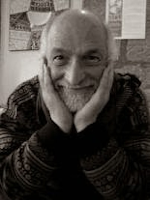
giovedì 9 giugno 2022

Considerazioni sul libro "Chi sei tu'", di Paolo D'Arpini, presentato a Vignola il 18 giugno 2022 - Considerations on the book "Who are you '", by Paolo D'Arpini, presented in Vignola on 18 June 2022


Hic et nunc

“I segreti provano ad entrare nelle orecchie, non impedirli, non nasconderti. Oh Amato, non farci mancare musica e vino, non lasciarci respirare una sola volta senza essere dove Tu sei.”  (Jalaluddin Rumi)

“Il tempo passa e non aspetta” disse il saggio,   eppure ho tenuto la bozza del libro "Chi sei tu?"  per  parecchio tempo nel cassetto,  per farlo decantare e renderlo quindi più solido e comprensibile. Non che abbia cambiato qualche concetto, no, il senso intimo  è assolutamente lo stesso di quando l'ho lasciato lì a riposare ... ma credo che quella sosta nel limbo della memoria sia stata sufficiente per renderlo più intellegibile, soprattutto a me stesso. Dico così perché anche se  i pensieri e le parole vengono percepite dalla mente le riconosco compiutamente  solo nel momento in cui appaiono davanti allo "schermo", in forma di libro.


Lo scopo del libro "Chi sei tu?"  è quello di mettere in chiaro alcuni concetti base su ciò che io chiamo "conoscenza di sé",  non  certo in forma di filosofia, assolutamente no! Semplicemente è un modo di riconoscere quella presenza che c'era già.

Per una sorta di simpatia che percepisco verso tutte le persone con le quali riesco a condividere emozioni e sentimenti ho pensato che potesse essere utile (per me e per loro) chiarire alcuni aspetti dell'auto-conoscenza che ancora si rivolgono alla persona. Poiché (comunque) dalla persona dobbiamo partire in quanto depositaria della prima scintilla di Coscienza dalla quale tutto deriva. Non voglio perciò sminuire il valore di questa persona, e come "questa" anche tutte le altre che pazientemente seguono e precedono.

Conoscere le caratteristiche incarnate, saper individuare le pulsioni che contraddistinguono la nostra persona, è sicuramente utile per non farci imbrogliare dalla mente, per non cadere nella trappola della falsa identità. Infatti tutto ciò che può essere descritto  non può essere “noi” ma solo la struttura funzionale del corpo/mente (nella quale ci riconosciamo). Questo apparato psico-fisico è  il risultato della commistione di forze naturali (od elementi) e di qualità psichiche (che degli elementi sono espressione) che non sono sotto il nostro diretto controllo. Nella multiforme interconnessione di queste energie gli infiniti esseri prendono forma. Anche se –in verità- non si tratta di “forze” né di “esseri” bensì di una singola forza e di un solo "essere" che assume vari aspetti durante il suo svolgersi nello spazio-tempo.

Ma qui occorre descrivere la “capacità separativa” (yin e yang) che produce l’illusione della diversità. Essa è il primo concetto che si forma nella mente (in effetti è la mente stessa).

Ai primordi della cultura umana la differenza fra Natura e “persona” era impercettibile, la speculazione filosofica non era arrivata a presupporre un io separato, in quanto  fruitore privilegiato della creazione. Infatti nell'antica tradizione matristica e panteistica la Natura era vista come la Madre Universale, la quale da se stessa ed in se stessa produce tutti i fenomeni, manifestando tutte le forme. In questa visione non vi è alcuna separazione o differenza fra la Matrice e le sue emanazioni, viventi o amorfe che siano. Animali, piante, montagne, corsi d’acqua, mari, cielo stellato, luna, esseri umani… tutto compartecipa ed è espressione dell’atto creativo, parte indivisibile di un Unicum.

La creazione in questa ottica è vista come qualcosa di spontaneo e naturale, una ricorrenza ciclica che sorge dalla terra, sulla terra insiste ed alla terra ritorna, in un continuo ripetersi senza un “oltre”. Tutto è presente nell’eterno qui ed ora. Questa beata visione non si è esaurita con il trascorrere delle generazioni, essa è durata a lungo, ed ancora permane nelle menti illuminate. Il suo procedere ellittico conserva il sapore dell’eternità.

Partendo da questi presupposti ho iniziato  ad esplorare quelle forme psichiche archetipali che da tempo immemorabile sono state riconosciute come presenti in tutte le espressioni rappresentative della vita.

Mi sono così imbattuto in conoscenze di molto antecedenti le religioni e la psicologia. Ho trovato ad esempio nel Libro dei Mutamenti (I Ching) e nel sistema elementale indiano  interessanti spunti per risalire al senso identitario che contraddistingue l'uomo integro. Una identità sia locale, basata sulla presenza nel qui ed ora,   che personale, ovvero percettiva ed emozionale.

Ad esempio, integrati dal sistema elementale, fondamentalmente due sono gli indirizzi culturali della Cina, il Confucianesimo ed il Taoismo, la via della correttezza e la via della spontaneità. Ricettacolo di questi due aspetti sociali è il Libro dei Mutamenti, cioè l’I-Ching, uno dei saggi testi più antichi dell'umanità. In esso sono integrati diversi commenti di Confucio e di Lao Tze, nonché considerazioni più tardive di matrice Chan (Meditazione Buddista). All'I-Ching sono riconducibili anche i basilari archetipi psichici dello zodiaco cinese e i due aspetti dello Yin e dello Yang, il Femminile ed il Maschile, la Tenebra e la Luce, la Terra ed il Cielo.

La spontanea e naturale interazione degli opposti, in continuo movimento, descritta nell'I-Ching, è lo stesso del greco "Panta rei os potamòs" (tradotto come ‘Tutto scorre come un fiume’), il celebre aforisma attribuito ad Eraclito, vissuto contemporaneamente al saggio Lao Tze. Ma anche nel ‘Libro dei Proverbi’ di Salomone si inneggia allo sposalizio del Cielo con la Terra, alla congiunzione degli opposti ... il serpente che si morde la coda ... come miracolo delle polarità che si integrano, dei due che sono uno, della dolcezza di un cuore di donna che acquieta l'aggressività dell'uomo...  E' questa l'intelligenza che guida la Natura in ciò che oggi chiamiamo ‘evoluzione’, che ha fatto dire a Leone Tolstoi: "Se un uomo vuole aiutare il mondo, non deve pensare di fuggire dal mondo. Deve imparare a conoscerlo e a vivere in esso, diventando un'oasi, un rifugio per chi è alla ricerca della propria anima".

Ed è proprio così che possiamo cercare di ritrovare la comprensione della nostra vera natura e del corretto agire nel mondo.  Con l'aiuto dei principi fondamentali del Libro dei Mutamenti è possibile realizzare nella maniera più completa le facoltà interiori dell'uomo. Questa possibilità è fondata sul fatto che l'uomo ha in sé facoltà simili al Cielo e alla Terra, in quanto egli è un micro-cosmo. Poiché nel Libro dei Mutamenti sono riprodotte le leggi di Cielo e Terra esso fornisce gli strumenti per coltivare la propria natura intrinseca, cosicché le più intime qualità buone possano dispiegarsi. In particolare due cose vengono prese in considerazione: la saggezza e l'operare, l'intelletto e la volontà. Quando intelletto e volontà sono centrati nel modo giusto anche la vita emotiva giunge alla giusta armonia.


Trovo che affrontare questi temi - il 18 giugno 2022,  nel campo della Bifolca di Vignola-, in prossimità del momento auspicioso del solstizio estivo, sia particolarmente consono ed opportuno. Infatti in questi giorni di metà giugno viviamo la pienezza della emanazione luminosa, che simbolicamente rappresenta non solo la luce solare ma anche l'intelligenza, il "lumen" dello spirito.

Questo momento  è caratterizzato dall'esagramma   Kien - il Creativo, composto da sei linee intere (yang, il cielo). In questo periodo, anche detto “il Cielo sopra il Cielo” l’energia positiva Yang è al massimo della sua espressione: corrisponde al culmine della forza primordiale luminosa, spirituale, salda, attiva.

Nell'esagramma  Kien è insito il concetto del tempo e quindi il movimento che perdura con forza instancabile, come ad un giorno segue un altro giorno. Questa durata nel tempo è l’immagine della forza inerente al Creativo. Il saggio ne trae modello da seguire per acquisire durevole efficacia nel suo operato. Il saggio si rende forte eliminando da sé tutto ciò che abbassa ed è volgare.

Il Cavallo è l’archetipo che ci accompagna nel solstizio d’estate, che per la tradizione cinese è l’apice, la massima espressione della stagione: fioritura e maturazione dei frutti,  la crescita: l’energia diventa materia. Il cavallo è allegro, acuto, gentile con gli altri, ama l’avventura, è intuitivo e talentuoso, a volte impaziente. Questo periodo del  “Cavallo”, in connubio con l’anno della Tigre in cui ci troviamo,  conferirà la capacità alle anime evolute di affrontare quei cambiamenti oggi più che mai necessari per riconoscersi come  parte integrante della Vita, della Natura, della Terra.

Applicato al mondo sociale  questo momento  designa l’azione creativa del “nobile”: questo  è un periodo propizio per le persone  che riusciranno a dare forma alle idee positive, la perseveranza giorno dopo giorno permetterà la realizzazione, concretizzazione dei loro progetti.  L’archetipo del Cavallo che  si associa all’esagramma  “Kien”,  conferisce forza, ma soprattutto indica che per mantenere l’armonia e ottenere riuscita è necessario, in  autonomia di pensiero,  dare fiducia e garantire  collaborazione attiva  alle persone che si pongono con noi  in sintonia evolutiva.

Disse Confucio: “Ciò che concorda nel tono vibra insieme.  Ciò che è affine nella sua intima essenza si ricerca. L’acqua scorre verso l’umido, il fuoco si volge verso l’asciutto. Le nubi, che sono il respiro del cielo, seguono il drago, il vento, che è il respiro della terra, segue la tigre. Così il saggio si eleva, e tutti gli altri fissano lo sguardo su di lui. Quello che è generato dal cielo si sente affine a ciò che sta in alto. Quello che è generato dalla terra si sente affine a ciò che sta in basso. Ognuno segue ciò che gli è simile”.

Il mio libro Chi sei tu?  Vuole essere un  contributo per affrontare il viaggio e  forse potrà fornire un viatico utile nel  percorso verso l'integrazione e l'autoconoscenza.


Paolo D'Arpini


Programma a Vignola del 18 giugno 2022: https://circolovegetarianotreia.wordpress.com/2022/05/06/alla-scoperta-dellidentita-personale-e-bioregionale-incontro-solstiziale-a-vignola-il-18-giugno-2022/


Testo inglese

“Secrets try to get into your ears, don't prevent them, don't hide from you. Oh Beloved, don't let us lack music and wine, don't let us breathe once without being where You are. " (Jalaluddin Rumi)

"Time passes and does not wait" said the sage, yet I kept the draft of the book "Who are you?" for a long time in the drawer, to make it settle and therefore make it more solid and understandable. Not that I have changed any concepts, no, the intimate sense is absolutely the same as when I left it there to rest ... but I think that pause in the limbo of memory was enough to make it more intelligible, especially to myself. I say this because even if thoughts and words are perceived by the mind, I recognize them fully only when they appear in front of the "screen", in the form of a book.

The purpose of the book "Who are you?" is to clarify some basic concepts on what I call "self-knowledge", certainly not in the form of philosophy, absolutely not! It is simply a way of recognizing that presence that was already there.

Out of a kind of sympathy that I perceive towards all the people with whom I can share emotions and feelings, I thought it could be useful (for me and for them) to clarify some aspects of self-knowledge that still apply to the person. Since (in any case) we must start from the person as the depository of the first spark of Consciousness from which everything derives. Therefore I do not want to diminish the value of this person, and like "this" also all the others who patiently follow and precede.

Knowing the embodied characteristics, knowing how to identify the drives that distinguish our person, is certainly useful in order not to be fooled by the mind, in order not to fall into the trap of false identity. In fact, everything that can be described cannot be "us" but only the functional structure of the body / mind (in which we recognize ourselves). This psycho-physical apparatus is the result of the mixture of natural forces (or elements) and psychic qualities (which elements are expressions) that are not under our direct control. In the multiform interconnection of these energies, infinite beings take shape. Even if - in truth - they are not "forces" or "beings" but a single force and a single "being" that takes on various aspects during its unfolding in space-time.

But here it is necessary to describe the "separative capacity" (yin and yang) that produces the illusion of diversity. It is the first concept that is formed in the mind (in fact it is the mind itself).

At the beginning of human culture the difference between Nature and "person" was imperceptible, philosophical speculation had not come to presuppose a separate ego, as a privileged user of creation. In fact, in the ancient matristic and pantheistic tradition, Nature was seen as the Universal Mother, who by herself and in herself produces all phenomena, manifesting all forms. In this view there is no separation or difference between the Matrix and its emanations of it, whether living or amorphous. Animals, plants, mountains, waterways, seas, starry skies, the moon, human beings ... everything shares and is an expression of the creative act, an indivisible part of a Unicum.

In this perspective, creation is seen as something spontaneous and natural, a cyclical recurrence that arises from the earth, insists on earth and returns to the earth, in a continuous repetition without an "beyond". Everything is present in the eternal here and now. This blissful vision did not end with the passing of generations, it lasted a long time, and still lingers in enlightened minds. Its elliptical progression preserves the flavor of eternity.

Starting from these assumptions, I began to explore those archetypal psychic forms which from time immemorial have been recognized as present in all representative expressions of life.

I thus came across knowledge of much antecedent religions and psychology. I found, for example, in the Book of Changes (I Ching) and in the Indian elemental system, interesting ideas to go back to the sense of identity that distinguishes the whole man. An identity that is both local, based on presence in the here and now, and personal, that is, perceptive and emotional.

For instance, integrated by the elemental system, there are basically two cultural orientations of China, Confucianism and Taoism, the way of correctness and the way of spontaneity. Receptacle of these two social aspects is the Book of Changes, that is the I-Ching, one of the most ancient wise texts of humanity. It incorporates several comments by Confucius and Lao Tze, as well as later considerations of a Chan matrix (Buddhist Meditation). Also attributable to the I-Ching are the basic psychic archetypes of the Chinese zodiac and the two aspects of Yin and Yang, the Feminine and the Masculine, Darkness and Light, Earth and Sky.

The spontaneous and natural interaction of opposites, in continuous movement, described in the I-Ching, is the same as the Greek "Panta rei os potamòs" (translated as 'Everything flows like a river'), the famous aphorism attributed to Heraclitus, lived at the same time as the sage Lao Tze. But also in the 'Book of Proverbs' of Solomon there is praise of the marriage of Heaven with the Earth, of the conjunction of opposites ... the serpent that bites its own tail ... as a miracle of the polarities that integrate, of the two that are one , of the sweetness of a woman's heart that calms the aggression of man ... This is the intelligence that guides Nature in what we now call 'evolution', which made Leo Tolstoi say: "If a man he wants to help the world, he doesn't have to think about running away from the world. He has to learn to know it and to live in it, becoming an oasis, a refuge for those in search of their soul".

And it is precisely in this way that we can try to find an understanding of our true nature and correct action in the world. With the help of the fundamental principles of the Book of Changes it is possible to realize in the most complete way the inner faculties of man. This possibility is based on the fact that man has in himself faculties similar to Heaven and Earth, as he is a micro-cosmos. Since the laws of Heaven and Earth are reproduced in the Book of Changes it provides the tools to cultivate one's intrinsic nature so that the innermost good qualities can unfold. In particular, two things are taken into consideration: wisdom and work, the intellect and the will. When intellect and will are centered in the right way, the emotional life also comes to the right harmony.

I find that addressing these issues today -18 June 2022, in the Bifolca di Vignola field-, near the auspicious moment of the summer solstice, is particularly appropriate and opportune. In fact, in these days of mid-June we experience the fullness of the luminous emanation, which symbolically represents not only sunlight but also intelligence, the "lumen" of the spirit.

This moment is characterized by the hexagram Kien - the Creative, made up of six solid lines (yang, the sky). In this period, also called "Heaven above Heaven", the positive Yang energy is at its maximum expression: it corresponds to the peak of the luminous, spiritual, steady, active primordial force.

The concept of time is inherent in the Kien hexagram and therefore the movement that persists with tireless strength, as one day follows another day. This duration in time is the image of the strength inherent in the Creative. The sage draws from it a model to follow in order to acquire lasting efficacy in his work. The wise man makes himself strong by eliminating from himself all that lowers and is vulgar.

The Horse is the archetype that accompanies us in the summer solstice, which for the Chinese tradition is the apex, the maximum expression of the season: flowering and ripening of the fruits, growth: energy becomes matter. The horse is cheerful, sharp, kind to others, loves adventure, is intuitive and talented, sometimes impatient. This period of the "Horse", in conjunction with the year of the Tiger in which we find ourselves, will give the evolved souls the ability to face those changes that are now more than ever necessary to recognize themselves as an integral part of Life, Nature, and the Earth.

Applied to the social world, this moment designates the creative action of the "noble": this is a propitious period for people who will be able to give shape to positive ideas, perseverance day after day will allow the realization and realization of their projects. The archetype of the Horse that is associated with the hexagram "Kien" gives strength, but above all it indicates that to maintain harmony and achieve success it is necessary, in autonomy of thought, to trust and guarantee active collaboration to the people who place themselves with us in evolutionary harmony.

Confucius said: “What agrees in tone vibrates together. What is similar in its intimate essence is sought. The water flows towards the humid, the fire turns towards the dry. The clouds, which are the breath of heaven, follow the dragon, the wind, which is the breath of the earth, follow the tiger. Thus the sage rises, and all the others fix their gaze on him. What is generated from heaven feels akin to what is above. What is generated from the earth feels akin to what is below. Everyone follows what is similar to him ".

My book Who are you? It wants to be a contribution to face the journey and perhaps it will be able to provide a useful viaticum on the path towards integration and self-knowledge.

Paolo D'Arpini

venerdì 3 giugno 2022

Qualities, sensations, attractions and repulsions that appear in the field of consciousness... - Qualità, sensazioni, attrazioni e repulsioni che appaiono nel campo della coscienza...


"Close your eyes and you will see clearly

Stop listening and you will hear the truth.

Stay silent and your heart can sing.

Do not seek the contact and you will find the union.

Be quiet and you will find the wave of the spirit.

Be gentle and you won't need strength.

Be patient and you will accomplish everything.

Be humble and you will keep your integrity."

(Taoist meditation)


The qualities, sensations, attractions and repulsions that appear in the field of consciousness are projections as are the dreams that appear to the dreamer. Everything is resolved in the same reality, unique and indivisible, inexplicable because there is no one to whom it can be explained….

Our mind is the result of a psychic and energetic combination of the forces combined by nature in this kaleidoscope which is the individual consciousness. In fact, nothing belongs to us (if specifically intended) or everything belongs to us (if understood as the totality of the known) ... What do you want a beautiful word uttered in silence or an ugly word screamed in the wind? We go forward because going back is impossible ... in the sense that we cannot correct anything of the lived events (in the past) we can only observe with greater attention the events that occur before our eyes in the present ...

Then someone might wonder how it is possible to change what is already described in destiny. Yet in thought there is already a lever of movement, if a clear intent manifests itself in the thought we can discover that the inspirations you have had on any innovative topic are then closely followed by a mass of interventions in the same vein ...

Synchronicity? Wave? In bioregionalism it is called "the great flow", and the function of the precursors is precisely that of initiating an evolutionary process of human intelligence ... for this reason it is important that the precursors do not take on themselves a specific "degree" or "copyright. "their job is just to prepare the ground, sow and proceed (like Jonny apple seed) ... Everyone starts at some point and then goes on and leaves his own path as an example.

Paolo D'Arpini


Testo italiano:


"Chiudi gli occhi e vedrai con chiarezza

Smetti di ascoltare e sentirai la verità.

Resta in silenzio e il tuo cuore potrà cantare.

Non cercare il contatto e troverai l'unione.

Sii quieto e troverai l'onda dello spirito.

Sii delicato e non avrai bisogno di forza.

Sii paziente e compirai ogni cosa.

Sii umile e manterrai la tua integrità."

(Meditazione Taoista) 


Le qualità, le sensazioni, le attrazioni e repulsioni che appaiono nel campo della coscienza, sono proiezioni come lo sono i sogni che appaiono al sognatore. Tutto si risolve nella stessa realtà, unica ed indivisibile, inspiegabile perché non vi è nessuno a cui poterla spiegare….

La nostra mente  è  il risultato di una combinazione psichica e energetica delle forze combinate dalla natura in questo caleidoscopio che è la coscienza individuale.  In effetti nulla ci appartiene (se inteso specificatamente) oppure tutto ci appartiene (se inteso come la totalità del conosciuto)... Cosa volete che sia una bella parola proferita in silenzio od una brutta parola urlata al vento? Andiamo avanti perché tornare indietro è impossibile... nel senso che non si  può correggere nulla degli eventi vissuti (nel passato) possiamo solo osservare con maggiore attenzione gli eventi che si presentano davanti ai nostri occhi nel presente...

Qualcuno allora potrebbe chiedersi come sia possibile modificare ciò che è già descritto nel destino.  Eppure nel pensiero c'è già una leva di movimento, se un chiaro intento si manifesta nel pensiero   possiamo scoprire che le ispirazioni che tu hai avuto su qualsiasi argomento innovativo vengono poi seguite a ruota da una messe di interventi nello stesso filone... 

Sincronicità? Onda? Nel bioregionalismo si chiama "il grande flusso",  e la funzione dei precursori è appunto quella di avviare un processo evolutivo dell'intelligenza umana... per questo è importante che i precursori non assumano su di sé una specifica "laurea" o "copyright" il loro lavoro è solo quello di preparare il terreno, seminare e procedere (come  Jonny seme di mela)... Ognuno comincia a qualche punto e poi prosegue e lascia il suo percorso come esempio.

Paolo D'Arpini


domenica 22 maggio 2022

Intervista di Alvin Crescini con Paolo D'Arpini al Salone del Libro di Torino, 22 maggio 2022 - Presentazione del libro "Chi sei tu?" - Interview by Alvin Crescini with Paolo D'Arpini at the Turin Book Fair, 22 May 2022 - Presentation of the book "Who are you?"


Domanda -  Il tema  emblematico, il filo conduttore, che qualifica questo salone del libro di Torino del maggio 2022 è "Cuori selvaggi" ha qualche attinenza con il tuo libro "Chi sei tu?", basato sull'I Ching e sul  sistema archetipale  cinese con integrazioni del sistema elementale indiano?

Risposta - Nella filosofia taoista, che è una componente essenziale della cultura cinese,  si dà una grande importanza alla naturalezza ed  alla selvaticità. L'armonia tra l'uomo e la natura è la condizione che consente al cuore dell'uomo di battere in sintonia con tutto ciò che vive. Il taoismo, di cui la cultura cinese è imbevuta, non è una religione ma una sorta di  naturalismo  che affonda le sue radici  nell’intuizione analogica,  nelle espressioni sacre della coscienza di appartenere ad un Tutto.  
Le religioni tradizionali,  presupponendo un dio creatore "separato", definiscono in tal modo una "differenza" tra "creatore e creato" e quindi si forma una scala gerarchica, che dal punto di vista  taoista non esiste, in quanto ogni cosa è il risultato dell'unica matrice,  che muta nelle forme Yin (passivo) e Yang (attivo), senza però condurre ad una  scissione nelle sue manifestazioni. Ogni cosa è sempre complementare e pienamente integrata nell'Insieme, nell'intero. Questo è il senso profondo della "selvaticità" di cui anche il Libro dei Mutamenti è impregnato.  Ma  una precisazione rispetto al tema  da lei menzionato  "Cuori selvaggi"  (come portatore di valori  al salone del libro di quest'anno)  è necessaria.  
In generale "selvatico" significa che nasce vive e cresce in natura non in contatto o quasi con l'attività umana. Mentre "selvaggio"   significa  non adatto o adattato alla civiltà, intesa come sistema di regole di convivenza umana e funzionamento della società. Un  "cuore selvatico" od un "cuore selvaggio"  devono trovare una sintesi, non basata sulla ribellione o sulla inconsapevolezza bensì sulla capacità di integrare istinto e ragione. 
Perciò nel mio libro   cerco di indicare un percorso che va nella direzione di  integrare questi due aspetti dell'intelligenza e della coscienza  in modo da raggiungere un'armonia e riconoscersi in  una interezza.  Interezza che non è mai andata perduta ma solo dimenticata.

Domanda - Come è nata questa tua ricerca di interezza, e che attinenza ha con l'integrazione tra autoconoscenza e conoscenza del mondo?

Risposta - La mia curiosità innata di conoscere me stesso, sia dal punto di vista dell'identità personale che da quello dell'identità ambientale e sociale, mi ha sempre accompagnato e spinto all'analisi. Avendo vissuto varie esperienze  -e quindi  definibili dirette-   in chiave di riconoscimento degli aspetti psichici e comportamentali che contraddistinguono  l'uomo e il mondo dei viventi, insomma avendo cercato per quasi l'intero capitolo della mia esistenza di giungere alla conoscenza, ho percorso  diverse vie e finalmente ho trovato un modo  idoneo, un punto d'incontro,  che unisce varie scuole e che  trova conferma sia in campo analogico che logico. 
Forse  la mia tendenza innata alla laicità mi ha portato a  lasciar da parte  tutto ciò che è basato su un "credo",  privilegiando il metodo delle esperienze vissute.  Il momento cruciale  della mia ricerca risale all'età di 29 anni, in cui miracolosamente la mia energia psicofisica e spirituale fu risvegliata dal mio maestro Muktananda, attraverso Shaktipat (risveglio dell'energia Kundalini).  Da allora spontaneamente -come una crescita naturale-  proseguii nel riconoscimento della "verità"  che si manifesta all'interno ed all'esterno di noi.  Questo progressivo riconoscimento mi ha messo nella condizione di poter ricevere e   dare risposte condivisibili, poiché l'esperienza della vita è comune ad ogni essere pur nelle diverse funzioni,  partendo dalla conoscenza della persona incarnata.  Mi ritrovai così -dopo una analisi comparata di vari metodi di autoconoscenza-  ad  adottare (come base di condivisione esperienziale) gli archetipi  del Libro dei Mutamenti,   integrandoli al sistema zodiacale cinese ed al sistema elementale indiano e ad altri aspetti psicoanalitici. Questo metodo, da me testato in centinaia (o  migliaia) di analisi archetipali compiute su persone sconosciute, mi è stato  confermato nella sua accuratezza. 
Attenzione però questo è solo un passaggio per la conoscenza della "persona", cioè l'identità del soggetto empirico (ego), un ulteriore passo  avanti va poi compiuto per riconoscere l'identità suprema (il  Sé). Ed anche  di questo, in alcuni capitoli, se ne parla nel libro "Chi sei tu?"

Domanda - Nel tuo libro si fa riferimento ad alcuni ricercatori maceratesi che ti hanno preceduto nella indagine da te perseguita, in particolare a Matteo Ricci e Giuseppe Tucci. Perché ritieni che vi siano delle attinenze con questi personaggi?

Risposta - Credo che un filone di ricerca abbia le sue origini  attraverso le spinte sincroniche che l'hanno messo in atto. Non sono nativo di Macerata ma una parte della mia esperienza è radicata nel maceratese. Mio padre morì ed stato sepolto a Macerata,  da dodici anni mi sono trasferito a Treia, una cittadina del maceratese, la casa editrice Ephemeria è di Macerata ed è  gestita da un maceratese, Antonello Andreani, ed è per la sua insistenza che ho infine messo nero su bianco la mia esperienza con  la stesura di questo libro, che per tanti anni era rimasto "nel cassetto".
Debbo dire perciò che  ho trovato molto significativa la  ricerca di chi mi ha preceduto, ovvero i  due insigni maceratesi, Matteo Ricci e Giuseppe Tucci,  attraverso i quali ho ricevuto una sorta di  incentivo a scrivere questo  libro,  pieno di premonizioni psichiche e di riflessioni filosofiche, utili alla “conoscenza di sé”.
Nel riconoscere  l’importanza di chi mi ha preceduto nella conoscenza culturale dell’estremo oriente  vorrei descrivere alcuni aspetti   dell'investigazione  di questi due precursori maceratesi…
Il primo fu il gesuita Matteo Ricci (1552/1610), che soggiornò lungamente presso la corte imperiale cinese scrivendo diversi libri in Mandarino (la lingua dotta); la sua più importante composizione fu il Grande Mappamondo, la cui sesta edizione fu fatta ristampare su ordine dell’imperatore stesso. Egli cercò di integrare la cultura cinese con quella occidentale in una sintesi più apprezzata in Cina, ove morì a Pechino, che presso la chiesa cattolica che lo aveva inviato in Cina come "missionario“.
L’altro grande indagatore fu il professor Giuseppe Tucci (1894/1984), fondatore e curatore dell’ISMEO, l’istituto italiano per lo studio della cultura orientale che ha sede nel museo  di Via Merulana a Roma. Io ebbi la fortuna di visitare quel museo e fui toccato dal rispetto con il quale le reliquie di religioni esterne alla nostra cultura avessero trovato ospitalità e idonea spiegazione.  In particolare apprezzai l'interesse dimostrato da Tucci nei confronti  della cultura nepalese e tibetana  estremamente affini all’antica matrice cinese rivolta al benessere dello stato e del popolo. In particolare Giuseppe Tucci è stato in grado di offrire un quadro suggestivo dei due indirizzi culturali originari  della Cina, il Confucianesimo ed il Taoismo, la via della correttezza e la via della spontaneità, successivamente integrati dal buddismo. e perfettamente evidenti anche nel Libro dei Mutamenti

Domanda - Date queste premesse chi ritieni possa essere interessato a leggere il  libro "Chi sei tu?"

Risposta - La risposta sta nella domanda stessa. Chiunque sia interessato a conoscere se stesso può trarre giovamento dalla lettura di questo testo, che non è pedante o  di difficile comprensione, bensì basato su esempi concreti e buoni consigli. Una sorta di mappa utile al viaggio verso l'autoconoscenza. Sempre considerando però che la mappa non è il territorio e che quindi la vera conoscenza subentra allorché si intraprende il viaggio.  Nel  concludere questa presentazione del mio libro debbo confermare che la fonte primaria degli aspetti trattati è l' I Ching,  forse il testo di saggezza più antico dell’umanità. In esso sono integrati diversi commenti di Confucio e di Lao Tze, nonché considerazioni più tardive di matrice Chan (meditazione Buddista), oltre alle considerazioni di Jung e di altri studiosi della psiche collettiva. All’I Ching, sono riconducibili anche gli archetipi psichici basilari dello zodiaco cinese. La mia pluridecennale ricerca, compiuta sia attraverso contatti personali con vari insegnanti  che su testi originali  di matrice cinese e indiana (come ad esempio Il Potere del Serpente di Arthur Avalon),  mi ha portato a elaborare un sistema archetipale integrato, basato sugli esagrammi radice dell’I Ching,  sui cinque elementi indiani e su altri aspetti. Ed ora, grazie alla fiducia dimostratami dall'editore del libro,  posso trasmettere  i miei studi e le mie sperimentazioni nella speranza che possano ispirare il lettore verso la conoscenza di sé, anche in senso spirituale…

Disse un saggio: "Il cuore dovrebbe essere il capo, allora tutto si sistemerebbe spontaneamente. Se riesci a fidarti della natura, a poco a poco diventerai quieto, silenzioso, felice, gioioso, festoso, perché la natura è in festa. La natura è una festa...”


Salone del Libro di Torino, 22 maggio 2022 - Alvin Crescini e Antonello Andreani in studio e  Paolo D'Arpini in remoto


Testo inglese:

Question - The emblematic theme, the leitmotif, which qualifies this Turin book fair of May 2022 is "Wild Hearts" has some bearing on your book "Who are you?", Based on the I Ching and the Chinese archetypal system with additions to the Indian elemental system?

Answer - In Taoist philosophy, which is an essential component of Chinese culture, great importance is given to naturalness and wildness. The harmony between man and nature is the condition that allows man's heart to beat in harmony with everything he lives. Taosim, which Chinese culture is imbued with, is not a religion but a sort of naturalism that has its roots in analogical intuition, in the sacred expressions of the consciousness of belonging to a Whole.
Traditional religions, assuming a "separate" creator god, thus define a "difference" between "creator and created" and thus a hierarchical scale is formed, which from the Taoist point of view does not exist, since everything is the result of the one matrix, which changes into the forms Yin (passive) and Yang (active), without however leading to a split in its manifestations. Everything is always complementary and fully integrated in the Whole, in the Whole. This is the profound sense of the "wildness" with which the Book of Changes is also impregnated. But a clarification with respect to the theme you mentioned "Wild Hearts" (as the bearer of values ​​at this year's book fair) is necessary.
In general, "wild" means that it is born, lives and grows in nature not in contact or almost with human activity. While "wild" means not suitable or adapted to civilization, understood as a system of rules of human coexistence and the functioning of society. A "wild heart" or a "wild heart" must find a synthesis, not based on rebellion or unawareness but on the ability to integrate instinct and reason.
Therefore in my book I try to indicate a path that goes in the direction of integrating these two aspects of intelligence and consciousness in order to achieve harmony and recognize each other in wholeness. Wholeness that has never been lost but only forgotten.

Question - How did your search for wholeness come about, and what connection does it have with the integration between self-knowledge and knowledge of the world?

Answer - My innate curiosity to know myself, both from the point of view of personal identity and from that of environmental and social identity, has always accompanied me and pushed me to analysis. Having lived various experiences - and therefore definable direct - in the key of recognition of the psychic and behavioral aspects that distinguish man and the world of the living, in short, having tried for almost the entire chapter of my existence to reach knowledge, I have traveled different vie and finally I found a suitable way, a meeting point, which unites various schools and which is confirmed both in the analogical and logical fields.
Perhaps my innate tendency to secularism has led me to leave aside everything that is based on a "creed", favoring the method of lived experiences. The crucial moment of my research dates back to the age of 29, when my psychophysical and spiritual energy was miraculously awakened by my master Muktananda, through Shaktipat (awakening of the Kundalini energy). Since then spontaneously - as a natural growth - I continued in the recognition of the "truth" that manifests itself inside and outside of us. This progressive recognition has put me in the condition of being able to receive and give shareable answers, since the experience of life is common to every being even in the different functions, starting from the knowledge of the incarnate person. Thus I found myself - after a comparative analysis of various methods of self-knowledge - to adopt (as a basis for experiential sharing) the archetypes of the Book of Changes, integrating them with the Chinese zodiac system and the Indian elemental system and other psychoanalytic aspects. This method, which I have tested in hundreds (or thousands) of archetypal analyzes performed on unknown people, has been confirmed to me in its accuracy.
Attention, however, this is only a step for the knowledge of the "person", that is the identity of the empirical subject (ego), a further step must then be taken to recognize the supreme identity (the Self). And even this, in some chapters, is mentioned in the book "Who are you?"

Question - In your book reference is made to some researchers from Macerata who preceded you in the investigation you pursued, in particular to Matteo Ricci and Giuseppe Tucci. Why do you think there are some connections with these characters?

Answer - I believe that a line of research has its origins through the synchronic forces that have put it into action. I am not a native of Macerata but part of my experience is rooted in the Macerata area. My father died and was buried in Macerata, for twelve years I moved to Treia, a town in the Macerata area, the Ephemeria publishing house is from Macerata and is managed by a Macerata artist, Antonello Andreani, and it is for his insistence that I finally put black on white my experience with the writing of this book, which for many years had remained "in the drawer".
I must therefore say that I found the research of those who preceded me, namely the two distinguished Macerata, Matteo Ricci and Giuseppe Tucci, very significant, through whom I received a sort of incentive to write this book, full of psychic premonitions and philosophical reflections , useful for "self-knowledge".
In recognizing the importance of those who preceded me in the cultural knowledge of the Far East, I would like to describe some aspects of the investigation of these two Macerata precursors ...
The first was the Jesuit Matteo Ricci (1552/1610), who spent a long time at the Chinese imperial court writing several books in Mandarin (the learned language); his most important composition was the Great Globe, whose sixth edition was reprinted by order of the emperor himself. He tried to integrate Chinese culture with Western culture in a synthesis more appreciated in China, where he died in Beijing, than at the Catholic church that had sent him to China as a "missionary".
The other great investigator was Professor Giuseppe Tucci (1894/1984), founder and curator of ISMEO, the Italian institute for the study of oriental culture based in the museum in Via Merulana in Rome. I was lucky enough to visit that museum and was touched by the respect with which the relics of religions outside our culture had found hospitality and suitable explanation. In particular, I appreciated the interest shown by Tucci in Nepalese and Tibetan culture, extremely similar to the ancient Chinese matrix aimed at the well-being of the state and the people. In particular, Giuseppe Tucci was able to offer an evocative picture of the two original cultural addresses of China, Confucianism and Taoism, the way of correctness and the way of spontaneity, subsequently integrated by Buddhism. and perfectly evident also in the Book of Changes

Question - Given these premises, who do you think might be interested in reading the book "Who are you?"

Answer - The answer lies in the question itself. Anyone interested in knowing himself can benefit from reading this text, which is not pedantic or difficult to understand, but based on concrete examples and good advice. A sort of map useful for the journey towards self-knowledge. Always considering, however, that the map is not the territory and that therefore true knowledge takes over when the journey is undertaken. In concluding this presentation of my book, I must confirm that the primary source of the aspects dealt with is the I Ching, perhaps humanity's oldest text of wisdom. It integrates several comments by Confucius and Lao Tze, as well as later considerations of a Chan matrix (Buddhist meditation), in addition to the considerations of Jung and other scholars of the collective psyche. The basic psychic archetypes of the Chinese zodiac can also be traced back to the I Ching. My decades-long research, carried out both through personal contacts with various teachers and on original Chinese and Indian texts (such as Arthur Avalon's The Power of the Serpent), led me to develop an integrated archetypal system, based on the root hexagrams of the 'I Ching, on the five Indian elements and on other aspects. And now, thanks to the trust shown to me by the publisher of the book, I can pass on my studies and my experiments in the hope that they can inspire the reader towards self-knowledge, even in a spiritual sense ...

A wise man said: "The heart should be the boss, then everything would settle spontaneously. If you can trust nature, you will gradually become quiet, silent, happy, joyful, festive, because nature is celebrating. Nature is. a party..."

Turin Book Fair, 22 May 2022 - Alvin Crescini and Antonello Andreani in the studio and Paolo D'Arpini remotely

mercoledì 18 maggio 2022

Karma e metempsicosi... - Karma and metempsychosis...


Il mio parere sulla reincarnazione? E’ come la ricorrente fioritura e fruttificazione di un albero. I risultati del processo vitale possono variare in seguito alle condizioni ambientali e temporali. La capacità di adattamento e risposta a tali condizioni è insita nella “coscienza” della pianta. Le modificazioni, sia a livello di mutazioni esterne che di adattamenti interni, non sono espressione di “volontà”, quindi non comportano una responsabilità diretta (quale risultato di una “scelta”).

Insomma il risultato è in conseguenza di una serie di fattori congiunti e collegati inestricabilmente gli uni agli altri. Dal punto di vista naturalistico, vediamo che la vita, nella sua assolutezza, è indipendente da ogni descrizione e senso di identificazione delle sue diverse forme e dei singoli processi vitali. Fiori, foglie, corteccia, rami, radici, pioggia, vento, sole, terra… Non si possono imputare separati scopi e ragioni alle parti… Tutto avviene in un contesto inscindibile che possiamo chiamare “Tao” oppure…

Ma ora, per cercare di capire il funzionamento dell’identificazione con i diversi momenti ed aspetti vitali, facciamo un altro esempio, quello del sogno poiché è il più vicino alla similitudine della dimenticanza di noi stessi, in quanto pura coscienza. Infatti quando noi sogniamo vediamo innumerevoli personaggi alcuni in antitesi con altri ma realmente essi sono tutti lo stesso sognatore. In questo sogno -chiamato il divenire- compiamo un percorso, un processo trasmutativo della coscienza individualizzata, che potremmo -da un punto di vista separativo- anche definire trasmigrazione o metempsicosi.

Il motore del samsara (l’illusione del divenire) è il karma -o azione- ma forse sarebbe meglio dire che è la propensione a compiere l’azione… Secondo la teoria “causa effetto”, della reincarnazione, il destino di questa vita (prarabdha) è la maturazione del karma più forte delle vite precedenti, con ciò non esaurendo la possibilità di future nascite con altri karma che abbisognano di una diversa condizione per potersi manifestare. Il modo per creare ulteriore karma viene individuato nell’atteggiamento con il quale viviamo la vita presente, ad esempio se emettiamo pensieri di scontento od eccessivo attaccamento verso gli eventi vissuti.

In se stesso il prarabdha di questa vita non cambia sulla base degli sforzi da noi compiuti mentre lo stiamo vivendo, è come un film che sta tutto nella pellicola, quindi pensare di modificarne il contenuto (una volta iniziata la proiezione) è irreale. Possiamo essere consapevoli ed accettare il film -come attenti spettatori- oppure arrabbiarci e commuoverci al suo scorrimento desiderando di modificarne gli eventi con la mente…. si forma nuovo karma…

Allo stesso tempo dovremmo chiederci: “..a chi appartiene questo karma? Esiste realmente un usufruitore, un io personale responsabile delle azioni che creano il karma?”

Secondo la visione nondualistica l’io è una sorta di miraggio, l’identificazione da parte della coscienza con l’oggetto osservato, un semplice riflesso condizionato, come avviene nell’osservazione della “propria” immagine in uno specchio che la mente riconosce come “se stessa”. Questo è il funzionamento spontaneo della coscienza che si proietta nel “godimento” della manifestazione, nel mondo delle forme e dei nomi.

Quindi cosa è la reincarnazione?

Paolo D’Arpini


Testo inglese 

My opinion on reincarnation? It is like the recurrent flowering and fruiting of a tree. The results of the life process may vary due to environmental and temporal conditions. The ability to adapt and respond to these conditions is inherent in the "consciousness" of the plant. The modifications, both at the level of external mutations and internal adaptations, are not an expression of "will", therefore they do not involve direct responsibility (as a result of a "choice").

In short, the result is the consequence of a series of factors joint and inextricably linked to each other. From the naturalistic point of view, we see that life, in its absoluteness, is independent of any description and sense of identification of its different forms and individual life processes. Flowers, leaves, bark, branches, roots, rain, wind, sun, earth ... We cannot attribute separate purposes and reasons to the parts ... Everything happens in an inseparable context that we can call "Tao" or ...

But now, to try to understand the functioning of identification with the different vital moments and aspects, let's take another example, that of the dream since it is the closest to the similarity of forgetting ourselves, as pure consciousness. In fact, when we dream we see countless characters some in antithesis with others but really they are all the same dreamer. In this dream - called becoming - we go through a path, a transmutative process of individualized consciousness, which we could - from a separative point of view - also define transmigration or metempsychosis.

The engine of samsara (the illusion of becoming) is karma - or action - but perhaps it would be better to say that it is the propensity to perform action ... According to the "cause and effect" theory of reincarnation, the destiny of this life ( prarabdha) is the maturation of karma stronger than previous lives, thereby not exhausting the possibility of future births with other karmas that need a different condition to be able to manifest. The way to create further karma is identified in the attitude with which we live the present life, for example if we emit thoughts of discontent or excessive attachment to lived events.

In itself the prarabdha of this life does not change based on the efforts we make while we are living it, it is like a film that is all in the film, so thinking of modifying its content (once the projection has started) is unreal. We can be aware and accept the film - as attentive spectators - or get angry and moved by its flow, wishing to modify its events with the mind…. new karma is formed ...

At the same time we should ask ourselves: “..to whom does this karma belong? Is there really a user, a personal self responsible for the actions that create karma? "

According to the nondualist vision, the ego is a sort of mirage, the identification by the consciousness with the observed object, a simple conditioned reflection, as happens in the observation of "one's" image in a mirror that the mind recognizes as " herself". This is the spontaneous functioning of the conscience that is projected in the "enjoyment" of the manifestation, in the world of forms and names.

So what is reincarnation?

Paolo D’Arpini


giovedì 5 maggio 2022

Considerazioni sul libro "Chi sei tu? I Ching, zodiaco cinese e sistema elementale indiano"… - Considerations on the book "Who are you? I Ching, Chinese zodiac and Indian elemental system"… - edizioni@ephemeria.it


Il nostro osservare il mondo, sia interiore (delle emozioni) che esteriore (degli oggetti), non è quasi mai “pulito”, privo cioè di interpretazione e concettualizzazione.

Siamo avvezzi a giudicare quel che osserviamo attraverso il filtro della memoria e delle sensazioni collegate alle trascorse esperienze. Anche nel caso di eventi “nuovi” o di idee precedentemente non considerate non facciamo a meno di cercare di “comprendere” e misurare sulla base del nostro conosciuto. Ecco questa “preconoscenza” è la nostra “schiavitù” ma se potessimo lasciarci andare sino al punto di poterci osservare mentre si innesca il meccanismo del “pre-giudizio” e capire il suo funzionamento… potremmo già considerare questa “attenzione” come una prima forma di meditazione e distacco dal processo appropriativo in corso.

Facciamo un’analogia pratica, per esemplificare questo tentativo di spostare l’attenzione dall’io giudicante alla capacità testimoniale della pura coscienza, analizzando il funzionamento del sogno. Quando sogniamo tutto avviene in modo apparentemente costruito e definito mentre allo stesso tempo gli avvenimenti del sogno mantengono il senso dell’imponderabilità. Il personaggio specifico del nostro sogno, nel quale noi ci identifichiamo, è esso stesso una semplice componente inscindibile dalla complessità del sogno, in cui i vari attori, figure, oggetti ed eventi sono un tutt’uno. La “farsa” del sogno mostra un’apparente finalità e significato agli occhi del personaggio di sogno nel quale ci identifichiamo. Vediamo che egli infatti compie gesti deliberati e verosimili sforzi di volontà per raggiungere i suoi fini di sogno, rapportandosi inoltre con gli altri personaggi del sogno come “diversi” da sé.

Può ciò corrispondere a verità?

Tutti gli aspetti del sogno sono prodotti dalla stessa mente e non sono in alcun modo controllabili e gestibili da alcun personaggio o situazione del sogno. Essendo ognuno di questi elementi semplici componenti “passive” immaginate nella mente del sognatore. Dal punto di vista dell’esperienza “empirica” nello stato di veglia si può dire che il processo di “creazione” sia praticamente il medesimo. Tutti gli oggetti ed i soggetti che reciprocamente si percepiscono (essendo ognuno contemporaneamente soggetto ed oggetto nella percezione altrui) scaturiscono dalla stessa “Mente”, o Coscienza, e si dipanano sullo schermo concettuale degli eventi spazio-temporali. In effetti, in questo funzionamento totale, non può esistere alcuna volizione o finalità personale, poiché (come nel sogno) ogni cosa si svolge indipendentemente dall’intenzione di qualsiasi dei personaggi sognati. Pur che apparentemente essi assumono su di sé il senso dell’affermazione o della negazione di una loro “volontà”, ma questo avviene solo conseguentemente alla considerazione effettiva degli eventi già vissuti. Ovvero dopo aver “giudicato” i fatti accaduti ed averli assunti come propri (attraverso il senso di identificazione) e quindi definiti come positivi o negativi (ai fini del personaggio).

Da ciò, per estensione, arriviamo all’identità dello stato di veglia e scopriamo che -come nel sogno- a manifestare la vita e le sue componenti non sono i singoli esseri bensì la Coscienza stessa, impegnata com’è nell’opera di vivificazione delle sue emanazioni e manifestazioni, che sono possibili solo per suo tramite.

Per questa ragione è detto che “quando il me scompare l’Io si manifesta” (Ramakrishna Paramahansa), ovvero quando l’identificazione individuale cessa automaticamente la Coscienza impersonale emerge. Si dice che “emerge” in quanto tale pura Coscienza è già insita nell’individuo stesso (come la mente è presente nel personaggio sognato) che la “sostanza” non appartiene alla sembianza mutevole ma è l’essenza che la anima. Ovviamente in caso di “risveglio” al puro Io il senso di identità individuale “muore” ma questo non implica l’automatica scomparsa della sua “sembianza” apparente, che continuerà a restare nella percezione degli “altri” osservatori, ma svuotata al suo interno di ogni identificazione oggettiva, essendo il risvegliato pura e semplice “soggettività”  (Consapevolezza priva di attributi).

La spontaneità è la caratteristica “comportamentale” del risvegliato, quando spontaneità significa semplice capacità di risposta, adeguata e consona, alle situazioni in cui egli si imbatte. In un tale essere non permane alcuna ombra di intenzionalità o di giudizio, di desiderio o repulsione, la sua “volontà” corrisponde esattamente agli eventi vissuti senza che lui lo ricerchi. Possiamo definire questo stato: Libertà.

Per significare la vera natura dell’essere ed il “ritorno” all’intrinseca consapevolezza che gli è propria, ammettendo che tale natura è la stessa per ognuno di noi, mi piace riportare una frase di Nisargadatta Maharaj, che disse: “Non importa ciò che fai o ciò che non fai se hai realmente percepito quello di cui sto parlando. Diversamente, non importa nemmeno se tu non hai capito quel di cui sto parlando..” Il che significa che in entrambi i casi la realtà intrinseca non cambia… e quel che è destinato ad avvenire avviene per conto suo….

Succede però che questo discorso, pur essendo a volte intellettualmente accettato, necessiti spesso una digestione ed assimilazione, deve insomma essere fatto “nostro”. Ciò può avvenire attraverso la riflessione, la rielaborazione e il riconoscimento al nostro interno di tale verità. Ora in qualche modo ci sembra di aver compreso ma dobbiamo disintossicarci dalla tendenza speculativa e dall’identificazione con il personaggio incarnato. A tal fine, non per ottenere la condizione che è già nella nostra natura ma allo scopo di scongiurare l’imbroglio della mente, consiglio la lettura ripetuta e la ponderazione sulle immagini contenute nel Libro dei Mutamenti (I Ching), un compendio di esempi archetipali psicosomatici, descrivente cioè i diversi modelli comportamentali, basati sulle variegate capacità espressive della mente nello svolgimento degli eventi spazio-temporali. Per mezzo dell’analisi sarà possibile riconoscere le multicolori forme che la mente può assumere in questo mondo di apparenze, essendo le sue trasformazioni semplici risultanze, risonanze e adattamenti alle condizioni che si trova ad affrontare. Questa è una risposta automatica allo svolgimento delle continue mutazioni e mescolamenti degli elementi basilari della vita.

Ovvio che tali mutazioni sono praticamente infinite ma nel Libro dei Mutamenti si esaminano 64 aspetti/madre, in forma di esagrammi in cui ogni linea è una componente costitutiva con propri significati. Essendo questo testo il risultato di un antichissimo e costante studio ed osservazione di fenomeni naturali e sociali, interpretati e visti sia con la ragione che con l’intuizione, esso si presenta come un complesso integrato dei diversi modi espressivi analitici ed analogici della mente.

“Conoscere la mente per non farsi imbrogliare dalla mente..” Affermava Ramana Maharshi.

E nel Libro dei Mutamenti si può dire che vengono fusi sia gli aspetti filosofici speculativi e metafici che quelli analitici ed empirici (Taoismo e Confucianesimo), perciò la prassi è quella di osservarne le immagini senza volerne assumere i concetti, un buon metodo per avvicinarsi alla corrispondente spontaneità comportamentale del saggio, basata sulla capacità di immediata risposta comportamentale nelle varie situazioni incontrate nella vita, anche in considerazione delle peculiari caratteristiche da ognuno incarnate e nella posizione e condizione in cui siamo. Insomma, conoscere il mezzo per affrontare adeguatamente il percorso.

Siccome la lettura del testo non è immediatamente chiara e assimilabile è consigliabile una ripetizione continuata, ma senza sforzi interpretativi, in modo da sospingere pian piano la nostra mente verso quel necessario “distacco” da finalità precostituite, tralasciando quindi il tentativo di comprensione dei significati razionali e lasciando che le immagini evocate trovino corrispondenza nel nostro inconscio.

Paolo D’Arpini


Considerazioni  sul libro  "Chi sei tu? I Ching, zodiaco cinese e sistema elementale indiano"… -  edizioni@ephemeria.it


Testo inglese:

 Our observation of the world, both internal (of emotions) and external (of objects), is almost never "clean", that is, devoid of interpretation and conceptualization.

We are used to judging what we observe through the filter of memory and sensations related to past experiences. Even in the case of "new" events or ideas previously not considered, we do not fail to try to "understand" and measure on the basis of our known. Here is this "foreknowledge" is our "slavery" but if we could let ourselves go to the point of being able to observe ourselves while the "pre-judgment" mechanism is triggered and understand its functioning ... we could already consider this "attention" as a first form of meditation and detachment from the ongoing appropriative process.

Let's make a practical analogy, to exemplify this attempt to shift the attention from the judging self to the witness capacity of pure conscience, analyzing the functioning of the dream. When we dream, everything happens in an apparently constructed and defined way while at the same time the events of the dream maintain the sense of imponderability. The specific character of our dream, in which we identify ourselves, is itself a simple component that is inseparable from the complexity of the dream, in which the various actors, figures, objects and events are one. The "farce" of the dream shows an apparent purpose and meaning in the eyes of the dream character with whom we identify. We see that he in fact makes deliberate gestures and probable efforts of will to achieve his dream ends, also relating to the other characters of the dream as "different" from himself.

Can this be true?

All aspects of the dream are produced by the same mind and are in no way controllable and manageable by any character or situation in the dream. Each of these elements being simple "passive" components imagined in the dreamer's mind. From the point of view of the "empirical" experience in the waking state, it can be said that the process of "creation" is practically the same. All objects and subjects that mutually perceive each other (each being simultaneously subject and object in the perception of others) spring from the same "Mind", or Consciousness, and unfold on the conceptual screen of space-time events. In fact, in this total functioning, there can be no personal volition or purpose, since (as in the dream) everything takes place regardless of the intention of any of the dreamed characters. While apparently they take upon themselves the sense of affirmation or denial of their "will", but this only happens as a result of the effective consideration of the events already experienced. That is, after having "judged" the events that have occurred and have assumed them as one's own (through the sense of identification) and therefore defined as positive or negative (for the purposes of the character).

From this, by extension, we arrive at the identity of the waking state and we discover that - as in the dream - it is not the individual beings who manifest life and its components but the Consciousness itself, engaged as it is in the work of vivification of its emanations and manifestations, which are possible only through it.

For this reason it is said that "when the me disappears, the ego manifests itself" (Ramakrishna Paramahansa), or when individual identification automatically ceases, impersonal Consciousness emerges. It is said that "emerges" as such pure Consciousness is already inherent in the individual himself (as the mind is present in the dreamed character) that the "substance" does not belong to the changing appearance but is the essence that animates it. Obviously in the event of "awakening" to the pure ego the sense of individual identity "dies" but this does not imply the automatic disappearance of its apparent "semblance", which will continue to remain in the perception of the "other" observers, but emptied within it of every objective identification, being the awakened pure and simple "subjectivity"
(Awareness devoid of attributes).

Spontaneity is the "behavioral" characteristic of the awakened person, when spontaneity means simple ability to respond, adequate and appropriate, to the situations in which he encounters. In such a being there remains no shadow of intentionality or judgment, desire or repulsion, his "will" corresponds exactly to the events he experienced without him seeking it. We can define this state: Freedom.

To signify the true nature of being and the "return" to the intrinsic awareness that is its own, admitting that this nature is the same for each of us, I like to quote a phrase by Nisargadatta Maharaj, who said: "It does not matter what what you do or what you do not do if you have really perceived what I am talking about. Otherwise, it doesn't even matter if you don't understand what I'm talking about .. ”Which means that in both cases the intrinsic reality doesn't change… and what is destined to happen happens on its own….

However, it happens that this discourse, although sometimes intellectually accepted, often needs digestion and assimilation, in short, it must be made "ours". This can happen through reflection, re-elaboration and recognition of this truth within us. Now somehow we seem to have understood but we must detoxify ourselves from the speculative tendency and from the identification with the embodied character. To this end, not to obtain the condition that is already in our nature but in order to avoid the cheating of the mind, I recommend repeated reading and pondering on the images contained in the Book of Changes (I Ching), a compendium of archetypal examples. psychosomatic, that is, describing the different behavioral models, based on the variegated expressive capacities of the mind in the development of space-time events. By means of analysis it will be possible to recognize the multicolored forms that the mind can take in this world of appearances, its transformations being simple results, resonances and adaptations to the conditions it faces. This is an automatic response to the unfolding of the constant mutations and mixing of the basic elements of life.

Obviously these mutations are practically infinite but in the Book of Changes 64 aspects / mother are examined, in the form of hexagrams in which each line is a constitutive component with its own meanings. Since this text is the result of an ancient and constant study and observation of natural and social phenomena, interpreted and seen both with reason and with intuition, it appears as an integrated complex of the different analytical and analogical expressive modes of the mind.

"Knowing the mind so as not to be fooled by the mind .." Ramana Maharshi affirmed.

And in the Book of Changes it can be said that both the speculative and metaphysical philosophical aspects as well as the analytical and empirical ones (Taoism and Confucianism) are merged, therefore the practice is to observe the images without wanting to assume the concepts, a good method to approach the corresponding behavioral spontaneity of the essay, based on the capacity for immediate behavioral response in the various situations encountered in life, also in consideration of the peculiar characteristics embodied by each and in the position and condition in which we are. In short, knowing the means to adequately address the path.

Since the reading of the text is not immediately clear and assimilable, a continuous repetition is advisable, but without interpretative efforts, in order to slowly push our mind towards that necessary "detachment" from pre-established purposes, thus leaving out the attempt to understand rational meanings and letting the evoked images find correspondence in our unconscious.

Paolo D’Arpini

Considerations on the book "Who are you? I Ching, Chinese zodiac and Indian elemental system"… - edizioni@ephemeria.it

mercoledì 4 maggio 2022

"Chi sei tu?" Una ricerca sulla conoscenza di sè. Annunciazione - "Who are you?" A search on self-knowledge - Annunciation


Paolo D’Arpini è un ricercatore laico appassionato dell’antica cultura cinese ed indiana, egli dopo lunghi soggiorni in Oriente nel 2010 si è trasferito da Calcata (il mitico borgo bagnato dal fiume Treja) a Treia (antica cittadella del Maceratese), in questo “buen retiro” ha potuto completare i suoi studi su un sistema archetipale da lui redatto integrando vari sistemi zodiacali ed elementali, per aiutarci a riconoscere le caratteristiche psicosomatiche della persona da noi incarnata. “Chi sei tu?” è la domanda che egli pone sul frontespizio del libro  in uscita, edito da Ephemeria di Macerata (edizioni@ephemeria.it).

Forse l’atmosfera dell’esperienza vissuta in Cina ed in India da due insigni maceratesi, Matteo Ricci e Giuseppe Tucci, ha influito sulla realizzazione del lavoro di ricerca del D’Arpini, che pur essendo nato a Roma ha avuto legami stretti con la città di Macerata, dove il padre Aldo è sepolto.

Insomma gli spiriti del luogo lo avranno influenzato fino a convincerlo ad editare un libro pieno di premonizioni psichiche e di riflessioni filosofiche, utili alla “conoscenza di sé”.

Nel suo riconoscimento dell’importanza di chi lo ha preceduto nella conoscenza culturale dell’estremo oriente così egli descrive i precursori maceratesi…


“Due sono stati i marchigiani illustri che hanno legato il loro nome alla scoperta dei misteri di Cina ed India. Il primo fu il gesuita maceratese, Matteo Ricci (1552/1610), che soggiornò lungamente presso la corte imperiale cinese scrivendo diversi libri in Mandarino (la lingua dotta); la sua più importante composizione fu il Grande Mappamondo, la cui sesta edizione fu fatta ristampare su ordine dell’imperatore stesso. Egli cercò di integrare la cultura cinese con quella occidentale in una sintesi più apprezzata in Cina, ove morì a Pechino, che presso la chiesa cattolica che lo aveva inviato in Cina come “missionario”, infine scomunicandolo.“


“L’altro grande maceratese fu il professor Giuseppe Tucci (1894/1984), fondatore e curatore dell’ISMEO, l’istituto italiano per lo studio della cultura orientale e importante museo sito in Via Merulana a Roma. Io ebbi la fortuna di visitare quel museo e fui toccato dal rispetto con il quale le reliquie di religioni esterne alla nostra cultura avessero trovato ospitalità e idonea spiegazione. In seguito a ciò mi interessai alla letteratura ed alle traduzioni originali prodotte dall’esimio professor Tucci e mi abbeverai a quella fonte di conoscenza. In particolare apprezzai le sue ricerche sulla cultura nepalese e tibetana e la sua ricerca sull’antica saggezza cinese, laica per antonomasia, rivolta al benessere dello stato e del popolo. In particolare Giuseppe Tucci è stato in grado di offrirci un quadro suggestivo dei due indirizzi culturali della Cina, il Confucianesimo ed il Taoismo, la via della correttezza e la via della spontaneità.“

Paolo D’Arpini conclude la presentazione del suo nuovo libro dicendo: “Fonte primaria degli aspetti sociali contenuti nella mia ricerca è il Libro dei Mutamenti, I Ching, uno dei testi di saggezza più antichi dell’umanità. In esso sono integrati diversi commenti di Confucio e di Lao Tze, nonché considerazioni più tardive di matrice Chan (Meditazione Buddista). All’I Ching, sono riconducibili anche gli archetipi psichici basilari dello zodiaco cinese. La mia pluridecennale ricerca compiuta sia su testi di matrice cinese che indiana, come ad esempio Il Potere del Serpente, mi ha portato a elaborare un sistema archetipale congiunto, basato sugli esagrammi radice dell’I Ching e sui cinque elementi indiani. Ed avendo “completato” i miei studi e le mie sperimentazioni dal vivo, ho deciso di trasmettere la conoscenza acquisita con questo testo che spero possa ispirare il lettore verso l’autoconoscenza, anche in senso spirituale…” 


Testo inglese: 

Paolo D'Arpini is a lay researcher passionate about ancient Chinese and Indian culture, after long stays in the East in 2010 he moved from Calcata (the mythical village bathed by the Treja river) to Treia (ancient citadel of Maceratese), in this “Buen retiro” was able to complete his studies on an archetypal system he compiled by integrating various zodiacal and elemental systems, to help us recognize the psychosomatic characteristics of the person we embody. "Who are you?" is the question he poses on the title page of the forthcoming book, published by Ephemeria di Macerata (edizioni@ephemeria.it).

Perhaps the atmosphere of the experience lived in China and India by two distinguished Macerata people, Matteo Ricci and Giuseppe Tucci, influenced the realization of D'Arpini's research work, who despite being born in Rome had close ties with the city of Macerata, where his father Aldo is buried.

In short, the spirits of the place will have influenced him to the point of convincing him to publish a book full of psychic premonitions and philosophical reflections, useful for "self-knowledge".

In his recognition of the importance of those who preceded him in the cultural knowledge of the Far East, this is how he describes Macerata's precursors ...

“There were two illustrious people from the Marche who linked their name to the discovery of the mysteries of China and India. The first was the Jesuit from Macerata, Matteo Ricci (1552/1610), who spent a long time at the Chinese imperial court writing several books in Mandarin (the learned language); his most important composition was the Great Globe, whose sixth edition was reprinted by order of the emperor himself. He tried to integrate Chinese culture with Western culture in a synthesis more appreciated in China, where he died in Beijing, than at the Catholic church that had sent him to China as a "missionary", finally excommunicating him. "

"The other great Macerata artist was Professor Giuseppe Tucci (1894/1984), founder and curator of ISMEO, the Italian institute for the study of oriental culture and an important museum located in Via Merulana in Rome. I was lucky enough to visit that museum and was touched by the respect with which the relics of religions outside our culture had found hospitality and suitable explanation. Following this I became interested in the literature and original translations produced by the esteemed Professor Tucci and I drank from that source of knowledge. In particular, I appreciated his research on Nepalese and Tibetan culture and his research on ancient Chinese wisdom, secular par excellence, aimed at the well-being of the state and the people. In particular, Giuseppe Tucci was able to offer us an evocative picture of the two cultural addresses of China, Confucianism and Taoism, the way of correctness and the way of spontaneity. "


Paolo D’Arpini concludes the presentation of his new book by saying: "The primary source of the social aspects contained in my research is the Book of Changes, I Ching, one of humanity's most ancient wisdom texts. It incorporates several comments by Confucius and Lao Tze, as well as later considerations of a Chan matrix (Buddhist Meditation). The basic psychic archetypes of the Chinese zodiac can also be traced back to the I Ching. My decades of research carried out on both Chinese and Indian texts, such as The Power of the Snake, led me to develop a joint archetypal system, based on the root hexagrams of the I Ching and on the five Indian elements. And having "completed" my studies and my live experiments, I decided to pass on the knowledge acquired with this text which I hope will inspire the reader towards self-knowledge, even in a spiritual sense..."