domenica 24 novembre 2019

The way of the middle way - La via della via di mezzo


Risultati immagini per La via della via di mezzo paolo d'arpini

Ramana Maharshi said: "... it is important to know the mind, so as not to be fooled by the mind ..", this in response to the question of whether it was necessary to study the mental mechanisms that are basically representations of the individual ego and therefore synonymous with illusion. In fact, if we do not understand the pitfalls and traps that the mind can raise, to make us understand that we are the matrix of our ego, we will never be able to free ourselves from the mechanism of identification with the agent (the empirical ego). therefore it is useful and necessary to know the archetypal characteristics of each person embodied.

Among other things, it is better to begin immediately to become aware of the psycho-physical qualities that characterize our "person" (egoic mask) so as not to be unprepared for eventualities.

Since the categories exist, since when the concepts of high and low, good and bad, masculine and feminine, luminous and dark were born in human society, we have always looked for an integrative way that could make the interrelation of those forces understandable which always co-act in all mutations.

For example, the Buddhist faith is called "the middle way", there is also the Christian saying "love the others as yourself" or the doctrine of the "universal brotherhood" of the various philosophical orders. This becoming first listeners and then integrative re-elaborators, this continuous accepting the possibilities present at the occasion without pushing for a pre-established solution is my middle ground. However, the truth of the intentions must be examined by the evidence of the facts. When we examine the way in which we place ourselves in the mutation we immediately discover if our feeling and action is really in tune, being part of the movement in progress (and this independently from the obtained result) or it is only frustrating acting ....

As far as I'm concerned I have to say that my conformation, my approach to society, is that of the "half  exhausted" (as they say in Rome), considering the active men like Yang and the passive men  like Yin. Being  only a means this gives to me the possibility of not hiring a seat, of remaining a modest ordinary man, and at the same time allowing me to speak with both categories, that of busy and intellectually prepared people and that of simple and common men of the world , so I can understand the reasons and partly to share the choices and be accepted as a hypothetical traveling companion. This also means that, speaking of my particular method of knowledge, or "Lay Spirituality", I spontaneously sympathize with those who want and can share it but also with those who want nothing to do with these "fantasies".

It is true, the missionary vocation suffers, the product does not sell well, but at least we feel free not to be sold ourselves.

Paolo D'Arpini

Risultati immagini per La via della via di mezzo paolo d'arpini

Testo italiano

Diceva Ramana Maharshi: "... è importante conoscere la mente, per non farsi imbrogliare dalla mente..", questo in risposta alla domanda se fosse necessario studiare i meccanismi mentali che in fondo sono solo rappresentazioni dell'io individuale e quindi sinonimo di illusione. In effetti se non comprendiamo i trabocchetti e le trappole che la mente può tenderci, per farci intendere di essere lei la matrice del nostro io, non potremo mai disincagliarci dal meccanismo dell'identificazione con l'agente (l'io empirico). pertanto è utile e necessario conoscere le caratteristiche archetipali da ognuno incarnate.

Tra l'altro è meglio cominciare subito a prendere coscienza delle qualità psico-fisiche che caratterizzano la nostra "persona" (maschera egoica) in modo da non essere impreparati alle evenienze.

Da quando esistono le categorie , da quando cioè nella società umana sono nati i concetti di alto e basso, buono e cattivo, maschile e femminile, luminoso ed oscuro, si è sempre cercata una via integrativa che potesse rendere comprensibile l’interrelazione di quelle forze che sempre co-agiscono in tutte le mutazioni.

Ad esempio la fede Buddista è definita “la via di mezzo”, c’è pure il detto cristiano “dell’ama gli altri come te stesso” o la dottrina della “fratellanza universale” dei vari ordini filosofici. Questo farsi prima ascoltatori e poi rielaboratori integrativi, questo continuo accettare le possibilità presenti all’occasione senza spingere per una soluzione precostituita è la mia via di mezzo. Occorre però che la verità delle intenzioni sia messa al vaglio dalla prova dei fatti. Allorché esaminiamo il modo in cui ci poniamo nel mutamento scopriamo immediatamente se il nostro sentire ed agire è veramente in sintonia, facente parte del movimento in atto (e ciò indipendentemente dal risultato ottenuto) oppure è solo frustrante recitazione….

Per quanto mi riguarda debbo dire che la mia conformazione, il mio approccio verso la società, è quella del "mezzo sderenato" (come si dice a Roma), considerando i perbenisti attivi come Yang e gli sderenati passivi come Yin. Essere un mezzo sderenato mi da la possibilità di non assumere un seggio, di restare un modesto uomo qualunque, ed allo stesso tempo mi permette di interloquire con entrambe le categorie, quella delle persone impegnate e intellettualmente preparate e quella dei semplici e comuni uomini di mondo, posso così capirne le ragioni ed in parte di condividerne le scelte ed essere accettato come un ipotetico compagno di strada. Questo significa anche che, parlando del mio particolare metodo di conoscenza, ovvero la "Spiritualità Laica", spontaneamente simpatizzo con chi vuole e può condividerlo ma anche con coloro che non vogliono aver nulla a che fare con queste “fantasie”.

E’ vero, la vocazione missionaria ne patisce, il prodotto non si vende bene, ma almeno ci si sente liberi di non esserci noi stessi venduti.


Paolo D'Arpini

lunedì 18 novembre 2019

The story revisited from the perspective of the psychohistory - La storia rivisitata nell'ottica della psicostoria


What is called "history" is at best a chronicle adjusted, to meet the needs of the  political power involved in the events described,   or it reflects the ideological positions of the narrators, who must in any case always deal with the power in charge. We also see this in current reports, those of newspapers, radio and TV, in which the narration of facts is always adjusted in order to satisfy a "power" or an "idea"...

According to the theory of Albert Einstein it can be deduced that a form that manifests itself in space is simple in time. In other words, the energetic projection of the form can only be identified in relation to its temporal prosecution. Hence the idea that everything and every event are simple space-time projections, and therefore "imaginary", or perceptible through consciousness, which is indeed an inseparable continuum... Only a reflected consciousness, that of the mind, is able to stop the frames in the chaotic spatial-temporal energy flow, making the forms, the facts, in short, what makes up the development of the action, not only visible but also consequential and sensorially experimentable.

In the description of events, defined history, the impression of the observer prevails (as shown above), this is the characteristic of the individual mind that, perceiving through the network of its predispositions, interprets and adjusts the meanings of the lived or reported actions.

At this point, in order to know the "truth" one must turn to the psychohistory, or rather to the ability to read the automatic memorization of the non-perceptible accounting record, present in the set of events. So if we want to know the history, the true one, it is necessary to enter the akashic warehouse of the vital mnemonic function, which is present in a holographic form in each of us.

We must fish in the unconscious, we must perceive what is present in the universal mind in the form of a psycho-physical mnemonic trace. It is necessary to understand the events narrated not only from the point of view of the narrator but of the various characters described. We must sink into the archetypal world and know how to recognize each of the evoked "models". We must let go of reason and analysis to dwell on the collective memory from which messages and insights can emerge that are different from the conclusions described in the official story.

According to the theory of the "psycho-history" one could arrive at this through the residual memorial analysis imprinted on the objects involved in the events. For example, if we wanted to establish the truth about the facts that accompanied the death of Gaddafi, even in the absence of his corpse, that obviously could be the best transmitter, we could use any object he owned and used in those fateful moments .. his golden gun? His boots? But I personally do not support this "physical" vision, preferring the "psychic" one of reworking within the mind, with specific references to the event, through a sort of meditative trance, a little what happens to mediums during seances.

With this method, results can be "disruptive" compared to those that are the opinions on the causes of historical events, for example in the analysis that establishes the reasons for the fall of the Roman empire, both the decadence of the costumes and the descent are usually highlighted of the barbarians but it never takes into account the consequences of the Christian affirmation, which was truly a disruptive and destructive fact of the Roman world, transforming it from a secular political civilization into a mere religious foundation.

And here it seems to me useful to make a little disgression. After the discovery of the Qumran scrolls it was evident that the teachings and the chronicles contained in them anticipated in fact all Christian teachings. Only that those scrolls were very much antecedent to the hypothetical birth of Christ. After the destruction of Jerusalem by Tito the Jewish diaspora intensified (which had already begun since time immemorial since the Jews were already present in many places in the world). Among the various Jewish groups or sects that of the Essenes was the most spiritually qualified and the least rooted to the rabbinical traditions.

The Essenes pursued a "humanitarian" philosophy in which they already prefigured a "universal" ideology then continued by the Christian church. Moreover the Essenes had understood one thing .. that in the Jewish scriptural imagination the arrival of a messiah, savior of Israel, continued to be envisaged. But of Messiahs or self-defined ones they had passed to tens over the centuries and the result had always been disappointing. For this reason the Essenes decided - pragmatically - that it was no longer worthwhile to project the arrival of the Messiah in the distant future (which for all the other Jews to maintain the "faith") and also realized that a religion that could be transmitted only by direct inheritance (genetically) could not triumph among human populations. They decided therefore two things that radically changed their structure, widening it more and more, and also making their "religion" more accessible to everyone. First they established that the Messiah was not to come in the future but had already come in the past and "described" (as a historical fact) a character (who from the point of view of the Roman official chronicles never existed) putting in his mouth those teachings they did part of their tradition (that of the famous Dead Sea scrolls above) and above all they established that one could adhere to their "religion" not only for wealth but also for conversion .... That was the cause of the definitive split between the Essene sect and traditional Judaism and from that fracture Christianity was born (which assumed its own specific identity starting from the III century AD or better from the year 1000 of Rome).

This example path, which I have narrated here, is the result of a psychohistoric "reading".

Paolo D’Arpini


Testo Italiano

Ciò che viene definito “storia” è al meglio una cronaca aggiustata in funzione di soddisfare le esigenze dei potenti coinvolti negli eventi descritti.. oppure rispecchia le posizioni ideologiche dei narratori, che debbono in ogni caso far sempre i conti con il potere in carica.. Lo vediamo anche nelle cronache attuali, quelle dei giornali, radio e tv, in cui la narrazione dei fatti è sempre aggiustata al fine di soddisfare un “potere” od un “idea”…
Secondo la teoria di  Albert Einstein si può dedurre che  una forma che si manifesta nella spazio è semplice durata nel tempo. Come dire che la proiezione energetica della forma è individuabile soltanto in rapporto con la sua prosecutio temporale. Da qui l’idea che ogni cosa ed ogni accadimento sono semplici proiezioni spazio temporali, e pertanto “immaginarie”, ovvero percepibili attraverso la coscienza, che è invero un continuum inscindibile… Solo una coscienza riflessa, quella della mente, è in grado di fermare i fotogrammi nel caotico flusso energetico spaziotemporale rendendo le forme, i fatti, insomma ciò che compone lo svolgimento dell’agire, non solo visibili ma anche consequenziali e sperimentabili sensorialmente.
Nella descrizione degli eventi, definita storia, prevale l’impressione dell’osservatore (come sopra evidenziato), questa è la caratteristica della mente individuale che, percependo attraverso la rete di sue predisposizioni, interpreta ed aggiusta i significati delle azioni vissute o riportate.
A questo punto per conoscere la “verità” occorre rivolgersi alla psicostoria, ovvero alla capacità di lettura della memorizzazione automatica  della registrazione contabile non percettibile, presente nell’insieme degli eventi. Per cui se vogliamo conoscere la storia, quella vera, è necessario introdursi nel magazzino akashico della funzione mnemonica vitale, che è presente in forma olografica in ognuno di noi.
Bisogna pescare nell’inconscio, bisogna percepire quello che è presente nella mente universale in forma di traccia mnemonica psico-fisica. Bisogna comprendere gli eventi narrati non solo dal punto di vista del narratore ma di quello dei vari personaggi descritti. Bisogna sprofondare nel mondo archetipale e sapersi riconoscere in ognuno dei “modelli” evocati. Bisogna lasciar andare la ragione e l’analisi per soffermarsi sulla memoria collettiva dalla quale possono così emergere messaggi e intuizioni diverse dalle conclusioni descritte nella storia ufficiale.
Secondo la teoria della “psicostoria” si potrebbe   arrivare a ciò attraverso l’analisi memorica residua impressa negli oggetti coinvolti negli eventi.. Ad esempio se volessimo stabilire la verità sui fatti che hanno accompagnato la morte di Gheddafi, pur in assenza del suo cadavere, che ovviamente potrebbe essere il miglior trasmettitore, potremmo utilizzare un qualsiasi oggetto da lui posseduto ed usato in quei momenti fatidici.. la sua pistola d’oro? I suoi stivali? Ma io personalmente non supporto questa visione “fisicista” preferendo quella “psichica” della rielaborazione all’interno della mente, con richiami specifici all’evento, attraverso una specie di trance meditativa, un po’ quel che avviene ai medium durante le sedute spiritiche.
Con questo metodo possono aversi risultati “stravolgenti” rispetto a quelle che sono le opinioni sulle cause degli eventi storici, ad esempio nell’analisi che stabilisce i motivi della caduta dell’impero romano di solito si evidenziano sia la decadenza dei costumi, sia la calata dei barbari ma non si tiene mai conto delle conseguenze dell’affermazione cristiana, che fu veramente un fatto disgregante e distruttivo della romanità, trasformandola da civiltà politica laica in mera fondazione religiosa.
E qui mi sembra utile fare una piccola disgressione. Dopo la scoperta dei rotoli di Qumran è risultato evidente che gli insegnamenti e le cronache in essi contenuti anticipavano di fatto tutti gli insegnamenti cristiani. Solo che quei rotoli erano di molto antecedenti all’ipotetica nascita di Cristo.  Dopo la distruzione di Gerusalemme ad opera di Tito si intensificò la diaspora ebraica (che era già iniziata da tempo immemorabile essendo gli ebrei già presenti in moltissimi luoghi nel mondo). Fra i vari gruppi o sette ebraiche quella degli Esseni era la più spiritualmente qualificata e la meno radicata alle tradizioni rabbiniche.
Gli Esseni perseguivano una filosofia “umanitaria” in cui si prefigurava già un’ideologia “universale” poi continuata dalla chiesa cristiana. Inoltre gli Esseni avevano capito una cosa.. che nella immaginazione scritturale ebraica si continuava a prospettare l’arrivo di un messia, salvatore d’Israele. Ma di messia -o autodefinitisi tali- ne erano passati a decine nei secoli ed il risultato era sempre stato deludente. Per questo gli Esseni decisero -pragmaticamente- che non valeva più la pena di proiettare la venuta del messia in un futuro lontano (cosa che per tutti gli altri ebrei era motivo di speranza e di forza per continuare a mantenere la “fede”) e intuirono anche che non poteva trionfare presso le popolazioni umane una religione che fosse trasmissibile solo per via ereditaria diretta (geneticamente). Decisero perciò due cose che cambiarono radicalmente la loro struttura, allargandola sempre più, e rendendo inoltre la loro “religione” più alla portata di tutti. In primis stabilirono che il messia non doveva venire in futuro ma era già venuto in passato e “descrissero” (come fatto storico) un personaggio (che dal punto di vista delle cronache ufficiali romane non è mai esistito) mettendogli in bocca quegli insegnamenti che facevano parte della loro tradizione (quella dei famosi rotoli del Mar Morto di cui sopra) e soprattutto stabilirono che si potesse aderire alla loro “religione” non solo per censo ma anche per conversione…. Quella fu la causa della frattura definitiva tra la setta essena e l’ebraismo tradizionale e da quella frattura nacque il cristianesimo (che assunse una sua identità specifica a partire dal III secolo d.c o meglio dall’anno 1.000 di Roma).
Questo percorso esemplificativo, che qui vi ho narrato, è il risultato di una “lettura” psicostorica. 

Paolo D’Arpini

venerdì 15 novembre 2019

The last Eva's question (which I missed) - L'ultima domanda di Eva (che mi era sfuggita)

Risultati immagini per The last question on the person

Eva writes: "Dear Paolo, I only need one last answer to the questions of Lorenzo Merlo  that perhaps has eluded you: "Without the support of a motivation, therefore passionate, an awareness certainly remains limited to the poor intellectual sphere. We can talk about it but we will not spontaneously recreate it in everyday life. Does it mean that the ego, its interests, are necessary for evolution? - "We are only what we have the strength to demand from us". (Martin Heidegger, The essence of truth)."

"Here the use of the term" awareness "in my opinion is not appropriate, awareness is intelligence-consciousness, defined from the etymological point of view as an extremely intimate phenomenon, the root of the sense of self (as presence). It is not a superficial being informed or a simple knowledge - and it also distinguishes itself from intellectual knowledge or the capacity for discernment In this case it seems to me more appropriate to use the word "opinion". Opinion is an expression of the individual self based on identification in a set of thoughts and beliefs From the point of view of "awareness" it does not matter to strive for the position of one's opinion. Opinion is manifested as a gesture, as an automatism of the person we "incarnate." That person, a character in the comedy of life, it is normal for him to express himself but it is not necessary for him to prevail or entrust an "evolutionary" meaning to his expression. personal expression, which is immediate or the result of a cogitation, in no way conditions the unfolding of things. When one understands the complementarity of every aspect of the existent, like a foam of a wave, one does not question the value of the single bubble, one merely performs its function, in the most accurate way, without feeling either responsible or bearers of a superior message. "Opinion" is carried forward as if it were a job to do but without feeling that the results of this work belong to us. In short, a "duty" is accomplished with detachment ... As I see it, opinion is a unifying device, a mnemonic reaction of individual perception. Do you think the essay ponders or controls or judges his actions or the thoughts that arise in his mind? In truth, what does motivation mean to him? An attachment, a conditioned reflex that places us in a mental scale of values ​​built on thought. After all, when one is centered in the Spirit, or in the Self, there is no danger of doing evil, since oneself and the whole coincide. The others are not different from us and if they are not different how could we harm them? Each of our actions is aimed at the common benefit, even if to the observer  this may appear to have a personal intention in the action taken.".

Paolo D'Arpini

Risultati immagini per paolo d'arpini


Testo italiano

Scrive Eva: "Gentile Paolo, mi manca solo un'ultima  risposta  alle domande di  Lorenzo Merlo che forse  le è sfuggita:   "Senza il supporto di una motivazione, quindi passionale, una consapevolezza resta certamente limitata al povero ambito intellettuale. Se ne potrà parlare ma non la si ricreerà spontanea nel quotidiano. Significa che l’io, i suoi interessi sono necessari all’evoluzione? - «Noi siamo solo quello che abbiamo la forza di pretendere da noi». (Martin Heidegger,  L’essenza della verità)


"Qui l'uso del termine "consapevolezza"  secondo me non è appropriato, la consapevolezza è  intelligenza-coscienza, definita dal punto di vista etimologico come un fenomeno estremamente intimo, la radice del senso dell'io (in quanto presenza). Non è un superficiale essere informati né un semplice sapere - e si distingue anche dalla conoscenza intellettuale o  dalla capacità di  discernimento. In questo caso mi sembra più consono usare  la parola "opinione".  L’opinione  è una espressione dell'io individuale basata   sull'identificazione in un set di pensieri e credenze. Dal punto di vista della "consapevolezza"  non ha importanza sforzarsi per la posizione della propria opinione. Si manifesta l’opinione come un gesto, come un automatismo della persona che noi “incarniamo”. Quella persona, un personaggio nella commedia della vita, è  normale che si esprima ma non è necessario che prevalga o che affidi  al suo esprimersi un significato  "evolutivo". Insomma l'espressione personale, che sia immediata o frutto di una cogitazione,  non condiziona in alcun modo lo svolgersi delle cose. Quando si comprende la complementarietà di ogni aspetto  dell’esistente, come fosse schiuma di un'onda, non ci si interroga sul valore della singola bollicina ci si limita a svolgere la propria funzione, nel modo più accurato, senza sentirsi né responsabili né portatori di un messaggio superiore.  Si porta avanti “l’opinione” come se fosse un lavoro da svolgere ma senza sentire che i risultati di tale lavoro ci appartengono. Insomma si compie un “dovere” con distacco… A parer mio l’opinione è  un  dispositivo aggregante, una reazione mnemonica della percezione individuale.  Tu ritieni che il saggio ponderi o controlli o giudichi il suo agire od i pensieri che sorgono nella sua mente? In verità cosa significa per lui motivazione?  Un attaccamento, un riflesso condizionato che ci pone  in una  scala mentale di valori costruiti sul pensiero.  In fondo, allorché si è centrati nello Spirito, ovvero nel Sé, non c’è pericolo di compiere il male, poiché se stessi e il tutto coincidono. Gli altri non sono diversi da noi e se non sono diversi come potremmo nuocer loro? Ogni nostra azione è  indirizzata al beneficio comune, anche se all’osservatore può apparire che ci sia una intenzionalità personale nell’azione compiuta".

Paolo D'Arpini

martedì 12 novembre 2019

Catholic Church: save what can be saved ... - Chiesa Cattolica: salvare il salvabile...

Risultati immagini per Catholic Church: save what can be saved ...

...to tell the truth, apart from the interference of Pope Bergoglio on geopolitical and economic affairs, I believe that some modifications concerning the management of the Church, both for reasons of syncretism and for a simple recognition of humanity, are necessary. In this regard, I point out my analysis of Catholicism and the possibility of preserving its Church.

The Catholic church could fall apart and disappear, due to exhaustion, as has already happened for other churches and other religions of the past. Or - as they are trying to make its current vertices - merge with the other sections of Israelite origin, and establish a sort of unified church. But this act would render the existence of 2000 years of Christian differentiation and 1500 years of Muslim innovation vain. In short, it would be a "return to the origins" that does not bode well. Given also the hierarchical values ​​that would follow, as well as the return to a remote ignoble past, like the biblical one.

The papacy's faults in this disruptive process of the Catholic church are obvious. From the inconsistencies on the betrayed morality, on the Pharisean economy and the accumulation of material wealth, on the removal from nature, etc.

All knots come home to roost, they say, and the church has added thousands of knots. And I am not referring only to recent scandals (but now silenced by secret agreements with those in charge) but to the innumerable faults accumulated over the centuries: doctrinal fictions, the sale of indulgences, the inequality between males and females, the persecution of heretics and witches , the prevarication and intimidation of the succumbed and frightened masses, the historical falsehoods on innumerable facts and persons that compose it, etc.

It would seem that the Catholic religion, and consequently the Christian one in general, has no escape and is simply destined to disappear in a smoky cloud of shame.

But it is not right to blame Christianity. Deviances began well before the birth of this religion and also continued after it. The matrix of monotheism with a despot and sectarian personal god is in Judaism, from which both Christianity and Islamism arose. The sins of the fathers have fallen on the children ... it is said.

Strictly speaking Judaism is not really a religion but a religious continuity based on genetic transmission. Jews are born, not made. And in fact in Judaism priests are the first to have the obligation of marriage and proliferation. The same thing happened at the beginning of Christianity, which in fact is only a doctrinal differentiation arising from the Essene model (a Jewish sect). But when the Roman empire, for purely political reasons, established religious unity under the aegis of Christianity, it was found more convenient to give the clergy a rule of celibacy, so as not to disperse the riches that the papacy was amassing.

The Roman papacy, among other things, is also a late institution with respect to the formation of Christianity. In truth the pope of Rome replaced the emperor of Rome and to guarantee continuity there should have been no internal family diatribes, the pope was elected in a context of celibates. This system, excellent from the point of view of maintaining the structure, is absolutely harmful instead for the preservation of human values. The consequence of this "unnatural" rule is what we see today in the form of pedophilia and homophilia inside the church. The prelates maintain a facade of chastity by ensuring that sexual needs are met with the followers and members of the church itself.

But maintaining the structure and wealth of the Vatican is a cause of degradation for religion, for obvious reasons .. (even the mafia is based on "commanding is better than fucking") ...

It follows that the first thing to do to save the Catholic religion would be to allow marriage to priests, followed immediately by openness to the female priesthood and subsequent abandonment of the Vatican political and economic mechanism. Thus priests and priestesses would re-enter the "people" from which they come and of which they are a part.

The elimination of the papacy and the cardinal institute is a point of immediate resolution to start this internal amendment process. The church should become a true "ecclesia" "Community" directed by the bishops freely elected by the people who meet once a year to deliberate collegially on religious facts. And indeed the drive to want to save "religion" from the clutches of its unhealthy principles and jokes is already present within the healthy Christian community.

This is just the beginning of a speech ...

Paolo D’Arpini

Risultati immagini per paolo d'arpini antipapa


Testo italiano

...a dire il vero, a parte le intromissioni del papa  Bergoglio sugli affari geopolitici ed economici, ritengo che alcune modifiche riguardanti la gestione della Chiesa, sia per ragioni di sincretismo che per un semplice riconoscimento di umanità, siano necessarie. A questo proposito segnalo questa  mia analisi sul cattolicesimo e sulla possibilità di conservazione della sua Chiesa 

La chiesa cattolica potrebbe sfaldarsi e scomparire, per esaustione, come è già avvenuto per altre chiese ed altre religioni del passato. Oppure -come stanno cercando di fare i suoi attuali vertici-  fondersi con gli altri tronconi di origine israelita, e fondare una sorta di chiesa unificata. Ma questo atto renderebbe  vana l'esistenza di 2000 anni di differenziazione cristiana e di 1500 anni di innovazione musulmana. Insomma sarebbe un "ritorno alle origini" che non promette nulla di buono. Viste anche  le valenze gerarchiche che ne conseguirebbero, nonché il ritorno ad un passato remoto ignobile, com'è quello biblico. 

Le colpe del papato in questo processo disgregativo della chiesa cattolica sono evidenti. Dalle incongruenze sulla morale tradita, sull'economia farisea  e l'accumulo di ricchezze materiali, sull'allontanamento dalla natura, etc. 

Tutti i nodi vengono al pettine, si dice, e la chiesa ha sommato migliaia di nodi.  E non mi riferisco solo agli scandali recenti (ma ora tacitati per segreti accordi con chi di dovere)  ma  alle innumerevoli colpe accumulate nei secoli: le finzioni dottrinali, la vendita delle indulgenze, la sperequazione fra maschi e femmine, la persecuzione di eretici e streghe, la prevaricazione e l’intimidazione delle masse succubi ed impaurite, le falsità storiche su innumerevoli fatti e persone che la compongono, ecc.

Sembrerebbe che la religione cattolica, e di conseguenza quella cristiana in generale, non abbia scampo e sia destinata semplicemente a scomparire in una nuvola fumosa di vergogna. 

Ma non è giusto dare tutte le colpe al cristianesimo. Le devianze sono iniziate ben prima della nascita di questa religione e sono pure continuate dopo di essa. La matrice del monoteismo  con un dio personale despota e settario è nell’ebraismo,  da esso sono poi sorti sia il cristianesimo che l’islamismo. Le colpe dei padri sono ricadute sui figli… si dice.

Strettamente parlando l’ebraismo non è propriamente una religione ma una continuità religiosa basata sulla trasmissione genetica. Ebrei si nasce, non si diventa. Ed infatti nell’ebraismo i sacerdoti sono i primi ad avere l’obbligo di matrimonio e di prolificazione.  La stessa cosa avveniva ai primordi del cristianesimo, che in effetti è solo una differenziazione dottrinale sorta dal modello esseno (una setta ebraica). Ma allorché l’impero romano, per motivi squisitamente politici, stabilì l’unità religiosa sotto l’egida del cristianesimo, fu trovato più conveniente dare una regola di celibato al clero, in modo da non disperdere le ricchezze che il papato andava ammassando. 

Il papato romano tra l’altro è anch’esso un’istituzione tardiva rispetto alla formazione del cristianesimo.  In verità il papa di Roma sostituì l’imperatore di Roma e per garantire la continuità non dovevano esserci diatribe familiari interne, il papa veniva eletto in un contesto di celibi.  Questo sistema, ottimo dal punto di vista del mantenimento della struttura, è assolutamente deleterio invece per la conservazione dei valori umani. Conseguenza di questa regola “innaturale” è quel che oggi osserviamo in forma di pedofilia ed omofilia interna alla chiesa. I prelati mantengono una facciata di castità provvedendo a soddisfare le esigenze sessuali  con gli  adepti e componenti della chiesa stessa.

Ma il mantenimento della struttura e della ricchezza del vaticano è causa di degrado  per la religione, per ovvie ragioni.. (anche la mafia si basa sul “comandare è meglio che fottere”)…

Se ne deduce che la prima cosa da fare per salvare il salvabile della religione cattolica, sarebbe quella di consentire il matrimonio ai preti, seguito immediatamente dall’apertura al sacerdozio femminile e successivo abbandono del meccanismo di potete politico ed economico vaticano. In tal modo sacerdoti e le sacerdotesse rientrerebbero nel “popolo” dal quale provengono e di cui sono parte. 

L’eliminazione del papato e dell'istituto cardinalizio è un  punto di immediata risoluzione per avviare questo processo di emendamento interno. La chiesa dovrebbe divenire una vera "ecclesia" "Comunità" diretta dai vescovi liberamente eletti dal popolo che si riuniscono una volta all'anno per deliberare collegialmente sui fatti religiosi. Ed in effetti le spinte a voler salvare la “religione” dalle grinfie dei suoi principi e  scherani malsani è già presente all’interno della sana comunità cristiana. 

Questo è solo l’inizio di un discorso….

Paolo D’Arpini

martedì 5 novembre 2019

Nondualist Buddhism. Nagarjuna and the denial of phenomena... - Buddhismo non dualista. Nagarjuna e la negazione dei fenomeni

Immagine correlata

"Nomen est Omen," said the Latins ... and they knew that they knew it because for them, as for all populations of Indo-European culture, the name carried a meaning. Not like today where the names carry with them only the story of a hypothetical "saint" of Christianity.

No, once, for the ancient pre-Christian peoples the name established a quality, it was a kind of omen, of "emblem" with which the new born was awarded. And then let's see what is the destiny assigned to "Nagarjuna" by analyzing his name. To begin with, Naga, who also stands for nude, indicates a snake. A sacred cobra, a deity (not that demonic snake of the bible), while Arjuna literally means "the pure".

Both in the sense of "nude" and "pure" it is implied a cleanliness, a sincerity, an honesty, a simplicity .. in short, a wisdom. And Nagarjuna confirmed these qualities. To begin with he was born (probably), in the 2nd century AD in Andhra Pradesh, in a family of brahmins. According to one tradition it was born under a tree of Terminalia Arjuna, which determined the second part of its name. The first part, Naga, is due to a journey that would have led, according to some legends, to the kingdom of nagas, the divine cobras, placed under the ocean, to recover the Prajñāpāramitā Sūtra entrusted to them from the time of Shakyamuni Buddha.

Of course these are all stories added to give luster but surely there is truth that Nagarjuna was a great philosopher and connoisseur of reality. Both followers of the Madhyamaka and scholars of that school recognize Nagarjiuna as its founder. More generally we can say that he was one of the first and principal original thinkers of the Mahāyāna, of which he systematized the idea of ​​the non-substantiality of all the elements of phenomenal reality.

His writings still today represent an almost unsurpassed peak of conceptualization of the metaphysical. In terms that today were taken up by philosophers such as Friedrich Wilhelm Nietzsche or - wanting to remain in an "Indian" environment - by the great advocate of modern Advaita: Nisargadatta Maharaj. Here is what Osho, another master of our times, said about him: "Nagarjuna was one of the greatest Masters that India has ever produced, of the caliber of Buddha, Mahavira and Krishna. And Nagarjuna was a rare genius. There is a possible comparison with no one else in the world. An intellect so sharp and penetrating rarely happens. "

Nagarjuna, beyond temporal impermanence, indicated a further quality in the non-substantiality of the phenomena: they were also empty of their identity as they depended on one another on the temporal level. All phenomena are therefore devoid of substantiality, since no phenomenon has an independent nature. He expresses his position in what is a work of capital of Buddhism: the Madhyamakakarika, Rooms of the Middle Way. Evidently reported by his followers, as happened with the Buddha's sayings, since Nagarjiuna believed that language is inevitably illusory as a product of conceptualizations and it is for this reason that he always refused to define himself as holder of any doctrine. Because the experience of emptiness is not compatible with any construction of thought. And the very idea of ​​emptiness risks being dangerous, if an identity is attributed to emptiness.

The same Buddha had warned against absolutizing his own doctrine, considering it as nothing more than a simple means of achieving liberation ("a raft to cross a river, which must be abandoned as soon as one has reached the other shore").

Here are some quotes that can help the reader better understand Nagarjuna's point of view:

"The conditional co-production, this and not another we call emptiness. Emptiness is a metaphorical designation. This and nothing else is the way of Mezzo. Absolute reality cannot be taught without first relying on the practical order of things: without understanding absolute reality, nirvana cannot be achieved "

"If the world were not empty, one could neither get what one does not already have, nor end the pain, nor eliminate all passions."

"If the enlightened do not appear and if the listeners have disappeared, a spontaneous knowledge is then produced in isolation in the Awakened solitary"

Paolo D'Arpini

Risultati immagini per paolo d'arpini
Connected article: http://bioregionalismo-treia.blogspot.com/2012/02/nagarjuna-ed-il-ladro-consapevole-di.html


Testo italiano

"Nomen est Omen" dicevano i latini... e loro sì che se ne intendevano poiché per loro, come per tutte le popolazioni di cultura indoeuropea, il nome portava  con sé un significato. Mica come al giorno d'oggi in cui i nomi si portano appresso solo la storia di un ipotetico "santo" della cristianità.

No, una volta, per gli antichi popoli pre-cristani il nome  stabiliva una qualità, era una sorta di auspicio, di "emblema" con il quale il nuovo nato veniva insignito.  Ed allora vediamo quale è il destino assegnato a "Nagarjuna" analizzando il suo nome. Tanto per cominciare Naga, che sta anche per nudo, indica un serpente. Un sacro cobra, una divinità (non quel serpente demoniaco della bibbia), mentre Arjuna  significa letteralmente "il puro".

Sia nell'accezione di "nudo" che di "puro" si sottintende una pulizia, una sincerità, una onestà, una semplicità.. insomma una saggezza. E Nagarjuna confermò queste qualità. Tanto per cominciare egli nacque (probabilmente),  nel II secolo d.C. in Andhra Pradesh, in una famiglia di brahmani.  Secondo una tradizione nacque sotto un albero di Terminalia Arjuna, fatto che determinò la seconda parte del suo nome. La prima parte, Naga, lo si deve ad un viaggio che avrebbe condotto, sempre secondo alcune leggende, nel regno dei naga, i cobra divini, posto sotto l'oceano, per recuperare i Prajñāpāramitā Sūtra ad essi affidati dai tempi del Buddha Shakyamuni.

Certo queste son tutte storielle aggiunte per dare lustro ma sicuramente di vero c'è che Nagarjuna fu un grande filosofo e conoscitore della realtà. Sia i seguaci del Madhyamaka sia gli studiosi  di quella scuola riconoscono Nagarjiuna come il suo fondatore. Più in generale si può dire che sia stato uno dei primi e principali pensatori originali del Mahāyāna, di cui sistematizza l’idea  della non sostanzialità di tutti  gli  elementi  della realtà fenomenica.

I suoi scritti  ancora oggi rappresentano una vetta quasi insuperata di concettualizzazione  del metafisico. In termini che ai giorni nostri furono ripresi da filosofi come Friedrich Wilhelm Nietzsche o -volendo restare in un ambito "indiano"- dal grande propugnatore dell'Advaita moderno: Nisargadatta Maharaj. Ecco cosa disse di lui Osho, un altro maestro dei nostri tempi: "Nagarjuna fu uno dei più grandi Maestri che l'India abbia mai prodotto, del calibro del Buddha, Mahavira e Krishna. E Nagarjuna era un genio raro. A livello intellettuale non esiste paragone possibile con nessun altro al mondo. Capita raramente un intelletto così acuto e penetrante."

Nagarjuna, oltre l'impermanenza temporale,  indicò una ulteriore qualità nella non sostanzialità dei fenomeni: essi erano vuoti anche di una loro identità in quanto dipendevano uno dall'altro sul piano temporale.  Tutti i fenomeni  sono quindi privi di sostanzialità, poiché nessun fenomeno possiede una natura indipendente. Egli esprime la sua posizione in quella che è  un'opera capitale del buddhismo: le Madhyamakakarika, Stanze della via di mezzo. Evidentemente riportata da suoi seguaci, come avvenne per i detti del Buddha, poiché  Nagarjiuna  riteneva che il linguaggio è inevitabilmente illusorio in quanto prodotto di concettualizzazioni ed è per questa ragione che egli rifiutò sempre di definirsi detentore di una qualsivoglia dottrina. Poiché l'esperienza della vacuità non è compatibile con alcuna costruzione di pensiero.  E l'idea stessa della vacuità rischia di essere pericolosa, se alla vacuità viene  attribuita una identità.

Lo stesso  Buddha  aveva messo in guardia dall'assolutizzare la propria dottrina, considerandola altro che un semplice mezzo per raggiungere la liberazione ("una zattera per attraversare un fiume, che va abbandonata appena si è arrivati all'altra sponda").

Di seguito alcune  citazioni che possono aiutare il lettore a comprendere meglio il  punto di vista di Nagarjuna:


"La coproduzione condizionata, questa e non altra noi chiamiamo la vacuità. La vacuità è una designazione metaforica. Questa e non altro la via di Mezzo.La realtà assoluta non può essere insegnata, senza prima appoggiarsi sull'ordine pratico delle cose: senza intendere la realtà assoluta, il nirvana non può essere raggiunto"

"Se il mondo fosse non vuoto, non si potrebbe né ottenere ciò che non si possiede già, né mettere fine al dolore, né eliminare tutte le passioni."

"Se gli illuminati non appaiono e se gli uditori sono spariti, un sapere spontaneo si produce allora isolatamente negli Svegliati solitari"

Paolo D'Arpini

lunedì 4 novembre 2019

"Recycling of Memory" of the Italian Bioregional Network - "Riciclaggio della Memoria" della Rete Bioregionale Italiana


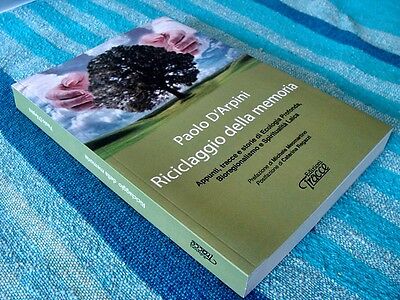
Recycling of Memory (Riciclaggio della Memoria - Tracce Editions) is a book of the Italian Bioregional Network, curated by Paolo D'Arpini, with the interventions of numerous bioregionalists doc. In narrative form, I too participated in this editorial adventure. However, I would like to give a definition of the topics dealt with: bioregionalism, deep ecology and secular spirituality.

In two words for me bioregionalism, profound ecology and secular spirituality, represent a way of feeling and facing life, which permeates us at various levels and levels and in all areas of our life: relationships with other living beings and the nature, social relationships, family relationships, the attitude at work, whatever it may be, with health and nutrition, with the civil environment, with the place that hosts us, but above all with ourselves; a path that first of all leads us to know our true nature, without conditionings. Only in this way will we be able to return, not to primitivism, but to a natural integration with the world of which we are a part.

The level of awareness of the human being is increasing, the consumerist and economicist models are showing their failure, people are increasingly tired of being teased and start to ask themselves many questions and sometimes look for messy and too easily solutions in reach out of hand but not always true.

Sometimes it is simply a matter of shifting attention from one illusion to another. The human being needs to overcome boredom and loneliness and find, moment by moment, in his life, a new play. In my opinion, instead, you have to learn to sail in the sea of ​​life, with joys and sorrows, to find the right balance and rediscover a love for ourselves, and a "wonder" like that of a child.

The reasons for reflection are many, the ideas inside and outside of us are wasted. Every moment can be experienced with a "spiritual" feeling and this can and must be transferred to our modus vivendi, whatever the situation we are going through.

The collection of writings in Recycling of Memory in my opinion has the merit of having focused a beacon on these aspects of living that a small seeker like me can illuminate a bumpy but exciting path and that once undertaken, even not knowing the goal (which perhaps it does not exist), it can no longer be arrested.

The book is available upon request to the Italian Bioregional Network: bioregionalismo.treia @ gmail, com - or to the editorial curator: Michele Meomartino Tel. 085 4683554 - cell. 393 2362091 - 339 6710189 - meomartinomichele@gmail.com 

Caterina Regazzi, ethologist of the Italian Bioregional Network


Testo Italiano

Riciclaggio della Memoria (Edizioni Tracce) è  un  libro della Rete Bioregionale Italiana, curato da Paolo D'Arpini, con gli interventi di numerosi bioregionalisti doc. In forma narrativa ho partecipato anch'io a questa avventura editoriale. Vorrei però dare una mia definizione dei temi trattati: bioregionalismo, ecologia profonda e spiritualità laica.

In due parole per me bioregionalismo, ecologia profonda e spiritualità laica, rappresentano un modo di sentire e di affrontare la vita, che ci permea a vari gradi e livelli ed in tutti i settori del nostro vivere: i rapporti con gli altri esseri viventi e la natura, i rapporti sociali, quelli familiari, l’atteggiamento sul lavoro, qualsiasi esso sia, con la salute e l’alimentazione, con l’ambiente civile, col luogo che ci ospita, ma prima di tutto con noi stessi; un percorso che prima di tutto, ci porta a conoscere la nostra vera natura, priva di condizionamenti. Solo così potremo tornare, non al primitivismo, ma ad un’integrazione naturale con il mondo di cui facciamo parte.

Il livello di consapevolezza dell’essere umano sta aumentando, i modelli consumistici ed economicistici stanno mostrando il loro fallimento, la gente è sempre più stanca di essere presa in giro e comincia a farsi molte domande e a cercare a volte disordinatamente e troppo facilmente soluzioni a portata di mano ma che non sempre sono vere.

Si tratta a volte semplicemente di spostare l’attenzione da un’illusione ad un’altra. L’essere umano ha bisogno di vincere la noia e la solitudine e ritrovare, momento per momento, nella sua vita, un nuovo giochino. Secondo me invece bisogna imparare navigare nel mare della vita, con gioie e dolori, per trovare un giusto equilibrio e riscoprire un amore per noi stessi, e uno "stupore" come quello di un bambino.

I motivi di riflessione sono tanti, gli spunti dentro e fuori di noi si sprecano. Ogni momento può essere vissuto con un sentire “spirituale” e questo si può e si deve trasferire nel nostro modus vivendi, qualsiasi sia la situazione che stiamo attraversando.

La raccolta di scritti in Riciclaggio della Memoria secondo me ha il merito di aver puntato un faro su questi aspetti del vivere che ad un piccolo cercatore come me può illuminare un percorso accidentato ma entusiasmante e che una volta intrapreso, anche non conoscendo il traguardo (che forse non esiste), non si può più arrestare.

Il libro è  disponibile facendone richiesta a Rete Bioregionale Italiana: bioregionalismo.treia@gmail,com - oppure al curatore editoriale: Michele Meomartino Tel. 085 4683554 - cell. 393 2362091 - 339 6710189 - meomartinomichele@gmail.com, 

Caterina Regazzi,  etologa  della Rete Bioregionale Italiana

giovedì 24 ottobre 2019

Nature, art and spirituality - Natura, arte e spiritualità


Risultati immagini per Natura, arte e spiritualità

Often what is represented in nature also finds its correspondence in the conscience of man, in fact the creative act, whether ascribed to a God or to Mother Nature, has often been compared to that of an artist who produces his work.

This happens because in the Logos of the manifested world a design or a purpose is recognized and it is exactly what happens with the artistic production. But an essential difference could be noted, in fact in the case of artistic work, such as painting, there are many distinct causes. The material: the canvases, the color, etc. The formal: the configuration, etc. The efficient: the artist, the brush, etc. And the final: honoring someone, earning a living, etc. But in the case of the manifestation of the world there are no distinct causes, the original being only one, whether it is defined natural Energy or God.

"He painted the picture of the existent in himself and on himself, with the brush of his will, and he was immediately delighted" affirms an ancient Indian writing referring to the Creator. But even in other philosophical and scientific texts painting is often used as an example to signify the progressive carrying capacity of life.

Following the concept of the three successive stages of the cosmic manifestation, we observe that at the beginning there is the "latency" or "causal energy" then the "subtle" or "thought form" takes over and finally the "gross" or "matter". These stages are compared with 1) lightening of the canvases and strengthening them with starch; 2) the sketch of the contours of the figures on the canvas; 3) filling of images with color.

The "consciousness" or creative will is the coefficient cause of the work, which is like the bleached canvas; the operative "capacity" is the subtle cause, represented by the features that are barely sketched but present in the author's imagination, as the fetus is present in the maternal uterus; and finally the final form which is like the manifested birth or appearance and can be compared to the finished painting.

However, we must remember that these creative functions, in the case of the "creation of the universe", all belong to the same Force or expressive capacity. The artist, the material, the work, the critic, the client ... etc. they all originate from the same primordial Energy (or God).

"The image of name and form, the observer, the screen on which he sees, and the light for which he sees ... all these are Himself" Ramana Maharshi stated.

Paolo D'Arpini

Risultati immagini per Natura, arte e spiritualità paolo d'arpini


Testo italiano

Spesso quel che è rappresentato nella natura trova anche una sua corrispondenza nella coscienza dell’uomo, infatti l’atto creativo, sia esso ascritto a un  Dio od a Madre Natura, è stato spesso paragonato a quello di un artista che produce la sua opera.

Ciò avviene poiché nel Logos del mondo manifesto si riconosce un disegno od uno scopo ed è esattamente quel che avviene con la produzione artistica. Ma potrebbe essere notata una differenza essenziale, infatti nel caso del lavoro artistico, come ad esempio la pittura, vi sono molte cause distinte. La materiale: le tele, il colore, etc.  La formale: la configurazione, etc. L’efficiente: l’artista, il pennello, etc. E la finale: l’onorare qualcuno, guadagnarsi da vivere, etc. Ma nel caso della manifestazione del mondo non vi sono cause distinte, essendo l’originale una sola, sia essa definita Energia naturale o Dio.

“Egli dipinse il quadro dell’esistente in se stesso  e su se stesso, con il pennello della sua volontà, e fu subito lieto” Afferma una antica scrittura indiana riferendosi al Creatore. Ma anche in altri testi filosofici e scientifici spesso la pittura è usata come esempio per significare la progressiva capacità realizzatrice della vita.


Seguendo il concetto dei tre stadi successivi della manifestazione cosmica, osserviamo che all’inizio vi è la “latenza” o “energia causale” poi subentra il “sottile” o “forma pensiero” ed infine il “grossolano” o “materia”. Questi stadi vengono comparati con 1) lo schiarimento delle tele ed il rafforzarle con l’amido; 2) lo schizzo dei contorni delle figure sulla tela; 3) riempitura delle immagini con il colore.

La “coscienza” o volontà creatrice è la causa coefficiente dell’opera, che è come la tela sbiancata;  la “capacità” operativa è la causa sottile, rappresentata dalle sembianze appena  schizzate ma presenti nella fantasia dell’autore, come è presente il feto nell’utero materno; ed infine la forma finale che è come la nascita o apparizione manifesta e si può paragonare alla pittura finita.

Dobbiamo però ricordare che queste funzioni creatrici, nel caso della “creazione dell’universo” appartengono tutte alla medesima Forza o capacità espressiva. L’artista, il materiale, l’opera, il  critico, il cliente.. etc. sono originati tutti dalla stessa Energia primordiale  (o Dio).

“L’immagine di nome e forma, l’osservatore, lo schermo sul quale egli vede, e la luce per la quale egli vede… tutti questi sono Egli stesso” Affermava Ramana Maharshi.


Paolo D'Arpini