domenica 15 luglio 2018

The mind is a mirror that reflects the light of consciousness... - La mente è uno specchio che riflette la luce della coscienza...


Risultati immagini per La mente è uno specchio che riflette la luce della coscienza

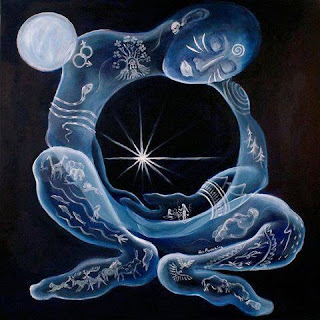
The mind is a mirror that reflects the light of consciousness to direct it to external objects, these objects are identified through the emission and intensity of the mirror. As a child I loved playing with a mirror stolen from my mother, with it I captured the sunlight and directed it, through a small window, into a dark cellar. Only what was illuminated by the light beam was visible while the rest of the walls and things piled on the floor remained obscure. Exactly the mind works, which illuminates the external world.

By analogy we see that the source of light, the sun, is like the supreme consciousness while the mirror is the mind. But the mind itself, in fact, is conscious, it is the reflective aspect of consciousness. I say "reflective" to indicate its propensity to turn to the outside. The mind is nothing but the capacity of consciousness to exteriorize itself.

This projective process can be observed during the dream, in which the mind from itself and in itself creates an entire world, with various entities in relationship among them including a character identified by the dreamer as himself. This is the game of the mind that makes the form of the self and of the other appear. At this point the doubt arises "how is it possible that awareness can be trapped and limited by the mind?". In truth, the limitation of consciousness is not real, in the same way that the light of the sun is not compromised or maimed by the mirror, likewise pure awareness is unconscious and not divided by the imaginary workings of the individual mind.

Where are they internal and external to the supreme consciousness that both penetrates and surpasses them? In reality, the only idea of such a separation is unthinkable in the source of light that it alone is. Take for example the dreamer who is not impaired or compromised by his dream, being himself every thing projected into the dream and at the same time not being any, the individual consciousness and pure awareness are placed in the same terms of relationship.

Once, in answer  to the question "what prevents the undifferentiated light of consciousness from revealing itself directly to the individual who ignores it", the sage Ramana Maharshi replied "how water in a pot reflects the sun in the narrow limits of the container, thus the latent tendencies (mental predispositions), which act as a reflective medium, capture the all-pervading and infinite light of consciousness, presenting itself in the form of the phenomenon called the mind ". This  sage's response makes us perceive how the mind is nothing more than an agglomeration of thoughts, in which the "I" thinking excels from which the false notion of a separate individual arises, which is in fact illusory as much as the alleged separation of a character dreamed about the dreamer.

Take care, however, consider that the attempt to understand intellectually this process is only one aspect of the "dream" and not the truth. In fact, the sages indicate the truth as ineffable and incomprehensible to the mind (meaning the separative and externalized mind), as much as the image reflected in the mirror can not understand or substitute for the person who is reflected in it. A reflection is only reflected is not substance.

And so how is it possible to reach the "substance" that we are?

The observer, being in himself consciousness, can never become an "object". Objectification is a component of outsourced dualism: "knower, known". But this duality can be recomposed into a "unicum" in which, by disappearing diversification (or the reflecting element addressed to exteriorization) the simple "knowledge" remains. This is the undifferentiated awareness to get which Ramana Maharshi advises: "When the ego (ego or mind) turns its attention to its source, the accumulated mental tendencies or predispositions are extinguished and in the absence of these (which are the reflecting medium ) also the phenomenon originating from "reflection", that is the mind, disappears and is absorbed in the Light of the only Reality (the Heart) ".

Yet despite being basically simple and direct self-knowledge remains a test alien to most. People refuse to know each other, prefer mystery and ignorance, evidently because of those famous mental tendencies accumulated by the mind, crammed into memory and imagination.

Paolo D'Arpini

Risultati immagini per allo specchio paolo d'arpini


Testo italiano:

La mente è uno specchio che riflette la luce della coscienza per dirigerla verso gli oggetti esterni, questi oggetti vengono identificati tramite la capacità di emissione ed intensità dello specchio. Da bambino adoravo giocare con uno specchietto rubato a mia madre, con esso catturavo la luce solare e la dirigevo, attraverso una finestrella, dentro una cantina buia. Solo ciò che era illuminato dal fascio luminoso era visibile mentre il resto delle pareti e delle cose accatastate sul pavimento restava oscuro. Esattamente allo stesso modo funziona la mente, che illumina il mondo esterno.
*
Per analogia vediamo che la sorgente di luce, il sole, è come la consapevolezza suprema mentre lo specchietto è la mente. Ma la mente stessa, in effetti, è cosciente, essa è l’aspetto riflettente della coscienza. Dico “riflettente” per indicare la sua propensione a rivolgersi verso l’esterno. La mente non è altro che la capacità della coscienza di esteriorizzare se stessa.
*
Questo processo proiettivo lo possiamo osservare durante il sogno, in cui la mente da se stessa ed in se stessa crea un intero mondo, con varie entità in rapporto fra loro incluso un personaggio identificato dal sognatore come se stesso. Questo è il gioco della mente che fa apparire la forma dell’io e dell’altro. A questo punto il dubbio sorge “com’è possibile che la consapevolezza possa venire intrappolata e limitata dalla mente?”. In verità la limitazione della coscienza non è reale, allo stesso modo in cui la luce del sole non risulta compromessa o menomata dallo specchio, parimenti la pura consapevolezza è intonsa e non divisa dall’operato immaginario della mente individuale.
*
Dove sono interno ed esterno per la coscienza suprema che entrambi li compenetra e li supera? In realtà la sola idea di una tale separazione è impensabile nella sorgente di luce che unicamente è. Prendiamo ad esempio il sognatore che non viene menomato o compromesso dal suo sogno, essendo lui stesso ogni cosa proiettata nel sogno ed allo stesso tempo non essendone alcuna, parimenti la coscienza individuale e la pura consapevolezza si pongono negli stessi termini di relazione.
*
Una volta, in risposata alla domanda “cosa impedisce all’indifferenziata luce della coscienza di rivelarsi direttamente all’individuo che l’ignora”, il saggio Ramana Maharshi rispose “come l’acqua in una pentola riflette il sole nei limiti ristretti del contenitore, così le tendenze latenti (predisposizioni mentali), che agiscono da mezzo riflettente, catturano l’onnipervadente ed infinita luce della coscienza presentandosi nella forma del fenomeno chiamato mente”. Questa risposta del saggio ci fa percepire come la mente non sia altro che un agglomerato di pensieri, in cui primeggia il pensiero “io” dal quale sorge la falsa nozione di un individuo separato, che in realtà è illusorio tanto quanto la presunta separazione di un personaggio sognato rispetto al sognatore.
*
Attenzione, consideriamo però che il tentativo di comprendere intellettualmente questo processo è solo uno degli aspetti del “sogno” e non la verità. Infatti i saggi indicano la verità come ineffabile ed incomprensibile alla mente (intendendo la mente separativa ed esteriorizzata), tanto quanto l’immagine riflessa nello specchio non può capire o sostituirsi alla persona che vi si riflette. Un riflesso è solo riflesso non è sostanza.
*
E dunque com’è possibile giungere alla “sostanza” che noi siamo?
*
Colui che osserva, essendo in se stesso coscienza, non può mai divenire un “oggetto”. L’oggettivazione è una componente del dualismo esternalizzato: “conoscitore, conosciuto”. Ma questa dualità può essere ricomposta in un “unicum” in cui, scomparendo la diversificazione (ovvero l’elemento riflettente rivolto all’esteriorizzazione) permane la semplice “conoscenza”. Questa è la consapevolezza indifferenziata per ottenere la quale Ramana Maharshi consiglia: “Quando l’io (ego o mente) rivolge la propria attenzione alla sua sorgente, le tendenze o predisposizioni mentali accumulate si estinguono ed in assenza di queste (che sono il mezzo riflettente) anche il fenomeno originato dalla “riflessione”, ossia la mente, scompare e viene assorbito nella Luce della sola Realtà (il Cuore)”.
*
Eppure malgrado sia in fondo semplice e diretta l’auto-conoscenza resta un esame alieno ai più. La gente rifiuta di conoscersi, preferisce il mistero e l’ignoranza, evidentemente a causa di quelle famose tendenze mentali accumulate dalla mente, stipate nella memoria e nell’immaginazione.
*

Paolo D’Arpini 

giovedì 12 luglio 2018

The will and the criterion of choice - La volontà ed il criterio della scelta


Risultati immagini per La volontà ed il criterio della scelta

There is a substantial difference in our inner attitude, if we believe that we have chosen the fulfillment of a certain action (o course of actions) or if we simply feel like being facing contingencies (if we respond to the stimulus of the events in progress). In the first case we feel responsible and we have defined expectations towards the results of our actions, in the second we know that our energy moves in harmony with the conditions in which we find ourselves and we do not calculate how to fulfill a precise end. It is clear that in the first case we may experience a sense of constraint, disappointment or hope, while in the second our behavior it looks like a child's play. We know well that the detachment and the inner peace are an important factor for success, so be it that at the time of passing an exam we do everything to feel relax, even if - in truth - the effort itself does not produces the desired effect... Yet, in the world we talk about "Success" in quite other terms and we always try to put the accent on our "personal effort". But let us return to the first case, in which we define ours act a "free choice", acting as bulldozers and following rules precise self-imposed or suffered, stating "this is ours decision" and following it with blind faith. Maybe we are not aware that in the second case we could easily float -or swim- following the current and that our will correspond spontaneously to our innate disposition. Let's see now that the results obtained in the first case are for us the result of concern and discouragement whereas in the second case, sailing on sight, every result is a discovery, every landing a enrichment. But-weirdness of the case- we hear affirmation in the world "...that's a self-made, one-piece, successful man fighting with the nails and with the teeth..." and on the other hand "...that person is a simpleton who lives in blissful innocence, without interests and does not know not even what is good and what is bad...". And at this point I would like to ask you, were not driven out Adam and Eve from the earthly paradise just for having tasted the fruit of goodness and evil? And yet of all the Genesis this, which seems to me the most significant passage, it is often described as a fairy tale... in reality it is an allegory of the exit from the harmony of unity primigenia and the entry into the hell of dualism and separation. Fortunately we do not have to wait long (nor many ... nor even one life, just a moment) to understand the trick of illusion, of the dual ego projection, since unity in consciousness is never decreased, it is right here and now ... and not then or tomorrow... Heaven and hell are only paradigms of the mind, in becoming. Eric Fromm wondered: "to be or to have?" Paolo D'Arpini


Testo italiano: 

C’è una sostanziale differenza, nell’atteggiamento interiore, se noi
crediamo di aver scelto il compimento di una determinata azione (o
corso di azioni) oppure se noi semplicemente sentiamo di star
affrontando delle contingenze (se rispondiamo cioè allo stimolo degli
eventi in corso). Nel primo caso ci sentiamo responsabili ed abbiamo
precise aspettative verso i risultati del nostro agire, nel secondo
sappiamo che la nostra energia si muove in sintonia con le condizioni
in cui ci troviamo e non calcoliamo di dover adempiere ad un preciso
fine.

E’ evidente che nel primo caso sperimentiamo un senso di costrizione,
delusione o speranza, mentre nel secondo il nostro comportamento molto
somiglia ad un gioco infantile. Sappiamo bene che il distacco e la
quiete interiore sono un fattore importante per la riuscita, tant’è
che al momento di superare un esame facciamo di tutto per sentirci
rilassati, anche se –in verità- lo sforzo stesso di rilassarci non
produce l’effetto desiderato…..Eppure, nel mondo parliamo di
“riuscita” in ben altri termini e cerchiamo sempre di porre l’accento
sul nostro “sforzo personale”.

Ma torniamo a considerare il primo caso, in cui definiamo il nostro
agire una “libera scelta”, agendo come bulldozers e seguendo regole
precise auto-imposte o subite, affermando “questa è la nostra
decisione” e seguendola con fede cieca. Magari non siamo consapevoli
che nel secondo caso potremmo facilmente galleggiare -o nuotare-
seguendo la corrente e che la nostra volontà corrisponderebbe
spontaneamente alla nostra disposizione innata.

Vediamo ora che i risultati ottenuti nel primo caso sono per noi
frutto di preoccupazione e sconforto mentre nel secondo caso,
navigando a vista, ogni risultato è una scoperta, ogni approdo un
arricchimento. Ma –stranezza del caso- sentiamo affermare nel mondo
“…quello è un uomo tutto d’un pezzo e di successo che si è fatto da sé
lottando con le unghie e coi denti…” e per contro “…quella persona è
un sempliciotto che vive in beata innocenza, senza interessi e non sa
nemmeno cosa è bene e cosa è male…”.

Ed a questo punto vorrei chiedervi, non furono cacciati Adamo ed Eva
dal paradiso terrestre proprio per aver assaggiato il frutto del bene
e del male? Eppure di tutta la Genesi questo, che mi sembra il
passaggio più significativo, viene spesso descritto come una favola…
in realtà è un’allegoria dell’uscita dall’armonia dell’unità
primigenia e l’entrata nell’inferno  del dualismo e della separazione.

Per fortuna non dobbiamo aspettare molto (né tante .. e neppure una
vita, basta un momento) per capire il trucco dell’illusione, della
proiezione egoica duale, giacché l’unità nella coscienza non è mai
venuta meno, è proprio qui ed ora… e non allora o domani… Paradiso ed
inferno son solo paradigmi della mente, nel divenire.

Si chiedeva Eric Fromm: “essere o avere?”

Paolo D’Arpini

lunedì 9 luglio 2018

I remain as I am... - Io rimango come sono...


Risultati immagini per Siddharameshwar Maharaj

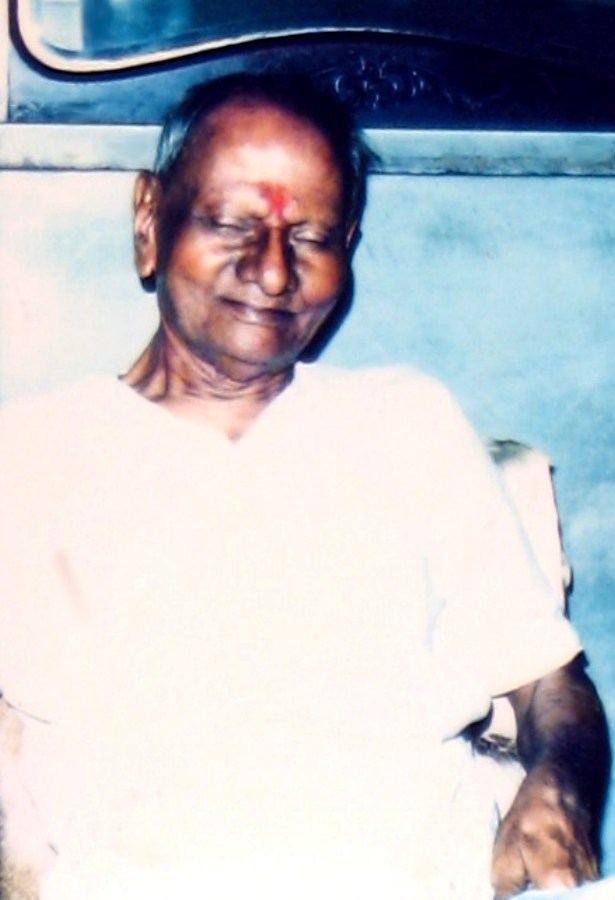
"I let my human nature develop, in the way that its destiny wants it, I remain as I am." And this was the sensation lived in front of Nisargadatta Maharaj, a man was observed that did not differ from behavior anyone else, in expressing what it was, without hesitation or adjustment. And then what is there to fix? What can obscure the self-awareness once you get that experience? What is the purpose of that experience? Simply to remind us who we really are: Pure Awareness And once we have that experience, that satori, we should let "human nature develop, in the way that its destiny wants it".

On the other hand if it is destiny to want it as we could oppose it? We can only bother and reject what we are experiencing, but in refusing there is suffering. In acceptance there is peace. Some say they can not simply "observe" the events that flow before their eyes but it is not correct because they are able to describe what they have observed, even if the observation is stained with "prejudice".

In the end things happen, despite everything and beyond our will. Sai Baba of Shirdi said that the only freedom we have is to accept what we are given to live ortry to reject it, it is from this different attitude that the propensity to live a new "karma" arises.

And finally what to choose? There is no scale of values, everything is manifested simultaneously and in the same condition, what we like and what we do not like, what we are in the flesh and what we are in the spirit. Because, as the Buddhists say "the buddha is present in the ten worlds of manifestation, from the underworld to the buddha".Is there a superior ego to be conquered, a lower self to lose? ... There is nothing in truth that "loses", not even the identified ego which is still an aspect of Reality. Therefore, as the vate said: "love your dream even  if it torments you!"

Paolo D'Arpini 

Risultati immagini per Siddharameshwar Maharaj

P.S. Nisargadatta reports that Siddharameshwar Maharaj, his teacher, told him: "You are the absolute, believe my words and act accordingly", I stood at his words with faith and perseverance and finally realized their truth"


Testo Italiano:

"Ho lasciato che la mia natura umana si sviluppi, nel modo in cui il suo destino lo vuole, io rimango come sono.”. E questa era la sensazione vissuta di fronte a  Nisargadatta Maharaj, si osservava un uomo che dal comportamento non differiva assolutamente da chiunque altro, nell'esprimere ciò che era, senza remore o aggiustamenti. D'altronde cosa c'è da aggiustare? Cosa può oscurare la consapevolezza di Sé una volta ottenuta quell'esperienza? A cosa serve quell'esperienza?  Semplicemente a ricordarci chi siamo veramente:  pura consapevolezza. Ed una volta avuta quell'esperienza, quel satori, dovremmo lasciare che "la natura umana si sviluppi, nel modo in cui il suo destino lo vuole". 

D'altronde se è il destino a volerlo come potremmo opporci? Possiamo solo arrovellarci e rifiutare ciò che stiamo vivendo. Nel rifiuto c'è sofferenza. Nell'accettazione c'è pace. Alcuni dicono di non poter "osservare" con distacco gli eventi che scorrono davanti ai loro occhi ma non è corretto poiché  essi sono in grado di descrivere ciò che hanno osservato, anche se l'osservazione è macchiata di "pregiudizio". 

Infine le cose succedono, malgrado tutto e aldilà della nostra volontà. Diceva Sai Baba di Shirdi che l'unica libertà che abbiamo è accettare ciò che ci è dato vivere o tentare di rifiutarlo,  è da questo diverso  atteggiamento che sorge la propensione a vivere un nuovo "karma".

Ed infine cosa scegliere? Non esiste una scala di valori, tutto si manifesta contemporaneamente e nella stessa condizione, quel che ci piace e quel che non ci piace, quel che siamo nella carne e quel che siamo nello spirito. Perché, come dicono i buddhisti  "il buddha è presente nei dieci mondi della manifestazione, dagli inferi alla buddhità". 

C'è un Io superiore da conquistare, un io inferiore da perdere?... Non c’è nulla in verità che si “perde”, nemmeno l’io individuato che è pur sempre un aspetto della Realtà. Pertanto, come disse il vate: "ama il tuo sogno se pur ti tormenta!"

Paolo D'Arpini


 P.S. Nisargadatta riferisce che Siddarameshwar Maharaj,  il suo maestro, gli disse: "Tu sei l'assoluto, credi alle mie parole ed agisci di conseguenza", io stetti alle sue parole con fede e perseveranza e infine realizzai la loro verità"

mercoledì 4 luglio 2018

Coming back home - La via del ritorno


Risultati immagini per la via del ritorno

The "recognition" of our true nature takes place as in the passage from dream to waking, it is natural and intrinsic in each of us. When we dream we are immersed in the dream and that is the only reality for us ... 

When the moment of awakening comes, there are signs that make us perceive the imminent change of state. In other words, we have a sense of the imminent exit from the illusion of the dream. Of course this is a simple analogy because in the dream and in the wake, which are mental conditions, there is no true illumination and realization. That "awakening" of which I speak is the intimate, indivisible essence, unapproachable by the mind, but its reality is in the inner intuition (insight) and perceivable (experiential) in the state of pure awareness.

In the process of return that impels every single being towards that pure awareness various miracles and mysterious changes occur. Adaptation to new states of consciousness always involves the whole mass body of the species, but in our human dimension we are accustomed to locomotive functioning, that is two steps forward and one behind, also called growth by trial and error. 

For this reason it seems that evolution is lacking in linearity and continuity. In our civilization we lived several moments that seemed heavenly, but lacked a holistic understanding. A bit like what happens in the animal world in which spontaneity reigns supreme but consciousness is lacking in self-awareness and in reason.In short, we must be able to integrate intuition and reason in our functioning and this fact we can proceed to forget the experimental process in order to fully experience the experience in itself. 

Observer and observed can not be separated.In order to obtain this result, the religions advise the way "to love your neighbor as yourself" while the Gnostic philosophies direct towards self-knowledge. We do not separate these two ways, keeping them tight like two oars of our boat that help us to get out of the quagmire of "dualism".  After all, how can we consider that something is outside of ourselves?

Paolo D'Arpini


Testo Italiano


Il  "riconoscimento" della nostra vera natura avviene come nel passaggio dal sogno alla veglia, è naturale ed  intrinseco in ognuno di noi. Quando sogniamo siamo immersi nel sogno e quella è per noi la sola realtà… Quando giunge il momento del risveglio ci sono delle avvisaglie che ci fanno percepire l’imminente cambiamento di stato. Come dire, abbiamo sentore dell’imminente uscita dall’illusione del sogno. Certo questa è semplice analogia poiché nel sogno e nella veglia, che sono condizioni mentali, non vi è vera illuminazione e realizzazione. Quel “risveglio” di cui parlo è l’intima essenza indivisibile, inavvicinabile dalla mente, ma la sua realtà è intuibile e sperimentabile nello stato di pura consapevolezza.

Nel processo di ritorno che sospinge ogni singolo essere verso quella pura consapevolezza avvengono vari miracoli e misteriosi cambiamenti. L’adattamento ai nuovi stati di coscienza coinvolge sempre e comunque tutto il corpo massa della specie, ma nella nostra dimensione umana noi siamo abituati al funzionamento a locomotiva, ovvero due passi avanti ed uno indietro, anche definito crescita per tentativi ed errori. Per questa ragione sembra che l’evoluzione manchi di linearità e continuità. Nella nostra civiltà abbiamo vissuto vari momenti che sembravano paradisiaci, che mancavano però di una comprensione olistica. Un po’ come avviene nel mondo animale in cui la spontaneità  regna sovrana ma la coscienza è carente nella auto-consapevolezza e nella ragione.

Insomma dobbiamo poter integrare l’intuizione e la ragione  nel nostro funzionamento e ciò fatto possiamo procedere a dimenticare il processo sperimentale per poter vivere integralmente l’esperienza in se stessa. Osservatore ed osservato non possono essere separati.

Per ottenere questo risultato le religioni consigliano la via “dell’amare il prossimo tuo come te stesso” mentre le filosofie gnostiche indirizzano verso l’auto-conoscenza.

Non scindiamo queste due vie, teniamole strette come due remi della nostra barca che ci aiutano ad uscir fuori dal pantano del “dualismo”.
  
In fondo, come possiamo considerare che qualcosa sia al di fuori di noi stessi? 

Paolo D'Arpini

domenica 17 giugno 2018

Lay spirituality and life in the world - Spiritualità laica e vita nel mondo


I  feel that for us, lay spiritualists, life "in the world" is most congenial, also because our research never goes beyond the self ... and the self is present everywhere and at all times ...

The individual  "I" (ego) rises from the reflection of consciousness in the mirror of the mind. An identifying overlay with the observed object. The object is the body-mind that reacts in relation (to contact) with the other external objects.

The moment that, in self-knowledge, the fictitious identity with the agent disappears what remains is the pure awareness of the Self. It is therefore not necessary, for the purpose of realization, that the images - the world and the observer - disappear, it is sufficient that the false identity with the reflected object / subject (ego) disappears. This means that the world can safely continue to manifest itself not being perceived as a separate reality, more or less as a dream could be compared to the dreamer. At this point the Self and its manifestation are seen as the exact same thing while the sense of the separative ego (of the me and the other) is obliterated. After all, dualism is only ignorance of oneself.

The sage observes the actions taking place without there being any propensity or intention or judgment in him. 

Spontaneously everything happens appropriately and consequently to the designated "destiny". Destiny is the answer to the natural interaction (and predisposition) of the various elements involved ... Since everything happens automatically there is no "preference" in the action of the sage. On the contrary, his own action is (apparently) intentional only in the eyes of the "others", since for the sage everything happens by itself. 

Every event experienced simply happens in his presence and he is the silent and detached witness. His action (or state) can be compared to sleepwalking, or awake sleep.

Moreover, the concept of "destiny" and of action also makes sense only in the mind of the observer still identified with the outside, that is, of an ego that identifies itself with the agent and with his actions. But the moment - as already mentioned - that this identification is destroyed every other connected concept disappears.Wisdom consists in remaining immune from illusion after understanding the truth. The fear of action and its consequences (karma) remains only in those who see the slightest difference between themselves and others. 

As long as the idea exists that the body / mind is the self, one can not be an expression of truth. But certainly it is possible for anyone, and in every condition, to know their true nature because it is absolutely true and real, it is the only one for everyone. In fact, the state of pure Being is common to all and is the direct experience of each one. To live one's true nature is meant by self-realization, since the self is present here and now.

The thought of feeling separate is the only obstacle to the realization of the all-pervading and omnipresent Being. And yet from the empirical point of view, identifying with the agent (ego) is an impediment to the proper functioning of the psychosomatic apparatus, in the context of global functioning. Thus the intellectual acceptance of truth is already a liberating form of intentional (rational) propensity to act. What is destined to happen will happen.

It is in the experience of everyone that getting involved in the question is a handicap to find the answer.

Paolo D'Arpini


Testo italiano

Ritengo che per noi spiritualisti laici la vita “nel mondo” sia più congeniale, anche perché la nostra ricerca non esula mai dal sé.. ed il sé è presente ovunque ed in ogni tempo…
*
L’io individuale (ego) sorge dal riflesso della coscienza nello specchio della mente. Una sovrimposizione identificativa con l’oggetto osservato. L’oggetto è il corpo-mente che reagisce in relazione (al contatto) con gli altri oggetti esterni.
*
Il momento che, nell’autoconoscenza, l’identità fittizia con l’agente scompare quel che resta è la pura consapevolezza del Sé. Non è perciò necessario, al fine della realizzazione, che le immagini -il mondo e l’osservatore- scompaiano, è sufficiente che la falsa identità con l’oggetto/soggetto riflesso (ego) scompaia. Ciò significa che il mondo può tranquillamente continuare a manifestarsi non essendo percepito come realtà separata, più o meno come potrebbe esserlo un sogno rispetto al sognatore. A questo punto il Sé e la sua manifestazione sono visti come la stessa identica cosa mentre il senso dell’io separativo (del me e dell’altro) viene obliterato. In fondo il dualismo è soltanto ignoranza di sé.
*
Il saggio osserva le azioni svolgersi senza che vi sia alcuna propensione o intenzione o giudizio in lui. Spontaneamente ogni cosa avviene confacentemente e conseguentemente al “destino” designato. Il destino è la risposta alla naturale interazione (e predisposizione) dei vari elementi coinvolti… Siccome tutto succede automaticamente non vi è alcuna “preferenza” nell’agire del saggio. Anzi il suo stesso agire è (apparentemente) intenzionale solo agli occhi degli “altri”, giacché per il saggio ogni cosa accade di per sé. Ogni evento vissuto accade semplicemente in sua presenza e lui ne è il testimone silenzioso e distaccato. Il suo agire (o stato) può essere paragonato al sonnambulismo, od al sonno da sveglio.
*
Ed inoltre anche il concetto di “destino” e di azione ha un senso unicamente nella mente dell’osservatore ancora identificato con l’esterno, ovvero di un ego che si identifica con l’agente e con le sue azioni. Ma il momento -come già detto- che tale identificazione è distrutta ogni altro concetto collegato scompare.
La saggezza consiste nel rimanere immune dalla illusione dopo aver compresa la verità. La paura dell’agire e delle sue conseguenze (karma) permane solo in chi vede la pur minima differenza fra sé e l’altro. Finché esiste l’idea che il corpo/mente è l’io non si può essere espressione di verità.
*
Ma certamente è possibile per chiunque, ed in ogni condizione, conoscere la propria vera natura poiché essa è assolutamente vera e reale, è l’unicum per ognuno. Infatti lo stato di puro Essere è comune a tutti ed è la diretta esperienza di ciascuno. Vivere la propria vera natura questo si intende per auto-realizzazione, poiché il sé è presente qui ed ora.
*
Il pensiero di sentirsi separati è il solo ostacolo alla realizzazione dell’Essere onnipervadente ed onnipresente. E pure dal punto di vista empirico identificarsi con l’agente (ego) è un impedimento al buon funzionamento dell’apparato psicosomatico, nel contesto del funzionamento globale . Per cui già l’accettazione intellettuale della verità è una forma liberatoria dalla propensione intenzionale (razionale) ad agire. Ciò che è destinato ad accadere accadrà.
*
E’ nell’esperienza di ognuno che arrovellarsi nella domanda è un handicap a trovare la risposta.

Paolo D’Arpini

domenica 10 giugno 2018

Vedanta's antiquity and the "three bodies" theory - Antichità del Vedanta e la teoria dei "tre corpi"


Risultati immagini per Vedanta, literally "after the Vedas"

Vedanta, literally "after the Vedas", is the school of thought of the non-dual Absolute "Brahman" described in the Upanishads, the Vedantic philosophical texts (after the Vedas). On the dating of the Vedas and Vedanta the opinions of scholars, both historians and religious, diverge somewhat. The difference in views is above all between Western and Indian researchers.

According to Europeans, prone to the western thread of a cradle of Middle-Eastern and Mediterranean civilization, the Vedas are placed around the first millennium BC. and the Upanishads to the period just before the birth of the historical Buddha (sixth century BC). Obviously according to the Indian historians the dates are of much earlier time.

Recent tests carried out by satellite confirm the existence of the parallel river Sarashwati of the Indus, which dried up around the 5th millennium BC. thus corroborating the descriptions made in the Mahabarata (an upanishadic text) which are therefore placed before that date. The Mahabarata also describes the sinking in the sea of the city of Dwarka and vestiges of this city have indeed been found submerged near the shores of the Indian Ocean.

Also the discovery of Moenjo Daro and Harappa, in the actual Pakistan, and their dating set around the X millennium BC. they assume that the Indus and Saraswati civilizations are the oldest on the face of the earth. Religious symbols and altars attributable to the Vedic system have been found in the excavations of those cities, from this it follows that the Vedas, transmitted orally, are contemporary and previous to any other tradition.This means that it was not the "Aryan" Europeans who invaded India but the exact opposite, that is, the "Aryans" of Indus and Saraswati who spread their civilization first in Persia and then in Europe, whose languages are of Indo-European origin.

This was also confirmed by the glottologic analysis of the origin of the idioms spoken on the planet, the branch being indo -ovely the Prakrit and the Sanskrit- among the oldest among those deriving from the "Nostratic" the first universal language, common to all Sapiens sapiens.

But I have to interrupt this psycho-historical explanation and bring attention to the psycho-somatic description of the "masks" that cover the Self (evoked in the title of this article).

According to Vedanta there are five "sheaths" (in Sanskrit "kosha") that hide the Self from the self (the absolute ego to the relative ego). They are "annamaya", "pranamaya", "manomaya", "vijnanamaya" and "anadamaya".

Annamaya is the sheath composed of food, the physical body. Its constituents are the five elements in the gross state, in varying degrees of mixture. The things of the experimented objective world are made of the same material.

Pranamaya is the sheath of vital energy (in the Bible "vital breath") it is the one that denotes vital quality, its expression is the breath, in Sanskrit "prana" and its five functions or "ways": "vyana" that that goes in all directions, "hears" that which rises upward, "samana" that equates what is eaten and drunk, "apana" that which descends downward, "prana" that which goes forward (collectively they are defined by the term "prana"). The five organs of action also belong to the sheath of "prana": the word, the taking, the proceeding, the excretion and the reproduction.


Manomaya is the sheath of consciousness, or individual mind, its functions are to ask and to doubt. Its channels are the five organs of knowledge: hearing, sight, touch, taste and smell.

Vijnanamaya is the sheath of self-consciousness, or intellect, that is, the agent and the user of the result of actions. This mask, or envelope, is considered the empirical soul that migrates from one physical body to another (in the metempsychosis theory).

Anadamaya is the sheath of joy, not the original bliss that is of Brahman, it is the pseudo bliss (experienced in deep sleep) of the so-called "causal body", the first cause of transmigration, Another name is "avidya" or nescience or ignorance of the Self.

According to the scholar T.M.P. Mahadevam is possible to rearrange these five masks in three "bodies":
"annamaya", the gross physical body;
"suksma-sarira" the subtle body, the set of three sheaths of prana mind and intellect ("pranamaya," manomaya "and vijnanamaya");
"karana-sarira", the causal body of the "anandamaya" sheath.It is through these three bodies that we experience the so-called "external" world in the three states of waking, sleep and deep sleep.

The empirical experience manifests itself through the five sheaths, projected or reflected in the concept of "space" and "time", without them the relative consciousness of a "world" could not exist. 


As the great sage and master of advaita-vedanta, Ramana Maharshi, used to say:   "The individual is made up of five sheaths, so all five are involved in the term" body. "Is there a world separate from the" body "? Do you have people who have no experience of the world?"

Paolo D'Arpini


Antichità del  Vedanta e la teoria dei "tre corpi"


Il Vedanta, letteralmente "dopo i Veda" è la scuola di pensiero dell'Assoluto non duale "Brahman" descritto nelle Upanishad, i testi filosofici vedantici (posteriori ai Veda). Sulla datazione dei Veda e del Vedanta le opinioni degli studiosi, storici e religiosi, divergono alquanto. La differenza di vedute è soprattutto fra ricercatori occidentali e quelli indiani. Secondo gli europei, proni al credo filo occidentale di una culla di civiltà medio-orientale e mediterranea, i Veda sono posti attorno al primo millennio a.C. e le Upanishad al periodo appena antecedente la nascita del Buddha storico (VI secolo a.C.). Ovviamente secondo gli storici indiani le date si allontanano moltissimo.

Recenti esami compiuti a mezzo satellite, confermano l'esistenza del fiume Sarashwati parallelo dell'Indo prosciugatosi attorno al V millennio a.C. avvalorando quindi le descrizioni fatte nel Mahabarata (un testo upanishadico) che vengono perciò poste in antecedenza a quella data. Il Mahabarata descrive anche l'affondamento nel mare della città di Dwarka e vestigia di questa città sono state effettivamente ritrovate sommerse vicino alle coste dell'oceano indiano. Inoltre il ritrovamento di Moenjo Daro e Harappa, nell'attuale Pachistan, e la loro datazione fissata attorno al X millennio a.C. fanno presumere che la civilizzazione dell'Indo e del Saraswati sia la più antica sulla faccia della terra. Simboli religiosi ed altari riconducibili al sistema vedico sono stati ritrovati negli scavi di quelle città, da questo se ne deduce che i Veda, trasmessi oralmente, sono contemporanei e precedenti a qualsiasi altra tradizione.

Ciò significa che non furono gli europei "ariani" a invadere l'India bensì l'esatto contrario, cioè furono gli "ariani" dell'Indo e del Saraswati ad diffondere la loro civiltà prima in Persia e poi in Europa, le cui lingue son dette di origine indo-europea. Ciò è stato confermato anche dall'analisi glottologica sull'origine degli idiomi parlati sul pianeta, essendo il ramo indo -ovvero il Prakrito ed il Sanscrito- fra i più antichi fra quelli derivanti dal "nostratico" la prima lingua universale, comune a tutti i Sapiens sapiens.

Però debbo interrompere questa spiegazione psico-storica e riportare l'attenzione alla descrizione psico-somatica delle "maschere" che ricoprono il Sé (evocata nel titolo di questo articolo).

Secondo il Vedanta sono cinque le "guaine" (in sanscrito "kosha") che nascondono il Sé al sé (l'Io assoluto all'io relativo). Esse sono "annamaya", "pranamaya", "manomaya", "vijnanamaya" e "anadamaya".

Annamaya è la guaina composta dal cibo, il corpo fisico. I suoi costituenti sono i cinque elementi nello stato grossolano, in vari gradienti di mistura. Dello stesso materiale sono fatte le cose del mondo oggettivo sperimentato.

Pranamaya è la guaina dell'energia vitale (nella Bibbia "soffio vitale") è quella che denota la qualità vitale, la sua espressione è il respiro, in sanscrito "prana" e le sue cinque funzioni o "modi": "vyana" quello che va in tutte le direzioni, "udana" quello che sale verso l'alto, "samana" quello che equipara ciò che è mangiato e bevuto, "apana" quello che scende verso il basso, "prana" quello che va in avanti (collettivamente vengono definiti con il termine "prana"). Alla guaina del "prana" appartengono anche i cinque organi di azione, ovvero: la parola, la presa, il procedere, l'escrezione e la riproduzione.

Manomaya è la guaina della coscienza, o mente individuale, le sue funzioni sono chiedere e dubitare. I suoi canali sono i cinque organi di conoscenza: udito, vista, tatto, gusto ed olfatto.

Vijnanamaya è la guaina dell'auto-coscienza, o intelletto, cioè l'agente ed il fruitore del risultato delle azioni. Questa maschera, od involucro, è considerata l'anima empirica che migra da un corpo fisico ad un altro (nella teoria della metempsicosi).

Anadamaya è la guaina della gioia, non la beatitudine originaria che è del Brahman, essa è la pseudo beatitudine (sperimentata nel sonno profondo) del cosiddetto "corpo causale", la causa prima della trasmigrazione, Un altro suo nome è "avidya" ovvero nescienza od ignoranza del Sé.

Secondo lo studioso T.M.P. Mahadevam è possibile riordinare queste cinque maschere in tre "corpi":
"annamaya", il corpo fisico grossolano; "suksma-sarira" il corpo sottile, l'insieme delle tre guaine di prana mente ed intelletto ("pranamaya, "manomaya" e vijnanamaya");
"karana-sarira", il corpo causale della guaina "anandamaya".

E' per mezzo di questi tre corpi che noi sperimentiamo il mondo cosiddetto "esterno" nei tre stati di veglia, sonno e sonno profondo.

L'esperienza empirica si manifesta attraverso le cinque guaine, proiettate o riflesse nel concetto di "spazio" e "tempo", senza di esse la coscienza relativa di un "mondo" non potrebbe sussistere. Come diceva il grande saggio e maestro dell'advaita-vedanta, Ramana Maharshi: "L'individuo è formato da cinque guaine, perciò tutte e cinque sono implicate nel termine "corpo". Vi è un mondo separato dal "corpo"? Dì ci sono persone che senza "corpo" hanno l'esperienza del mondo?"

Paolo D'Arpini

sabato 2 giugno 2018

Bioregionalism: "Here we are here and now ...." - Bioregionalismo: "Eccoci qui ed ora…."


Risultati immagini per Bioregionalism: Here we are here and now .... see

It is thought that a bioregionalist, or an  inhabitant of the Earth, is someone well-intentioned who retires to live in a solitary valley, and then tell stories, dreams of bucolic life full of images.

The ability to emit thought forms making them visible in the mind of others is a shamanic action. This is also the ability of the poet, the artist or anyone that "renounce" the logical analytical description drawing directly from the unconscious.

And it is perfectly true that it is necessary to return to the observation of nature, recovering a direct contact with all that lives. Yet the natural spirit, the "Genius Loci", can not be described but only experienced, the evocations are symbols from which "appears" that the place is not different from the self through which it is experienced ... but perhaps this is only  my feeling.

However, I believe that bioregional spirituality resides in remaining in that "natural" state in which every difference between the seer and the vise disappears. And at this point what sense does it keep trying to describe the indefinable (due to the limitation of the mind)? What "is" is pure and simple consciousness, neither person nor place, nor one nor two ... nor even zero!Let's leave then the oneiric metaphysics and we really talk about the "place" - of the bioregion - in which we find ourselves."Our" land is today polluted and debased in various ways, with the electromagnetic waves that cross the fields, with poisoned landfills, with the smelly stacks of power plants, heavy industries and waste incinerators. To which are added the pesticides used in monocultures, the expropriations of gardens and countryside to build useless warehouses and houses on houses. 

Then there are the sewage drains not or poorly cleaned of several municipalities, uncontrolled artesian wells and the continuous pumping of deep waters operated by various bodies and by concessionaires of mineral waters, which contribute to depleting groundwater and allow the pollution to fall more and more down, more and more down!

If we want the fascination of life in this Land to make sense and it is possible for future generations, the time has now come to make decisions that are impractical, linked to our diet and our habits, to the type of consumer goods used, to our approach. general towards the planet and society of all living beings.Recognition of the value of our habitat, as a source of life, is simply necessary because we are not separate from it, we are not aliens on this earth that so brutally and stupidly destroy, all that is done wrong to it we do ourselves.And it is not enough to say that "we must reduce consumption and limit energy subjection from non-renewable sources". 

Ecological economy is not just about rumors or philosophical speculations. Economics means "giving a name to the environment" and what has a name also has its own reality, its raison d'etre, and it is alive. 

Poetry, magic, hospitality, ethics?  Let us call things by their name...

Paolo D'Arpini
Italian Bioregional Network - bioregionalismo.treia@gmail.com

Risultati immagini per Bioregionalism: paolo d'arpini


Testo italiano:

Immagine correlata

Si pensa che un bioregionalista, ovvero un riabitante della Terra, sia qualcuno animato di buone intenzioni che si ritira a vivere  in un vallone solitario, per poi raccontare storie, sogni di vita bucolica ricchi di  immagini. 


La capacità di emettere forme pensiero rendendole visibili nella mente altrui  è una  azione sciamanica.  Questa è anche la capacità del poeta, dell'artista o di chiunque "rinunci" alla descrizione logico analitica attingendo direttamente all'inconscio. 

Ed è perfettamente vero che occorre ritornare all'osservazione della natura, riprendendo un contatto diretto con tutto quel che vive.   Eppure lo Spirito naturale, il "Genius Loci",  non può essere descritto ma solo sperimentato,  le evocazioni sono simboli da cui "appare" che il luogo non è diverso dal sé attraverso il quale viene sperimentato... ma forse questa  è solo una mia sensazione. 

Risultati immagini per Genius Loci,

Ritengo comunque che  la  spiritualità bioregionale  risieda nel permanere in quello stato "naturale" in cui ogni differenza fra veggente e visto scompare. Ed a questo punto che senso ha continuare a tentare di descrivere l'indefinibile (a causa della limitazione della mente)? Quel che "è" è pura e semplice coscienza, né persona né luogo, né uno né due … e nemmeno zero! 

Lasciamo quindi da parte la metafisica onirica e parliamo veramente del "luogo" -della bioregione-  in cui ci troviamo. 

La "nostra" terra viene oggi inquinata e svilita in vari modi, con le onde elettromagnetiche che attraversano i campi, con le discariche avvelenate, con le ciminiere puzzolenti delle  centrali elettriche, delle industrie pesanti e  degli inceneritori per rifiuti.  A cui si aggiungono  i pesticidi usati nelle monoculture, gli espropri di orti e campagne per costruirvi inutili capannoni  e case su case. Poi ci sono gli scarichi fognari non o mal depurati di parecchi comuni, pozzi artesiani non controllati ed il continuo pompaggio di acque profonde operato da vari enti e dalle concessionarie di acque minerali, che contribuiscono ad impoverire le falde sotterranee e consentono all'inquinamento di scendere sempre più giù, sempre più giù! 

Immagine correlata

Se vogliamo che il fascino della vita in questa Terra  abbia un senso e sia possibile anche per le generazioni future è giunto ora il tempo di scelte improcrastinabili, legate alla nostra alimentazione ed alle nostre  abitudini, al tipo di beni di consumo utilizzati, al nostro approccio generale nei confronti del pianeta e della società di tutti i viventi. 

Il riconoscimento del valore del nostro habitat, in quanto fonte di vita, è semplicemente necessario poiché noi non siamo separati da esso, non siamo alieni su questa terra che così brutalmente e stupidamente distruggiamo, tutto ciò che vien fatto di male ad essa lo facciamo a noi stessi. 

E non basta dirlo che "dobbiamo diminuire i consumi e limitare la sudditanza energetica da fonti non rinnovabili".  Economia ecologica  non è  fatta solo  di chiacchiere o speculazioni filosofiche. Economia significa "dare un nome all'ambiente" e ciò che ha un nome ha pure una sua realtà, una sua ragione d'essere, ed è vivo. 
Poesia, magia, accoglienza, etica? Chiamiamo le cose con il loro nome...

Paolo D'Arpini  

Risultati immagini per habitat inquinato paolo d'arpini

Rete Bioregionale Italiana