venerdì 26 gennaio 2018

Ecological sexuality and love - Sessualità ecologica ed amore


Immagine correlata


Observing what happens in nature and among animals and observing the natural instincts of man we can not help but find behavioral similarities, especially in the sexual sphere.

Sexuality in humans is a powerful engine that drives us towards a specific direction ... But sexuality is also culture, it is also a source of spiritual research. In fact, sexuality is a means by which to complete the ascent path towards the unitary consciousness. Even in devotional mysticism, ecstasy is the result of a strong "sexual" concentration. Trying to find a synthesis between what is spontaneous and natural and what is part of social expectations or customs it is necessary to go to the discovery of an "ecological or lay sexuality" in which to recognize us.

To obtain a satisfactory result in our research we must first of all carry out an operation of detachment and discernment. Observing the primordial drives without falling into the identifying trap with them. Despite appearing that man has everything in his hands, in fact it is not so. The fact is that if we did not feel that we are doing something of our own will we would not have satisfaction in acting. So we think we decide.

But the force that drives us to action, call it nature, mind, God, vital energy or any name, makes us move without our knowing it. We can indicate the action performed as "ours" only after it has happened. But if it were not so, or if we did not feel we were the architects, we would not want to bring anything to completion.

So how to be free from the sense of I and mine?

And here we report the attention to the most pressing desire that pushes man and woman to join together to satisfy a physiological and mental need, with the aim of losing at least for a moment the consciousness of self, as an agent, and merge in the other. The observation of this process is the only path that remains open to identify the boundary between free choice and instinct. This is why it is important that the sexual act takes place as a gift of love and not as dry self-gratification.

We can thus touch the wonder of sexual encounter in a naturalistic and spiritual key and reach the conscious rediscovery of the sacredness of nature!

Correctly speaking, this "conscience" is not the result of a religion but a spontaneous inner movement of man to integrate into nature and with oneself.

Paolo D'Arpini


Testo italiano

Osservando ciò che avviene in natura e fra gli animali e osservando le pulsioni naturali dell’uomo non possiamo far a meno di trovare similitudini comportamentali, soprattutto nella sfera sessuale.

La sessualità nell’uomo è un potente motore che ci spinge verso una specifica direzione… Ma la sessualità è anche cultura, è anche fonte di ricerca spirituale. Infatti la sessualità è un mezzo attraverso cui compiere il percorso di risalita verso la coscienza unitaria. Anche nel misticismo devozionale l’estasi è la risultanza di una forte concentrazione “sessuale”. Cercando di trovare una sintesi fra ciò che è spontaneo e naturale e ciò che fa parte delle aspettative o consuetudini sociali è necessario andare alla scoperta di una “sessualità ecologica o laica” nella quale riconoscerci.

Per ottenere un risultato soddisfacente nella nostra ricerca dobbiamo innanzi tutto compiere una operazione di distacco e discernimento. Osservando le pulsioni primordiali senza cadere nella trappola identificativa con esse. Malgrado appaia che l’uomo abbia ogni cosa nelle sue mani in effetti non è così. Il fatto è che se non sentissimo che stiamo compiendo qualcosa di nostro non avremmo soddisfazione nell’agire. Così pensiamo di essere noi a decidere.

Ma la forza che ci spinge all’azione, chiamatela natura, mente, Dio, energia vitale o qualsiasi nome, ci fa muovere a nostra insaputa. Possiamo indicare l’azione compiuta come “nostra” solo dopo che essa è avvenuta. Ma se così non fosse, ovvero se non sentissimo di essere noi gli artefici, non vorremmo portare nulla a compimento.

Ed allora come essere liberi dal senso dell’io e del mio?
E qui riportiamo l’attenzione al desiderio più impellente quello che spinge l’uomo e la donna a congiungersi carnalmente per soddisfare un bisogno fisiologico e mentale, con lo scopo di perdere almeno per un momento la coscienza di sé, in quanto agente, e fondersi nell’altro. L’osservazione di questo processo è l’unica strada che ci resta aperta per individuare il confine tra libera scelta ed istinto. Per questo è importante che l’atto sessuale si svolga come dono d’amore e non come arida auto-gratificazione.

Possiamo così toccare la meraviglia dell’incontro sessuale in chiave naturalistica e spirituale e giungere alla riscoperta consapevole della sacralità della natura!

Correttamente parlando questa “coscienza” non è il risultato di una religione ma un moto spontaneo interiore dell’uomo per integrarsi nella natura e con se stessi.

Paolo D’Arpini

giovedì 25 gennaio 2018

Not religion but spirituality is the evolutionary key for humanity - Non la religione ma la spiritualità è l'umana chiave evolutiva


Risultati immagini per non la religione ma la spiritualità è l'umana chiave evolutiva

Following the continuous loss of credibility of the dualistic monolithic faiths, the debate on religious education  in State schools has been  resumed in different parts of the West. The thing has not yet succeeded in drifting into a complete legislative proposal and it is "natural" that religious institutions defend their matters with a sword, which ensures a secure retribution to many priests. In addition, today rabbis and mullahs are knocking at the door of the religious teaching, to guarantee an adequate share of the market and of ideological-political hegemony. It is less natural that this matter be now defended by the pretenders as "space of freedom" and "equal opportunity".

Undoubtedly, when certain interests come into play, the words fly, too often disconnected from their meaning.

Personally I am in favor of the teaching of secular philosophical thought, linked to the so-called "lay spirituality" or biospirituality, based on the knowledge of Self and on one's own nature, and not on invented texts and novels. This is the first and only form of "religiosity" that has promoted the development of human society as a whole. See for example the evolutionary function of philosophies such as Platonic and Socratic, Zen, Taoism and Advaitic Vedanta (non-dualism), but I would like this teaching to be real, not fictitious. In fact, too often the religious teacher develops his "theoretical" program perhaps by giving "sexual education" (in the form of a pseudo tantric or bigot lesson) or lectures with an ethical / moralistic background (stuff for "innocent"people).

The teacher must be qualified in the experience of the Self and not by the accumulation of concepts learned on the texts. Thus it happened in the Zen schools, for example, in which it was not possible to teach if the Satori had not been experimented.

The traditional religions are now a useless ballast, and yet sometimes it is necessary to analyze them at least in order to resize  what they really are: fables good for childhood!

In this historical moment, in which we witness an ideological clash between various cultures, I often found myself mediating the opposing views and the contrasts created between human beings. The tendency is always to separate in the name of an ideology, of a religion. What happens in the Middle East between Jews and Muslims, between Shiites and Sunnis, also takes place in the rest of the world, among Catholics, Orthodox and Protestants, etc. and the wars of religion manifest themselves on a planetary level. With the inclusion of the new "consumerist materialism" in antagonism with "ecological primitivism".

Today in the West there is a great pseudo-religious ferment, on the one hand some are perched on the defense of Catholicism as the last ratio of civilization, others "convert" to Islamism, others do everything to show that instead it is right there the rotten (and become atheists), and still others turn to softer and more reasonable religions, towards yoga or new age and neo-pagan tendencies.

Of these varied expressions of thought I try to accommodate the most "healthy", I do it good-naturedly, with a syncretic spirit, and try to mitigate the accusations and criticisms of monotheistic religions, especially if these can become grounds for racial separation and splitting in the meaning of common belonging to the human species.

I have often found some intolerant attitudes in various religious figures but also in "pure" atheistic rationalists. This happens to all those who claim the right to teach their "gospel". And it is what pedantically make all the assumers of a religion or ideology, be  they  fathers of the church, mullahs and rabbis, or supreme teachers of the atheist "truth".

But these separative ideas of the human species, based on a thought, on a concept, have no sense whatsoever. How can one separate what has never been divided by nature and is not even divisible? Take a Christian, if  you couple it with an animist, they proliferate; take a Jew, if you pair it with a Taoist, proliferate; take a Muslim if you pair it with an atheist, proliferate...

Religions and faiths are just labels put there by cunning "speculators" to create havoc among men, especially among those who like to think in dualistic terms and who have nothing else to do but see differences between themselves and others ... and in this of course they are very good: Christians, Muslims, Jews, flippatists ... and all those who split humanity in the name of a "name".  But we are human beings only...

Paolo D'Arpini


Testo Italiano

In seguito alla continua perdita di credibilità delle fedi monolatriche  dualistiche  anche in Italia è ripresa la discussione sull’insegnamento religioso nelle scuole di Stato.  La cosa non è sinora riuscita a d approdare in una compiuta proposta legislativa ed è  "naturale" che le istituzioni religiose difendano a spada tratta la loro materia, che assicura una retribuzione sicura a tanti preti. All'uscio dell'Ora di religione, inoltre, bussano oggi anche rabbini e mullah, per  garantirsi una adeguata fetta di mercato e di egemonia ideologico-politica. E’ meno naturale che questa materia sia difesa dai pretendenti come “spazio di libertà” e di "pari opportunità".


Indubbiamente quando entrano in gioco certi interessi le parole volano, troppo spesso sganciate dal loro significato.


Personalmente sono  favorevole  all’insegnamento  del pensiero filosofico laico, collegato alla cosiddetta "Spiritualità laica" o Biospiritualità, basata sulla conoscenza di Sé e sulla propria natura, e non su testi e romanzi inventati.  Questa è la prima ed unica forma di "religiosità" che ha promosso lo sviluppo della società umana nel suo complesso. Vedi ad esempio la funzione evolutiva svolta da filosofie come quella Platonica e Socratica, lo Zen, il Taoismo e l'Advaita Vedanta (non-dualismo), ma vorrei che quest’insegnamento fosse reale, non fittizio. Infatti troppo spesso l’insegnante religioso sviluppa il suo programma  "teorico" magari impartendo  "educazione sessuale" (in forma pseudo tantrica o bacchettona) o  lezioncine a sfondo etico/moralistico (roba per "innocenti").


L'insegnante deve essere qualificato nell'esperienza del Sé e non  dall'accumolo di nozioni apprese sui testi. Così avveniva infatti nelle scuole Zen, ad esempio, in cui non era possibile insegnare se non si era sperimentato il Satori.


Le religioni tradizionali sono ormai  una zavorra inutile, eppure talvolta occorre analizzarle per lo meno allo sopo di ridimensionarle a quel che realmente sono: favole necessarie all'infanzia!


In questo momento storico, in cui assistiamo ad uno scontro ideologico fra varie culture, sovente mi son trovato a mediare le opposte visioni e le contrapposizioni che si creano fra esseri umani. La tendenza è sempre quella di separare nel nome di una ideologia, di una religione. Ciò che avviene in medio oriente fra ebrei e musulmani, fra sciiti e sunniti, avviene anche nel resto del mondo, fra cattolici, ortodossi e protestanti, etc.  e le guerre di religione si manifestano a livello planetario.  Con l'inserimento in lizza del nuovo "materialismo consumista" in antagonismo col "primitivismo ecologista".


In Occidente oggi c’è un grande fermento pseudo-religioso, da una parte alcuni si arroccano sulla difesa del cattolicesimo come ultima ratio di civiltà, altri si "convertono" all'islamismo, altri  fanno di tutto per dimostrare che invece è proprio lì il marcio, ed altri ancora si rivolgono a religioni più soft e ragionevoli, verso lo yoga o le tendenze new age e neopagane.


Di queste variegate espressioni di pensiero  io cerco di accogliere le parti più "sane", lo faccio bonariamente, con spirito sincretico,  e cerco di mitigare le accuse e le critiche verso le religioni monoteiste  soprattutto se queste possono divenire  motivo di separazione razziale e di spaccatura nel significato di comune appartenenza alla specie umana.


Certi atteggiamenti intolleranti li ho spesso  trovati in diversi esponenti religiosi ma anche in "puri" razionalisti atei. Questo succede a tutti coloro che si arrogano il diritto di insegnare un loro "vangelo".  Ed è ciò che fanno pedantemente tutti gli assuntori di una religione od ideologia, che siano padri della chiesa, maestri della fede, mullah e rabbini o docenti supremi della "verità" atea.


Ma queste idee separative della specie umana, basate su un pensiero, su un concetto, non hanno senso alcuno. Come si può separare quello che non è mai stato diviso dalla natura e non è nemmeno divisibile? Prendete un cristiano, se lo accoppiate con un’animista prolificano; prendete una ebrea, se la accoppiate con un taoista, prolificano; prendete un musulmano se lo accoppiate con una atea, prolificano…


Le religioni e le fedi son solo etichette messe lì da furbi “speculatori” per creare scompiglio fra gli uomini, soprattutto fra quelli che amano pensare in termini dualistici e che non hanno nient’altro da fare se non vedere differenze fra se stessi e gli altri… ed in questo ovviamente sono bravissimi i cristiani, i musulmani, gli ebrei, i flippatisti… e tutti quelli che spaccano l’umanità in nome di un “nome”. Ma noi tutti siamo semplicemente Esseri Umani.


Paolo D'Arpini

martedì 23 gennaio 2018

Mental evolution in male and female - Evoluzione intellettiva nei due generi

Risultati immagini per The mental evolution in male and female

The mental evolution of our species, as Ramana Maharshi said, has never ended. Attention is referred to as "mind" not of "pure awareness". The individual mind and also the collective mind are constantly in a process of knowledge - becoming - so the path is unlimited and perfectible, while the "pure awareness" (the Self) is beyond time space and can not be measured in any way. In China it is called Tao, in India they call it Atman, we lay spiritualists know it as Spirit.

Returning to the mind, we say that at some point in our history the process of intellectual maturation had allowed the woman (first of all) to assume the psychophysical self-awareness and therefore to become aware of the I, a stage that all zoologists know good when they analyze the behavior of animals, to see if they are able to recognize themselves in the mirror, for example.

Obviously it is not a question of self-awareness of the Self (in the higher and universal sense) but of the consciousness of representing a specific name form, that is the mind and the body ... in short, it is the ego. But the ego is an important milestone for the development of consciousness. In any case, intellectual growth must start from the ego.

So when this stage was reached by a hypothetical "first woman" (the Eve that scientists define the mother of all mothers, based on the message mitochondrial DNA contained in the female spinal cord), arose the problem of how to elevate in humans (meaning the male) the state of self-consciousness and judgment.

To do this it was possible only by the genetic way, that of the transmission of certain characteristics considered evolved. But in ancient matriarchal societies man could not exercise (because he was not able) roles of social responsibility, or he could do it very limitedly, so it became necessary in the game of the evolution of the species that man, in the sense of male,  assumed on himself the conduction of human society. Hence the birth of the patriarchy, with the good and the evil that ensues. The good is the reason brought to its heights, abstract thought, philosophy, etc. evil is dominance and "utilitarian" exploitation not only of women but also of other species and natural resources.

Today we have reached the point where man (the male) has taken the necessary steps to equalize his level of self-consciousness and intelligence to that of women. Therefore it is no longer necessary to maintain patriarchy, which was nevertheless useful in the global development plan of the human species - as was previously the matriarchy.

Now the masculine and the feminine can walk side by side using both mental abilities in unison. Analogic (feminine) and logical (masculine) ability. The integration of these two forms of intelligence will allow - as also the psychologist Michele Trimarchi affirms - to the human species to carry out the next evolutionary step ... towards a more mature "spiritual" (lay) consciousness.

Paolo D'Arpini


Testo italiano

L'evoluzione mentale della nostra specie, come diceva lo stesso Ramana Maharshi, non ha mai fine.. Attenzione si parla di "mente" non di " pura consapevolezza". La mente individuale ed anche quella   collettiva sono  costantemente in un processo di conoscenza -in divenire-, quindi il  percorso è illimitato e perfettibile, mentre la "pura consapevolezza" (il Sé) è al di là dello spazio tempo e non può essere misurata in alcun modo.  In Cina viene definita Tao, in India la chiamano Atman, noi  spiritualisti laici la conosciamo come  Spirito. 

Tornando alla mente, diciamo  che ad un certo punto della nostra storia  il processo di maturazione intellettiva aveva consentito alla donna (in primis) di assumere l'auto-consapevolezza psicofisica e quindi di prendere coscienza dell'io, uno stadio che tutti gli zoologi conoscono bene quando analizzano i comportamenti degli animali, per vedere se essi sono in grado di riconoscersi allo specchio, ad esempio.  

Ovviamente non si tratta dell'auto-consapevolezza del Sé (nel senso superiore ed universale) ma della coscienza di rappresentare uno specifico nome forma, ovvero la mente ed il corpo... insomma si tratta dell'ego. Ma l'ego è una pietra miliare importante per lo sviluppo della coscienza. In ogni caso la crescita intellettuale deve partire dall'ego. 

Quindi allorché questo stadio venne raggiunto da un'ipotetica "prima donna" (quella Eva che gli scienziati definiscono la madre di tutte le madri, sulla base del  messaggio DNA mitocondriale contenuto nel midollo spinale femminile), sorse il problema di come elevare nell'uomo (s'intende il maschio) lo stato di autocoscienza e giudizio.

Per far ciò era possibile la sola via genetica, quella della trasmissione di certe caratteristiche ritenute evolute. Però nelle società matriarcali antiche l'uomo non poteva esercitare (perché non in grado) ruoli di responsabilità sociale, o poteva farlo molto limitatamente, per cui si rese necessario nel gioco dell'evoluzione della specie che l'uomo assumesse su di sé la conduzione della società umana. Da qui la nascita del patriarcato, con il bene ed il male che ne consegue. Il bene è la ragione portata alle sue vette, il pensiero astratto, la filosofia, etc. il male è la dominanza e lo sfruttamento "utilitaristico" non solo delle donne ma anche delle altre specie e delle risorse naturali.

Oggi siamo arrivati al punto in cui l'uomo (il maschio) ha compiuto i passi necessari per pareggiare il suo livello di autocoscienza ed intelligenza a quello della donna. Pertanto non è più necessario il mantenimento del patriarcato, che è stato comunque utile nel  piano di sviluppo globale della specie umana -come lo fu il matriarcato precedentemente.  

Ora il maschile ed il femminile  possono camminare fianco a fianco utilizzando entrambe le  capacità mentali all'unisono. La capacità analogica (femminile) e quella logica (maschile). L'integrazione di queste due forme d'intelligenza consentirà -come anche afferma lo psicologo Michele Trimarchi- alla specie umana di compiere il successivo passo evolutivo.. verso una più matura coscienza "spirituale" (laica).

Paolo D'Arpini


giovedì 18 gennaio 2018

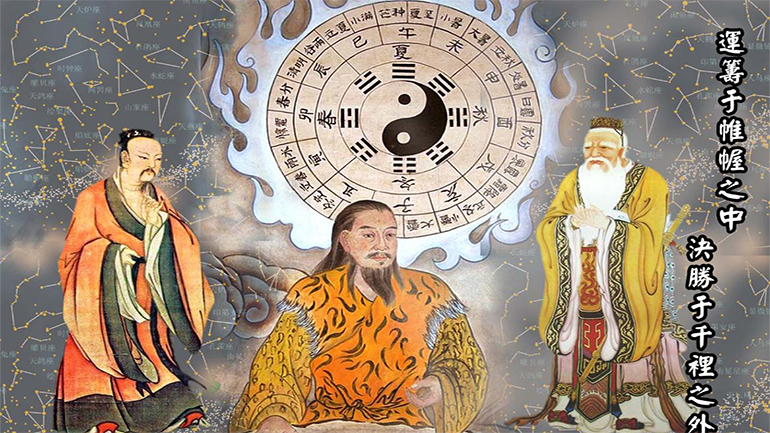
How to read I Ching - Come leggere I Ching


Risultati immagini per The Book of Changes

The Book of Changes  (I Ching) is a book of knowledge and should be read as a "novel" in which the characters are made up of the hexagrams themselves. To let oneself be pervaded by the evoked images without attempting an analysis is the best way to approach it; the text must be understood both by means of rationality and by intuition, using the mind with its logical and analogical part, namely, Yang and Yin. Our study leads us to analyze all the expressive modes of the mind until we come to understand that the observer is not different from what is observed (and this is corroborated even by the recent discoveries of quantum physics).

Some philosophical considerations: We can say that perfection in form is a convention and as such "perfectible"; the perfection for the Chinese and the Indians lies rather in the absolute, in the inner consciousness, in the phase preceding each attribute. Hence the concept of indefinable and ineffable truth that can only be evoked and experienced in the dissolution of the individual subject in the universal subject.
Existence is an expression of the absolute that is neither understood nor described, but within the dualism it appears in the form of empirical knowledge of a subject who knows the object.

Our present research is based on the knowledge of the practical aspects of this dual manifestation, except to deny it from time to time to remind us that it is not the ultimate truth, this path is not learning to know what we are intimately, Absolute Consciousness, but there it serves above all to "detoxify" us from the externalizing tendency and from all that it produces (the sense of identification with form and name) because we want to give less value to this specific aspect. In reality, we analyze the outside (or the recognizable aspects of the mind) only in order to recognize its non-substantiality.

Reincarnation according to the Buddhist  or Taoist concept is not personal.
The meeting of Yin with Yang leads to physical and psychical manifestation without this formative path being linked to the essence of an individual self; it is rather an expressive mode of consciousness that takes on a certain appearance and identity on the basis of the psychophysical characteristics in which it encounters.

In other words, the individual ego is only a mental tendency, a thought, an identifying capacity, which has no substance and is only a reflection that is formed in consciousness. Therefore according to the Buddhist criterion there is no individual self that is reincarnated but only a sequence of mental thoughts and tendencies in a sort of evolutionary continuation.

For this reason we point out the realization of Self as a "rediscovering" of what we have always been and not the achievement of something that we get from scratch, this "knowledge of self" and at the same time imponderable and indefinable and all-encompassing. The whole of everything that is.

Paolo D'Arpini

Risultati immagini per The Book of Changes paolo d'arpini


Testo italiano

Il Libro dei Mutamenti è un libro di conoscenza e andrebbe letto come un “romanzo” in cui i personaggi sono costituiti dagli esagrammi stessi. Lasciarsi pervadere dalle immagini evocate senza tentare un'analisi è il modo migliore per avvicinarsi ad esso; il testo va compreso sia per mezzo della razionalità che per mezzo dell'intuizione, usando cioè la mente con la sua parte sia logica che analogica ovvero Yang e Yin. Il nostro studio ci porta ad analizzare tutti i modi espressivi della mente fino ad arrivare a comprendere che colui che osserva non è diverso da quello che è osservato (e questo viene corroborato persino dalle recenti scoperte della fisica quantistica).


Alcune considerazioni filosofiche.  Possiamo dire che la perfezione nella forma è una convenzione e come tale “perfettibile”; la perfezione per i Cinesi e gli Indiani risiede piuttosto nell'assoluto, nella coscienza interiore, nella fase che precede ogni attributo. Da qui il concetto di verità indefinibile ed ineffabile che può essere solo evocata e vissuta nello scioglimento del soggetto individuale nel soggetto universale. 
L'esistenza è espressione dell'assoluto che non si comprende né si descrive, ma all'interno del dualismo appare in forma di conoscenza empirica di un soggetto che conosce l'oggetto. 

La nostra ricerca presente è basata sulla conoscenza degli aspetti pratici di questa manifestazione duale, salvo il negarlo di tanto in tanto per ricordarci che non è la verità ultima, questo percorso non è di apprendimento per conoscere quello che intimamente siamo, Coscienza Assoluta, ma ci serve soprattutto per “disintossicarci” dalla tendenza esternalizzante e da tutto ciò che essa produce (il senso di identificazione con la forma ed il nome) perché vogliamo dare meno valore a questo aspetto specifico. In realtà analizziamo l'esterno (ovvero gli aspetti riconoscibili della mente) solo allo scopo di poterne riconoscere la non-sostanzialità.

La reincarnazione secondo il concetto buddista o taoista non è di tipo personale. L'incontro dello Yin con lo Yang porta alla manifestazione fisica e psichica senza che questo percorso formativo sia legato all'essitenza di un io individuale; si tratta piuttosto di un modo espressivo della coscienza che assume una determinata sembianza ed identità sulla base delle caratteristiche psicofisiche in cui si imbatte. 

In altre parole l'io individuale è solo una tendenza mentale, un pensiero, una capacità identificativa, che non ha sostanza ed è solo un riflesso che si forma nella coscienza. Perciò secondo il criterio buddista non c'è alcun io individuale che si reincarna ma solo una sequenza di pensieri e tendenze mentali in una sorta di prosieguo evolutivo.

Per questa ragione si indica la realizzazione di Sé come un “ritrovare” ciò che si è sempre stati e non il raggiungimento di un qualcosa che si ottiene ex novo, questa “conoscenza di sé e allo stesso tempo imponderabile ed indefinibile ed onnicomprensivo. L'insieme di tutto ciò che è.

Paolo D'Arpini

domenica 14 gennaio 2018

Believing is static, experimenting is dynamic - Il credere è statico l'esperimentare è dinamico


Risultati immagini per Il credere è statico l'esperimentare è dinamico

Friedrich Wilhelm Nietzsche wrote: "It is with the triumph "ecumenical "Christianity (misfortune of humanity, of animals, of the world) that a global inversion of values has been achieved. Everything in the pagan world, among our polythe-peasant fathers, was perceived in a straight, clean, truthful way, veiled and turned upside down. Never an antique would have given, for example, the name of "love" to hatred or vice versa. The black  exploitative  priests is precisely this they imposed, urbi et orbi. Thus, for at least a thousand years, the church tortured in the name of good ... "

Personally I do not enter into the merits of the discourse on the veracity of religions. From the point of view of the laicity of thought, belief is a personal choice, therefore: "de gustibus non est disputandum!"

But I would like to open a discriminative chink: believing is static, experimenting is dynamic. Belief is the result of memory, experiencing is the result of an action.

The only incontrovertible truth is the one corroborated by one's own personal experience ... but unless one has a direct inner revelation we may  say that believing in a religion is a mental exercise of will and is devoid of any substantiality. Things are different, as mentioned above, in the case of direct experience or "realization". But since "realization" is of the Self, we can safely say that "intrinsic truth" is the only real truth ... all the rest being simple mental projection.

One side is the judgment and another the discrimination. ... I do not reject the existence of an absolute and all-pervading "god" which, being the only real presence, includes within itself every aspect of the manifest and the unmanifest. The god of religions is simple assumption and mental projection, as is this description of it. Because the One can not assert the One.

The "religion" in itself would not be guilty, but so are all the priests, popes and cardinals who have used the natural motion of the "return" to the Self (or God)! They have done the greatest deception and cheating, towards themselves and their neighbor, they have actually played the deceiving function "of the envious devil ..." Separating what is inseparable and then claiming to want to "re-unite" through a religious dictation.

There is no obligation to remain bogged down in a "creed" (the moment you understand the consequences of it). Only he who insists on wanting to believe is a co-participant of that creed. Yet, is not this thought also a belief?

So why remain clinging to something that is mere illusion, a dual symbol?

Let us abandon, therefore, vanity and separative arrogance, and let us fulfill without fear the "return home", in recognizing ourselves in what it is ...

Paolo D'Arpini


Testo italiano

Scriveva Federico Nietzsche: “E’ col trionfo “ecumenico” cristiano (sventura dell’umanità, degli animali, del mondo) che si è realizzata una globale inversione dei valori. Tutto ciò che nel mondo pagano, tra i nostri padri contadini politeisti, era percepito in maniera retta, pulita, veritiera, si è velato e capovolto. Mai un antico avrebbe dato, per esempio, nome di “amore” all’odio o viceversa. La nera pretaglia sfruttatrice è proprio questo che impose, urbi et orbi. Così, per almeno mille anni essa torturò in nome del bene…”

Personalmente non entro nel merito del discorso sulla veridicità delle religioni. Dal punto di vista della laicità di pensiero il credere è una scelta personale, quindi: “de gustibus non est disputandum!”

Ma vorrei aprire una fessura discriminativa. Il credere è statico, l’esperimentare è dinamico. Il credere è il risultato della memoria, l’esperimentare è il risultato di una azione.

L’unica verità incontrovertibile è quella corroborata dalla propria esperienza personale… ma a meno che non si abbia una rivelazione diretta interiore affermare di credere in una religione è un esercizio mentale di volontà ed è privo di ogni sostanzialità. Cosa diversa, come detto sopra, nel caso di esperienza diretta o “realizzazione”. Ma siccome la “realizzazione” avviene nel Sé, possiamo tranquillamente affermare che la “verità intrinseca” è l’unica reale verità.. tutto il resto essendo semplice proiezione mentale.

Un conto è il giudizio ed un altro la discriminazione. ... non rifiuto l' esistenza di un "dio" assoluto ed onnipervadente che, essendo la sola presenza reale, comprende in sé ogni aspetto del manifesto e dell'immanifesto. Il dio delle religioni è semplice assunzione e proiezione mentale, come lo è d'altronde questa mia descrizione. Poiché l'Uno non può asserire l'Uno

La "religione" in se stessa non sarebbe colpevole ma lo sono tutti i sacerdoti, papi e cardinali che hanno utilizzato il moto naturale del "ritorno" al Sé (o Dio)! Essi hanno compiuto il più grande inganno ed imbroglio, verso se stessi ed il loro prossimo, essi hanno in verità svolto la funzione ingannatrice "dell'invidioso maligno..." Separando ciò che è inseparabile per poi pretendere di volerlo"ri-unire" attraverso un dettame religioso.

Non v'è alcun obbligo a restare impantanati in un "credo" (il momento che ne hai capito le conseguenze). Solo colui che insiste nel voler credere è compartecipe di quel credo. Eppure, non è il credere anch'esso un pensiero?

Quindi perché restare avvinghiati ad un qualcosa che è mera illusione, un simbolo duale?

Abbandoniamo, dunque, la vanità e l'arroganza separativa e compiamo senza paura il "ritorno a casa", nel riconoscersi in ciò che è...

Paolo D'Arpini

sabato 13 gennaio 2018

Karma and life in the world - Karma e vita nel mondo


Immagine correlata

The individual "I" (ego) rises from the reflection of consciousness in the mirror of the mind. An identifying superimposition with the observed object. The object is the body-mind that reacts in relation (to contact) with the other external objects.

The moment that, in self-knowledge, the fictitious identity with the agent disappears what remains is the pure awareness of the Self. It is therefore not necessary, for the purpose of realization, that the images - the world and the observer - disappear, it is sufficient that the false identity with the reflected object / subject (ego) disappears. This means that the world can safely continue to manifest itself not being perceived as a separate reality, more or less as a dream could be compared to the dreamer. At this point the Self and its manifestation are seen as the same identical thing while the sense of the separative ego (of the me and the other) is obliterated. After all, dualism is only ignorance of oneself.

The sage observes the actions taking place without there being any propensity or intention or judgment in him. Spontaneously everything happens appropriately and consequently to the designated "destiny". Destiny is the answer to the natural interaction (and predisposition) of the various elements involved ... Since everything happens automatically there is no "preference" in the action of the sage. On the contrary, his own action is (apparently) intentional only in the eyes of the "others", since for the sage everything happens in itself. Every event experienced simply happens in his presence and he is the silent and detached witness. His action (or state) can be compared to sleepwalking, or awake sleep.

Moreover, the concept of "destiny" and of action also makes sense only in the mind of the observer still identified with the outside, that is, of an ego that identifies itself with the agent and with his actions. But the moment that such identification is destroyed every other connected concept disappears.

Wisdom consists in remaining immune from illusion after understanding the truth. The fear of action and its consequences (karma) remains only in those who see the slightest difference between themselves and others. As long as the idea exists that the body / mind is the self, one can not be an expression of truth.

But certainly it is possible for anyone, and in every condition, to know their true nature because it is absolutely true and real, it is the only one for everyone. In fact, the state of pure Being is common to all and is the direct experience of each one. To live one's true nature is meant by self-realization, since the self is present here and now.

The thought of feeling separate is the only obstacle to the realization of the all-pervading and omnipresent Being. And yet from the empirical point of view, identifying with the agent (ego) is an impediment to the proper functioning of the psychosomatic apparatus, in the context of global functioning. Thus the intellectual acceptance of truth is already a liberating form of intentional (rational) propensity to act (in this sense). What is destined to happen will happen. It is in the experience of everyone that getting involved in the question is a handicap to find the answer.

Paolo D'Arpini

Risultati immagini per Karma e vita nel mondo paolo d'arpini

P.S.

In my experience the relationship with a teacher is not intended to transmit any doctrine or spiritual teaching but to perceive the "touch" or "perfume" of its realization. His words are just a subterfuge to convey his "grace" (there is no other word more pertinent and appropriate) ... spending time in his "presence" ...


Risultati immagini per Karma e vita nel mondo


Testo italiano

L’io individuale (ego) sorge dal riflesso della coscienza nello specchio della mente. Una sovrimposizione identificativa con l’oggetto osservato. L’oggetto è il corpo-mente che reagisce in relazione (al contatto) con gli altri oggetti esterni.

Il momento che, nell’autoconoscenza, l’identità fittizia con l’agente scompare quel che resta è la pura consapevolezza del Sé. Non è perciò necessario, al fine della realizzazione, che le immagini -il mondo e l’osservatore- scompaiano, è sufficiente che la falsa identità con l’oggetto/soggetto riflesso (ego) scompaia. Ciò significa che il mondo può tranquillamente continuare a manifestarsi non essendo percepito come realtà separata, più o meno come potrebbe esserlo un sogno rispetto al sognatore. A questo punto il Sé e la sua manifestazione sono visti come la stessa identica cosa mentre il senso dell’io separativo (del me e dell’altro) viene obliterato. In fondo il dualismo è soltanto ignoranza di sé.

Il saggio osserva le azioni svolgersi senza che vi sia alcuna propensione o intenzione o giudizio in lui. Spontaneamente ogni cosa avviene confacentemente e conseguentemente al “destino” designato. Il destino è la risposta alla naturale interazione (e predisposizione) dei vari elementi coinvolti… Siccome tutto succede automaticamente non vi è alcuna “preferenza” nell’agire del saggio. Anzi il suo stesso agire è (apparentemente) intenzionale solo agli occhi degli “altri”, giacché per il saggio ogni cosa accade di per sé. Ogni evento vissuto accade semplicemente in sua presenza e lui ne è il testimone silenzioso e distaccato. Il suo agire (o stato) può essere paragonato al sonnambulismo, od al sonno da sveglio.

Ed inoltre anche il concetto di “destino” e di azione ha un senso unicamente nella mente dell’osservatore ancora identificato con l’esterno, ovvero di un ego che si identifica con l’agente e con le sue azioni. Ma il momento  che tale identificazione è distrutta ogni altro concetto collegato scompare.

La saggezza consiste nel rimanere immune dalla illusione dopo aver compresa la verità. La paura dell’agire e delle sue conseguenze (karma) permane solo in chi vede la pur minima differenza fra sé e l’altro. Finché esiste l’idea che il corpo/mente è l’io non si può essere espressione di verità.

Ma certamente è possibile per chiunque, ed in ogni condizione, conoscere la propria vera natura poiché essa è assolutamente vera e reale, è l’unicum per ognuno. Infatti lo stato di puro Essere è comune a tutti ed è la diretta esperienza di ciascuno. Vivere la propria vera natura questo si intende per auto-realizzazione, poiché il sé è presente qui ed ora.

Il pensiero di sentirsi separati è il solo ostacolo alla realizzazione dell’Essere onnipervadente ed onnipresente. E pure dal punto di vista empirico identificarsi con l’agente (ego) è un impedimento al buon funzionamento dell’apparato psicosomatico, nel contesto del funzionamento globale . Per cui già l’accettazione intellettuale della verità è una forma liberatoria dalla propensione intenzionale (razionale) ad agire. Ciò che è destinato ad accadere accadrà.  E’ nell’esperienza di ognuno che arrovellarsi nella domanda è un handicap a trovare la risposta.

Paolo D’Arpini


P.S.

Secondo la mia esperienza il rapporto con un maestro non ha lo scopo della trasmissione di qualsivoglia dottrina o insegnamento spirituale bensì di percepire il “tocco” o “profumo” della sua realizzazione. Le sue parole sono solo un sotterfugio per trasmettere la sua “grazia” (non c’è altra parola più pertinente ed appropriata)… trascorrendo il tempo nella sua “presenza”…

venerdì 12 gennaio 2018

Good common sense is not reasoning - Il buon senso non è un ragionamento


Risultati immagini per la botte di diogene

"Logic is good in reasoning, but in life it is useless." (Rémy de Gourmont)

... I admit that intuitions, in the meaning of the "good common sense" have a value and a depth that no ideology either religion can dream of reaching. The climbing on logic of Machiavelli they have had some success in the development of the political system and even today his "teaching" is taken as an example of pragmatism (and of "reason of state") that goes beyond any human "weaknesses". While the good intentions and reflections of his contemporary Guicciardini they are left to the evening examinations of conscience of the wise men that  withdraw from the world.

Yet in the ideas of Guicciardini there are the seeds of a true and proper growth!

"Move, meet, open the way to the news and you will be so capable of overcome any obstacle to get in the way, and be one positive example for friends and a model for all those who  will follow you! But only by identifying  right away the mistakes you may incur  you  can correct them and avoid the worst. It is enough to know how to look inside wisely to find the right path to face  an important decision. And so you will be able to express  deep feelings  on what is right and true ... "(R. Wilhelm)

These qualities and attitudes remind me, by analogy, of the events and legendary episodes of the life of the great Taoist master Zhuang Zi,  who actually lived in the III century b.C., and author of the "Book of the Southern Flower". His was an example of noble  and wise  behavior of those who have already exceeded the worldliness and  inwardly it no longer has any connection with worldly existence, which however sometimes can be in the situation of having to re-enter society for approaching others and impart his teachings and provide his help ... without any pretension.

Paolo D'Arpini


Testo italiano

"La logica è buona nei ragionamenti, ma nella vita non serve a nulla" (Rémy de Gourmont). 


… riconosco che le intuizioni, nell’accezione del “comune buon
senso” hanno un valore ed una profondità che nessuna ideologia o
religione può sognare di raggiungere. L’arrampicarsi del Machiavelli
ebbe ed ha avuto un certo successo nello svolgimento del sistema
politico ed ancora oggi il suo “insegnamento” viene preso ad esempio
di pragmatismo (e di “ragion di stato”) che travalica le debolezze
dell’umano. Mentre i buoni propositi e le riflessioni del Guicciardini
vengono lasciate agli esami di coscienza serali  dei saggi che si
ritirano dal mondo.

Eppure  nelle idee di Guicciardini vi sono i semi di  un vero e
proprio cambiamento e crescita!


“Muoviti, incontra, apri la strada alle novità e sarai così capace di
sormontare qualsiasi ostacolo si frapponga sulla via, e di essere un
modello d’esempio positivo per gli amici e per tutti coloro che ti
seguiranno! Ma solamente individuando da subito gli errori ti sarà
possibile correggerli ed evitare il peggio. Basta sapersi guardare
dentro con saggezza per trovare la strada giusta per affrontare una
decisione importante. E così sarai capace di esprimere sensazioni
profonde su ciò che è giusto e vero…” (R. Wilhelm)


Queste qualità ed atteggiamenti mi  ricordano, per analogia, gli
eventi e gli episodi leggendari della vita del grande maestro Taoista
Zhuang Zi, vissuto realmente nel III secolo a. C., ed autore del
“Libro del fiore del sud”. Il suo fu un esempio di comportamento
nobile  e saggio di  chi ha già superato il mondo e che interiormente
non ha più alcun legame con l’esistenza mondana, che però talora può
trovarsi nella situazione di dover rientrare  nella società per
avvicinarsi agli altri ed impartire i suoi insegnamenti e fornire il
suo aiuto… senza pretesa alcuna.

Paolo D’Arpini