domenica 12 gennaio 2020

2020, anno del Topo (di metallo). Inizia il 25 gennaio 2020, termina l'11 febbraio 2021 - 2020, year of the (metal) Mouse. Starts on January 25, 2020, ends on February 11, 2021


Risultato immagini per topo di metallo"

Al  Topo  nel Libro dei Mutamenti è assegnato l'esagramma  numero 2,  Kun (La Terra - la matrice centrale). In Cina, il Nord e l'inverno  sono il luogo ed il momento  dedicati al Topo,   che trova riparo nelle viscere della Terra. Egli infatti  nasce nella  stagione del freddo, dell’oscurità e della notte (le sue ore  vanno dalle 23 alle 1). Questo è  il periodo dell’accumulo, ed il Topo -si sa- è un grande accumulatore. E’ anche il momento di fare piani di sopravvivenza   poiché solo con adeguati preparativi si potrà uscire dalla situazione contingente in cui ci troviamo. Per queste ragioni anche noi saremo spinti ad una  riflessione preparatoria alla conservazione, o  mantenimento, intesa come durata in vita.

Tutti  gli archetipi  cinesi si associano  ai diversi  elementi (Terra, Metallo, Acqua, Legno, Fuoco) e  questo fa sì che vengano modificati gli aspetti dell'animale stesso; le sue caratteristiche psichiche e le sue propensioni  si “colorano” in modo diverso a seconda degli elementi a cui si abbinano.  Quest'anno, dal 25 gennaio 2020 inizia l'anno del Topo di Metallo, che dura sino all' 11 febbraio 2021. L'anno caratterizza  un tipo raffinato, un po' edonista ed amante  dell'ordine costituito, intelligente,  geloso, con forte consapevolezza di sé. I precedenti anni del Topo di Metallo sono stati  il 1900 ed il 1960. Due momenti importanti per la società umana, nel 1900 si può dire sia iniziata l'età industriale e nel 1960 ha preso grande forza il rinnovamento scientifico ed intellettuale. In generale chi è nato nell'anno del Topo è molto intuitivo e reattivo, caratteristiche che aiutano ad adattarsi sempre alle nuove situazioni. I nativi del Topo hanno inoltre una ricca immaginazione e sono acuti osservatori, sono curiosi e preferiscono vivere in prima persona ogni cosa e provare tutto sulla loro pelle.

Per coloro nati nel 1960 (precedente anno Topo Metallo)  il 2020 sarà il loro anno del compimento, della rinascita nello stesso corpo (corrispondente al 60° anno di età), sarà un anno di crescita,  transizione e passaggio. Un paio di consigli a questi Topi: sul piano professionale non lasciatevi intimorire dalle critiche, mentre sul piano finanziario evitate investimenti a lungo termine, pensate  e agite giorno per giorno,nel qui ed ora.

Ed ora alcune spiegazioni  sull''origine del calendario lunare cinese si fa risalire al 2637 a.C. quando l'imperatore Huang Ti iniziò il computo del tempo. Si dice che all'epoca egli avesse sessantun anni, il fatto lascia sospettare che tale sistema fosse già  in uso  da un periodo molto antecedente.... Infatti il ciclo dei 12 archetipi  rapportati ai 5 elementi  richiede un periodo di 60 anni per compiere un giro completo, ciò significa che al 60° compleanno si ripropongono condizioni del tutto simili a quelle presenti al momento di nascita. Una curiosità: in Cina ed in Giappone le persone  che compiono 60 anni vestono di rosso, come simbolo di rinascita.

Per quanto riguarda l'influenza degli elementi sui diversi archetipi animali dovremmo cercare di integrare tutti gli aspetti  e propensioni per evitare di creare delle disarmonie dovute alla repressione di alcuni tratti e questa eventualità potrebbe portare addirittura ad una “esplosione” delle caratteristiche trascurate (che si manifesta in forma di malattia o malessere). Aderendo alle qualità dello spazio-tempo come le stagioni dell'anno o i momenti zodiacali possiamo trovare i periodi più adatti per estrinsecare le nostre qualità espressive.  Questo in modo particolare vale per l'archetipo del Topo, che rappresenta in assoluto la capacità della sopravvivenza e di acquisizione  in qualsiasi condizione si manifesti la vita.  A ciò vanno  aggiunte anche  le direzioni  di appartenenza e le  qualità spazio temporali. Al Topo -dicevamo- compete il  Nord e l'inverno  -  la sua posizione nell'ordinamento induista è quella di Rati Priti (attaccamento), come descritto nel testo ”The serpent Power” di Sir John Woodroffe.   E rappresenta ciò che è nascosto, accumulo di provviste, vicinanza nel clan.  L'elemento Metallo che caratterizza il Topo del 2020 corrisponde  alla Giustizia, in quanto ordinamento,  sancisce la storia evolutiva dell'uomo (vedi le varie età storiche e proto-storiche); nella simbologia cinese il Metallo è rappresentato  dall'oro bianco, sinonimo di pulizia e di purezza.

Analisi generale  delle diverse caratteristiche archetipali:
Conoscendo le qualità dell'animale e dell'esagramma di riferimento saremo in grado di comprendere i significati che ci riguardano, essendo noi un "unicum" creato dall'incontro di vari aspetti energetici. Il quadro finale che si ottiene è un'immagine completa dell'individuo, nei suoi tre aspetti: senso dell'io, intelletto, memoria (integrati). Nel Libro dei Mutamenti sono suggeriti al consultante due possibili atteggiamenti: quello della Via Nobile e quello della Via Ignobile; nel primo caso si tratta di azioni a favore della collettività e dell'insieme, nel secondo di azioni egoiche individuali. Essi corrispondono a differenti livelli evolutivi.

Gli Opposti nel Cerchio degli Archetipi:
Oltre ad esserci consequenzialità nella formazione di ogni archetipo dal precedente esiste anche una correlazione tra un archetipo e quello che si trova al punto cardinale opposto (per quanto riguarda il Topo l'opposto è il Cavallo situato nell'estate, e nelle ore del mezzogiorno).  La qualità  dei due opposti parte dal centro e si irradia, manifestando degli antagonismi e opposizioni  che in realtà sono forme diverse della stessa emanazione energetica  della coscienza. Ne consegue una funzione della manifestazione in doppia forma, che deriva appunto dalla stessa sorgente. I pareri diversi  altro non sono che l'espressione del nostro bagaglio esperienziale e prospettico. Questo fenomeno va accettato in quanto concessoci da Dio o dalla Natura come Capacità Illuminante ma dobbiamo ricordare che si tratta di un fenomeno speculare, che presenta diversi aspetti a seconda della prospettiva da cui si guarda. Questo concetto può aiutarci ad evitare l'arroccamento sulle nostre posizioni personalistiche. La variegata capacità espansiva della coscienza crea gli archetipi; noi dobbiamo considerare come tutti abbiano la stessa importanza e natura ed ognuno è indissolubilmente legato a tutti gli altri. Per un approfondimento in tal senso è consigliato lo studio del comportamento e delle caratteristiche psico-fisiche dei dodici animali archetipici su testi di etologia e zoologia o studiano gli esagrammi preposti indicati nel libro dei Mutamenti.

Secondo il Libro dei Mutamenti, la creazione avviene costantemente attraverso l’incontro di Cielo e Terra, ovvero Energia e Materia, Coscienza e Forma, ma questa descrizione non è sola prerogativa dell’I Ching, anche altre religioni e filosofie (ed anche la moderna scienza) indicano il movimento, la vibrazione o trasformazione, come fattore primo che crea il mondo. L’energia cinetica sprigionata attraverso il cambiamento sopraggiunto nel “quid” originario statico si è propagata in uno svolgimento, apparentemente infinito, che utilizza i canali conduttori dello spazio e del tempo. Che lo si chiami Verbo, Om, Spirito o Tao ha poca importanza… 


I Ching. Esagramma  KUN - Correlato all'archetipo del Topo 


Risultato immagini per i ching esagramma kun"

Sotto c’è il trigramma Kun e sopra c’è il trigramma Kun – Tutte le linee sono spezzate.

La sentenza.
Il ricettivo opera sublime riuscita,
propizio per la perseveranza di una cavalla.
Se il nobile ha qualcosa da imprendere
e vuole procedere si smarrisce;
se invece segue, trova una guida.
Propizio è trovare amici nell’Occidente e nel Meridione,
rinunciare ad amici nell’Oriente e nel Settentrione.
Tranquilla perseveranza reca salute.

Commento alla decisione.
Perfetta è invero la sublimità del Ricettivo. Tutti gli esseri gli devono la loro nascita, poiché con dedizione accoglie il Celeste.

Spiegazione. La grandezza del Ricettivo è definita “perfetta”. Perfetto è ciò che raggiunge il modello è quindi implicita la dipendenza dal Creativo.  Il Creativo è ciò che genera perché da lì proviene l’anima. Il Ricettivo è ciò che partorisce, ciò che accoglie in sé il seme Celeste e conferisce agli esseri la loro struttura corporea.

E' detto nel commento all'Esagramma:

Precedere arreca smarrimento perché si perde la strada.
Seguire in dedizione, così si ottiene la posizione durevole.

Se il Ricettivo (la Mente) volesse spingersi avanti di sua iniziativa devierebbe dalla sua indole naturale e smarrirebbe la via. Seguendo invece con dedizione il Creativo (lo Spirito), arriva alla durevole posizione che gli compete. In occidente e meridione secondo l’ordinamento del Re Wen stanno le figlie. Mentre in oriente e settentrione stanno i figli. In seguito alla rinuncia di amici Kun  resta da sola (la Terra è femminile).  Ma ciò è bene perché il Femminile deve stare da solo con il Maschile. Infatti la Terra deve stare sola con il Cielo. Il funzionario deve servire solo il sovrano. La moglie dedicarsi solo al marito.

L’immagine.
Lo stato della Terra è l’accogliente dedizione.
Così il nobile sorregge con l’ampiezza della sua natura
il mondo  esterno.

Spiegazione. La Terra compie le cose per mezzo della forma, perciò di essa si dice “stato”. Così anche l’uomo nobile deve possedere ampiezza di vedute, forza interiore, carattere compatto per essere in grado di sopportare il mondo senza subirne gli influssi.

Commento al sei al quinto posto (il posto del Nobile o del Sovrano):
“Veste inferiore gialla reca sublime salute: la bellezza è interiore”

Spiegazione:
La bellezza è nascosta e non viene esibita. Il giallo è il colore del mezzo e della misura. La misura interiore che agisce verso l’esterno porta equilibrio in ogni manifestazione. La serietà, la sollecitudine e la modestia sono le qualità che si addicono al Ricettivo. Solo la verità crea la serietà, solo la serietà rende possibile la verità.  

Paolo D'Arpini - spiritolaico@gmail.com

Risultato immagini per i ching paolo d'arpini"


Testo inglese:

The Mouse in the Book of Changes is assigned the hexagram number 2, Kun (The Earth - the central matrix). In China, the North and winter are the place and the moment dedicated to the Mouse, which finds shelter in the bowels of the Earth. In fact, he was born in the season of cold, darkness and night (his hours range from 11pm to 1am). This is the period of accumulation, and the Mouse -you know- is a large accumulator. It is also the time to make survival plans because only with adequate preparations can we get out of the contingent situation in which we find ourselves. For these reasons, we too will be driven to a preparatory reflection for conservation, or maintenance, intended as life span.

All Chinese archetypes associate themselves with the different elements (Earth, Metal, Water, Wood, Fire) and this causes the aspects of the animal itself to be modified; its psychic characteristics and its propensities are "colored" differently according to the elements to which they match. This year, from 25 January 2020, the year of the Metal Mouse begins, which lasts until 11 February 2021. The year features a refined type, a little hedonistic and lover of the established order, intelligent, jealous, with strong self-awareness. The previous years of the Metal Mouse were 1900 and 1960. Two important moments for human society, in 1900 it can be said that the industrial age began and in 1960 the scientific and intellectual renewal took great strength. In general, those born in the year of the mouse are very intuitive and reactive, characteristics that help to adapt always to new situations. The natives of the mouse also have a rich imagination and are keen observers, they are curious and prefer to experience everything firsthand and try everything on their skin.

For those born in 1960 (previous year Metal Mouse) 2020 will be their year of fulfillment, of rebirth in the same body (corresponding to the 60th year of age), it will be a year of growth, transition and transition. A couple of tips to these Mice: on a professional level, don't be intimidated by criticisms, while on a financial level, you avoid long-term investments, think and act day by day, in the here and now.

And now some explanations on the origin of the Chinese lunar calendar can be traced back to 2637 BC. when Emperor Huang Ti started counting time. It is said that at the time he was sixty-one years old, the fact suggests that this system had already been in use for a long time before .... In fact, the cycle of the 12 archetypes related to the 5 elements requires a period of 60 years to complete a complete turn, this means that at the 60th birthday conditions similar to those present at the time of birth are proposed. A curiosity: in China and Japan people who are 60 years old wear red, as a symbol of rebirth.

As for the influence of the elements on the different animal archetypes we should try to integrate all aspects and propensities to avoid creating disharmonies due to the repression of some traits and this possibility could even lead to an "explosion" of the neglected characteristics (which manifested in the form of illness or malaise). Adhering to the qualities of space-time such as the seasons of the year or the zodiacal moments we can find the most suitable periods to express our expressive qualities. This in particular applies to the mouse archetype, which absolutely represents the ability of survival and acquisition in any condition life occurs. To this must also be added the directions of belonging and the spatio-temporal qualities. The Mouse - we said - is responsible for the North and winter - its position in the Hindu order is that of Rati Priti (attachment), as described in the text "The serpent Power" by Sir John Woodroffe. And it represents what is hidden, accumulation of supplies, closeness in the clan. The Metal element that characterizes the Mouse of 2020 corresponds to Justice, as an order, sanctioning the evolutionary history of man (see the various historical and proto-historical ages); in the Chinese symbolism the metal is represented by white gold, synonymous with cleanliness and purity.

General analysis of the different archetypal characteristics
Knowing the qualities of the animal and the reference hexagram we will be able to understand the meanings that concern us, being we a "unicum" created by the encounter of various energetic aspects. The final picture obtained is a complete image of the individual, in its three aspects: sense of self, intellect, memory (integrated). In the Book of Changes, two possible attitudes are suggested to the consultant: that of the Via Noble and that of the Via Ignoble; in the first case they are actions in favor of the community and the whole, in the second of individual egoic actions. They correspond to different evolutionary levels.

The Opposites in the Circle of Archetypes:
In addition to there being consequentiality in the formation of each archetype from the previous one, there is also a correlation between an archetype and the one found at the opposite cardinal point (as regards the Mouse, the opposite is the Horse located in the summer, and in the midday hours) . The quality of the two opposites starts from the center and radiates, manifesting antagonisms and oppositions which are actually different forms of the same energetic emanation of consciousness. It follows a function of the manifestation in double form, which derives precisely from the same source. The different opinions are nothing more than the expression of our experiential and prospective background. This phenomenon must be accepted as it is granted to us by God or by Nature as an Illuminating Ability but we must remember that it is a specular phenomenon, which has different aspects depending on the perspective from which one looks. This concept can help us avoid perching on our personalistic positions. The varied expansive capacity of consciousness creates archetypes; we must consider how everyone has the same importance and nature and everyone is inextricably linked to everyone else. For further study in this sense, the study of the behavior and psycho-physical characteristics of the twelve archetypal animals on texts of ethology and zoology is recommended, or they study the hexagrams indicated in the book of Changes.

According to the Book of Changes, creation occurs constantly through the encounter of Heaven and Earth, that is Energy and Matter, Consciousness and Form, but this description is not the sole prerogative of the I Ching, also other religions and philosophies (and also modern science) indicate movement, vibration or transformation, as the prime factor creating the world. The kinetic energy released through the change that occurred in the original static "quid" has propagated in an apparently infinite development that uses the conducting channels of space and time. Whether it is called Verb, Om, Spirit or Tao is of little importance ...
I Ching - Hexagram KUN - Related to the mouse archetype

Below is the Kun trigram and above is the Kun trigram - All lines are broken.

The sentence.
The receptive sublime work succeeded,
propitious for the perseverance of a mare.
If the nobleman has something to learn
and he wants to proceed he gets lost;
if it follows, find a guide.
Auspicious is to find friends in the West and in the South,
give up friends in the East and North.
Peaceful perseverance brings health.

Comment on the decision.
The sublimity of the Receptive is indeed perfect. All beings owe their birth to him, because with dedication he welcomes the Celestial.

Explanation. The size of the Receptive is defined as "perfect". Perfect is what reaches the model, therefore the dependence on the Creative is implicit. The Creative is what generates because the soul comes from there. The Receptive is that which gives birth, that which welcomes in itself the Celestial seed and gives beings their body structure.

It is said in the commentary on the Hexagram:

Preceding causes bewilderment because you lose your way.
Follow in dedication, so you get the lasting position.

If the Receptive (the Mind) wanted to go forward on his own initiative he would deviate from his natural disposition and would lose the way. On the other hand, by following the Creator (the Spirit) with dedication, he arrives at his enduring position. In the west and south according to the regulations of King Wen are the daughters. While in the east and north are the children. Following the renunciation of friends Kun remains alone (the Earth is female). But this is good because the Feminine must be alone with the Masculine. In fact, the Earth must be alone with Heaven. The official must serve only the sovereign. The wife dedicate herself only to her husband.

The image.
The state of Earth is welcoming dedication.
Thus the nobleman holds up with the breadth of his nature
the outside world.

Explanation. The Earth accomplishes things by means of form, therefore it is called "state". So even the noble man must have a broad range of views, inner strength, compact character to be able to bear the world without being influenced by it.

Comment on six in fifth place (the place of the Noble or Sovereign):
"Yellow lower robe brings sublime health: beauty is interior"

Explanation:
Beauty is hidden and not exhibited. Yellow is the color of the medium and the size. The inner measure that acts outwards brings balance in every manifestation. Seriousness, concern and modesty are the qualities that are suitable for the Receptive. Only truth creates seriousness, only seriousness makes truth possible.

Paolo D'Arpini - spiritolaico@gmail.com    

sabato 11 gennaio 2020

"Travel friends. The lay spiritual search begins and ends in the Self " by Paolo D’Arpini and Afterword by Caterina Regazzi - “Compagni di viaggio. La ricerca spirituale laica inizia e finisce nel Sé” di Paolo D’Arpini con postfazione di Caterina Regazzi


From the cover IV:
"Travel companions" is a sort of diary, a collection of anecdotes and experiences lived together with particular characters, we would say "extraordinary", met along the spiritual path. The author's personal way is that of secular spirituality, so these encounters with the "saints" are narrated in a very informal way without any emphasis or pretension, however trying to convey the teaching or the message received. In some cases the meetings did not even take place on a physical plane but on an elective plane. The text contains first-hand accounts of some significant moments lived together with different masters, a narration of dialogues and confidences, the same that are told between friends in moments of intimacy, during the return to our real home.


Paolo D'Arpini


Afterword by Caterina Regazzi:


My beloved Paolo asked me to write an afterword to his book "Travel companions", and I, who are also his travel companion, am going to do it, I am not happy to say, as the things to do in my life are many (for me) and the energies in this period are few. Moreover, I owe it to him precisely because the reading of some of his stories, of which many are included in this book, was a great nourishment for me, which brought me even closer, than I was already doing alone, to a world of spirituality in which the main event, the tendency to ... stronger is the "discovery of the Self". Oh yes, because despite the most evident content in this book are the tales of Paul's encounters with various saints and sages, direct, physical, but sometimes only indirect encounters, the characters described and remembered have had for Paul, and indirectly they will have on the reader, the purpose of helping him to discover his own Self, acting as a mirror, in which the entity is reflected, sees and recognizes itself.


The text, at times, is a dialogue between Paolo and himself or perhaps with a hypothetical reader, so it was almost impossible for me to make any cut, no replacement, even as I had begun to do, in proofreading , to remove some ellipsis which for me were too many, which evoked a more "spoken" speech

that written, and that abound here. It is precisely an "evocative" writing that leaves the reader the possibility of imagining, to end the sentence, an ending of its own. It is difficult for me, who am a very concrete person (or was I?), To digest this type of writing.

But, speaking of spirituality, how can you be concrete? Each of those who read this text, will find facts, ideas, images that "resonate" or maybe things that will annoy them, but certainly this book cannot leave you indifferent. Paul's spiritual path is his life and his life is his spiritual path. These stories were originally written during years and years of encounters and experiences. A book on secular spirituality? On the encounters of his life that have illuminated his path? The description of the sudden emergence from the darkness of the light of his spirit? Soon done: there is a large imaginary trunk where over the years the impressions, the experiences, which can be read and enjoyed even as "simple" adventures, which appear alive, have been fortunately (for us) and fortunately (for him) and as vivid as they had been lived just yesterday and told in such a vital and sometimes even self-ironic way that we seem to see them flowing before our eyes and, like a child who looks and regards ten or twenty times the same cartoon or the same fable is read ten or twenty times, I read and reread some of these stories with renewed pleasure and enjoyment (the leper, the embrace, the story with Leslie, etc.).


I consider myself a very fortunate person to be able to enjoy these experiences even if they are second-hand because Paolo does not make them a mystery and he keeps them in his heart, but he shares them generously with those who know that he will be able to appreciate and take advantage of them. And so it will be for those who approach this book, certain that after reading it and perhaps even rereading it, consuming it almost, everyone will be able to look inside and outside themselves, with greater clarity and love. Once again, Paolo, thank you for what you give us and to be who you are. (Afterword by Caterina Regazzi)


Extract from: "Travel friends. The lay spiritual search begins and ends in the Self " by Paolo D’Arpini


Edizioni OM Bologna (Italy), Via 1 Maggio 3 / e - Quarto Inferiore

Tel. 051 767079 - Cell. 393 / 33.64.368

Risultato immagini per compagni di viaggio di paolo d'arpini"
Cover test fantasy by Daniela Spurio

Dalla IV di copertina:
“Compagni di viaggio” è una sorta di diario, una raccolta di aneddoti e di esperienze vissute assieme a personaggi particolari, diremmo “straordinari”, incontrati lungo il cammino spirituale. La via personale dell’autore è quella della spiritualità laica, quindi questi incontri con i “santi” sono narrati in modo molto informale senza alcuna enfasi o pretesa, cercando comunque di trasmetterne l’insegnamento o il messaggio ricevuto. In alcuni casi gli incontri non sono nemmeno avvenuti su un piano fisico ma su un piano elettivo. Il testo contiene resoconti di prima mano di alcuni momenti significativi vissuti assieme a diversi maestri, una narrazione di dialoghi e confidenze, le stesse che si raccontano tra amici nei momenti d’intimità, durante il ritorno alla nostra vera casa.

Postfazione di Caterina Regazzi:

Il mio amato Paolo mi ha chiesto di scrivere una postfazione al suo libro “Compagni di viaggio”, ed io, che pure compagna del suo viaggio sono, mi ci accingo, non dico di buon grado, in quanto le cose da fare nella mia vita sono tante (per me) e le energie in questo periodo sono poche. Del resto glielo devo proprio perché la lettura di certi suoi racconti, di cui molti sono compresi in questo libro, è stata per me un grande nutrimento, che mi ha fatto avvicinare ancora di più, di quanto non stessi già facendo da sola, ad un mondo di spiritualità in cui l’evento principale, la tendenza a… più forte è la “scoperta del Sé”. Eh si, perché nonostante il contenuto più evidente in questo libro siano i racconti degli incontri di Paolo con vari santi e saggi, incontri diretti, fisici, ma a volte solo indiretti, i personaggi descritti e ricordati hanno avuto per Paolo, ed indirettamente avranno sul lettore, lo scopo di aiutarlo a scoprire il proprio Sé, fungendo da specchio, in cui l’ente si riflette, vi vede e si riconosce.

Il testo, a tratti, è un dialogo di Paolo con se stesso o forse con un ipotetico lettore, per cui, per me è stato quasi impossibile, nella correzione delle bozze, fare alcun taglio, alcuna sostituzione, persino, come avevo iniziato a fare, togliere alcuni puntini di sospensione che per me erano di troppo, che evocavano un discorso “parlato” più che scritto, e che qui abbondano. È una scrittura appunto “evocativa” che lascia al lettore la possibilità di immaginare, per terminare la frase, un finale tutto suo. Difficile per me, che sono una persona molto concreta (o lo ero?), digerire questo tipo di scrittura.

Ma, parlando di spiritualità, come si fa ad essere concreti? Ognuno di coloro che leggeranno questo testo, potrà trovarvi fatti, idee, immagini che gli “risuonano” o magari cose che lo infastidiranno, ma di certo questo libro non può lasciare indifferenti. Il percorso spirituale di Paolo è la sua vita e la sua vita è il suo percorso spirituale. Questi racconti sono stati originariamente scritti durante anni ed anni di incontri e di esperienze. Un libro sulla spiritualità laica? Sugli incontri della sua vita che hanno illuminato il suo percorso? La descrizione dell’emergere improvviso dal buio della luce del suo spirito? Presto fatto: c’è un grande baule immaginario dove negli anni sono stati fortunatamente (anche per noi) e fortunosamente (per lui) raccolte le impressioni, le esperienze, che si possono leggere e godere anche come “semplici” avventure, che appaiono vive e vivide come fossero state vissute appena ieri e raccontate in maniera così vitale e a volte anche auto-ironica che ci pare di vederle scorrere davanti ai nostri occhi e, come un bambino che guarda e riguarda per dieci, venti volte sempre lo stesso cartone animato o si fa leggere per dieci venti volte la stessa favola, io leggo e rileggo alcune di queste storie con rinnovato piacere e godimento (la lebbrosa, l’abbracciona, la storia con Leslie, ecc.).

Mi ritengo una persona molto fortunata di poter godere di queste esperienze anche se di seconda mano perché Paolo non ne fa mistero e le custodisce sì nel suo cuore, ma le condivide generosamente con chi sa che le potrà apprezzare e farsene bagaglio. E così sarà per chi si avvicinerà a questo libro, certo che dopo averlo letto e magari anche riletto, consumandolo quasi, ognuno potrà guardare dentro e fuori di sé, con maggior chiarezza e amore. Ancora una volta, Paolo, grazie per quello che ci doni e di essere quello che sei.  


Risultato immagini per caterina regazzi treia"
Caterina Regazzi

Estratto da: “Compagni di viaggio. La ricerca spirituale laica inizia e finisce nel Sé” di Paolo D’Arpini

Edizioni OM Bologna, Via 1 Maggio 3/e – Quarto Inferiore
Tel. 051 767079 – Cell. 393/33.64.368


martedì 7 gennaio 2020

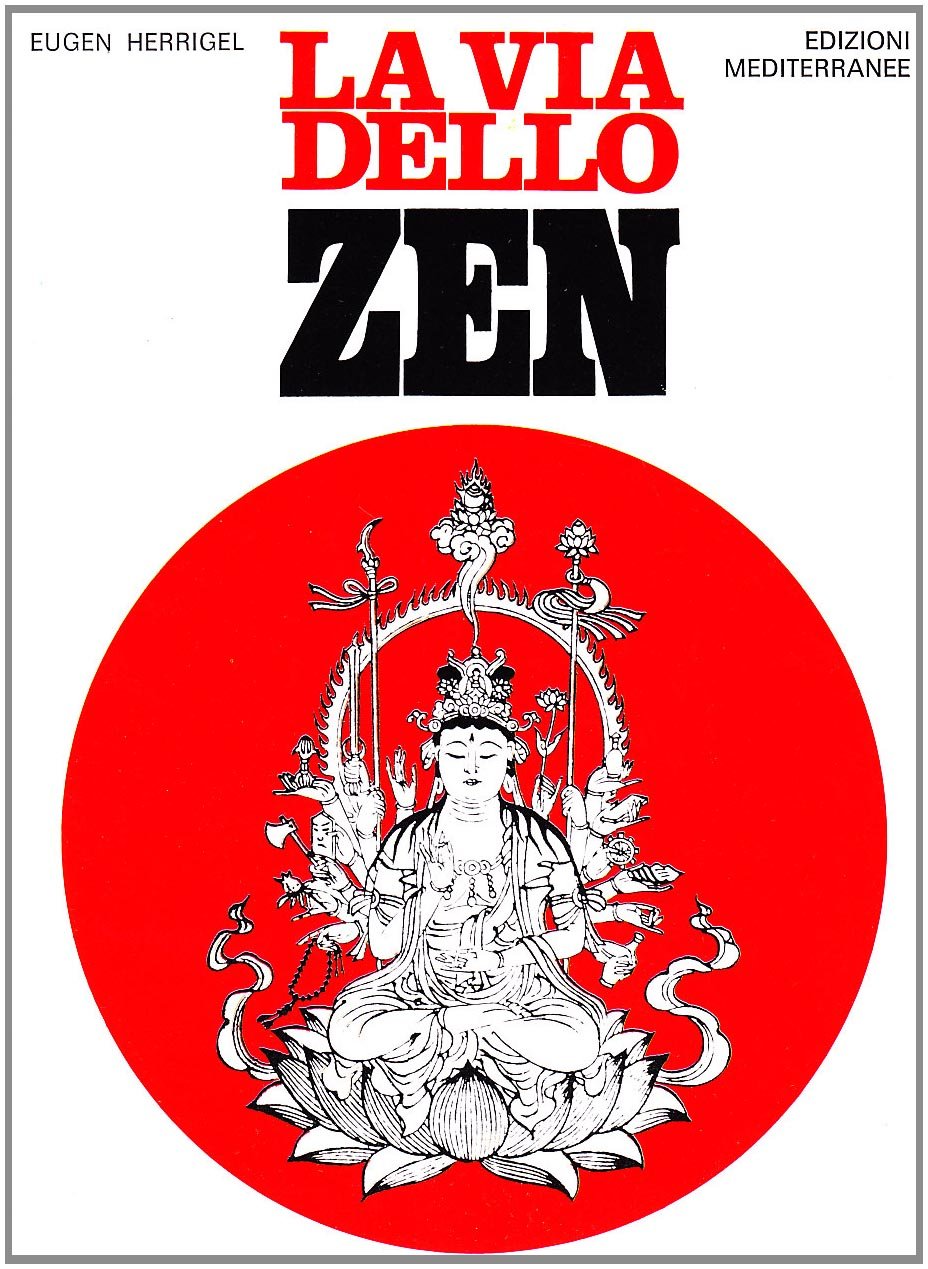
Abstract from "The Way of Zen" by Heugen Herrigel - Stralcio da "La Via dello Zen" di Heugen Herrigel


Risultati immagini per "La Via dello Zen" di Eugen Herrigel

The way that leads him to himself - as adventurous as dangerous - has proved difficult. The more he wants to be an" I ", the more day by day the man learns to respect everything that exists simply because it exists,

He feels at the center of the universe, revolves around himself, the theme of his existence consists of personal joys and sorrows, value, power, honor.

He has the presumption of having organized everything, of having subordinated everything to himself, of increasingly dominating the field of action of the unpredictable, of the chaotic. And this calls it progress, civilization!

When it feels cold to the heart it attributes the phenomenon to "bad mood" which reason can control. And not even this gives rise to the suspicion that he is living a wrong life.

Fascinated by himself, he wants to be a self-sufficient ego. And to live boldly, avidly from one's own center, to be the center himself, and calls it character, personality.

A center that was yesterday, today is, tomorrow will now be here now there, and finally claims to die a death of its own, very personal.

Faced with this limit and at the height of his possibilities, his attitude turns into real evil, his courage to live becomes haughtiness, arrogance.

Even if they wanted, these people would not be able to understand to what extent their conception of life is distorted. This is the reason why Zen Buddhism refuses to wake them up, does not preach models to follow, does not believe in the building power of the word. These are speeches that touch the ear but do not penetrate the heart.

Heugen Herrigel  - Abstract from "The Way of Zen"

Immagine correlata


Testo italiano:

La Via che lo porta a se stesso -avventurosa quanto pericolosa- si è rivelata difficile. Più vuole essere un "Io" più l'uomo giorno per giorno disimpara a rispettare tutto ciò che esiste semplicemente perché esiste, 

Si sente al centro dell'universo, ruota intorno a se stesso, la tematica della sua esistenza consiste di gioie e dolori personali, valore, potenza, onore.

Ha la presunzione di aver organizzato tutto, di aver tutto subordinato a se stesso, di dominare sempre più il campo d'azione dell'imprevedibile, del caotico. E questo lo chiama progresso, civiltà!

Quando sente freddo al cuore attribuisce il fenomeno a "cattivo umore" che la ragione può controllare. E nemmeno questo fa nascere in lui il sospetto che sta vivendo una vita sbagliata.

Affascinato da se stesso, vuol essere un Io autosufficiente. E vivere spavaldamente, avidamente dal proprio centro, essere centro egli stesso, lo chiama carattere, personalità.

Un centro che ieri era, oggi è, domani sarà ora qua ora là, e infine pretende di morire una morte propria, personalissima. 

Di fronte a questo limite e all'apice delle sue possibilità il suo atteggiamento si tramuta in vera e propria malvagità, il suo coraggio di vivere diventa alterigia, arroganza. 

Anche se lo volessero queste persone non riuscirebbero a capire sino a che punto sia distorta la loro concezione della vita. Questa è la ragione per cui il buddhismo Zen rinuncia a svegliarle, non predica modelli da seguire, non crede nella forza edificatrice della parola. Sono discorsi che sfiorano l'orecchio ma non penetrano nel cuore.

Heugen Herrigel  

Stralcio da: "La Via dello Zen"

martedì 17 dicembre 2019

Solstice, Book of Changes and Return... - Il Solstizio, il Libro dei Mutamenti ed il Ritorno...


Risultati immagini per Winter Solstice

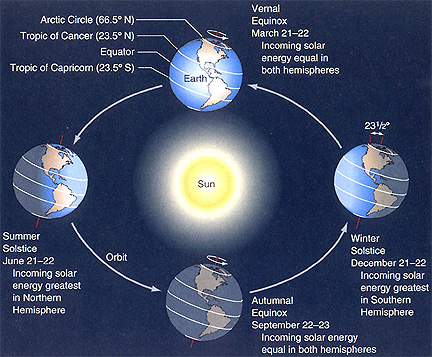
With the advent of the Winter Solstice, which falls on December 22 this year, the process that is called the "rebirth" of the sun takes place. The term solstice comes from the Latin "solstitium", which literally means "firm sun" (from "sol", sun, and "sistere", stand still).

In fact, in the northern hemisphere starting from the middle of the month until the last days of December, the sun seems to stop in the sky (the more evident the closer one gets to the equator). In astronomical terms, at that time the sun reverses its motion in the "declination" sense, ie it reaches the point of maximum distance from the equatorial plane. The darkness of the night reaches its maximum extension and the light of day is minimal. They occur that is the longest night and the shortest day of the year.

Immediately after the Solstice, the daylight gradually returns to increase and the darkness of the night slows down until the summer Solstice, in June, when we will have the longest day of the year and the shortest night. The day of the winter solstice generally falls on December 21st, this year on the 22nd, but due to the apparent inversion of solar motion the third / fourth following day becomes visible.

The sun, therefore, in the Winter Solstice reaches its weakest phase in terms of light and heat, and seems to fall into darkness but then returns to life and "invincible" in the same darkness ... In ancient times this event was celebrated as "Sol Invictus ". Everything starts from a careful observation of the behavior of the planets and the sun, and the ancients, as surprising as they may seem, were well aware of the tools that allowed them to observe and describe the movements and behavior of the stars.

At the same time the esoteric meaning is also that of the victory of the real which unmasks the fictitious, that is, what is true, the luminous growth, becomes evident thus showing the fiction of appearance.

This change in spiritual vision is also highlighted through various religious events that are celebrated throughout the northern hemisphere, the most felt for us Italians is Christmas, in which we remember the birth of Jesus, but there are many more wise men who are born at the same time, this is because the symbolism of the return to the light is too significant to miss the opportunity to mark the supremacy of this or that sage, or prophet or divine incarnation. This symbolism, in an abstract or secular form, has a connection also in the Chinese calendar and in the Book of Changes, the oldest text written by man, in which from December 22 the Return to the Light of Knowledge is remembered, with the hexagram "The Return ", which we will discuss later.

The calculation of time in China takes place through a lunar calendar in which the beginning of the year is sanctioned by the passage of thirteen moons (we consider the passage of new or black moons). This count has officially begun and established over 6,000 years ago.

The Book of Changes, as an oral tradition, even precedes the formation of the Chinese calendar: it was initially a divinatory system based on space-time co-ordinates and on an affirmative or negative oracular response in which the broken line represented the no and the line whole represented the yes, in a way completely analogous to the divinatory system of the Mongolian and Tibetan shamans (to which it is connected) and subsequently to that of the Pythia or the Sibyls in the Mediterranean world.

The basic cycles of the Chinese calendar consist of sixty years. The Chinese were pragmatic and the lunar system refers to the space-time condition on earth, to the seasonal cycles that affect all living beings; the movements of the planets, on the contrary, are not analyzed because the aspect of the here and now in which we find ourselves is privileged.

The commentaries known today on the Book of Changes are the work of Lao Tze and Confucius and / or his disciples (dating back to around 600 BC). In the I Ching, later Buddhist influences can also be recognized.

According to the Chinese philosophy the negative aspects should not be discarded but to give the right answer it is necessary to keep the right behavior. This behavior is representative of evolution. According to the Chinese and also Indian criteria (especially in the Taoist and Advaita system) it is necessary to live one's original nature by freeing oneself from superstructures such as religious, cultural and social influences. Zen itself urges us to pursue authenticity rather than perfectibility. In this regard I recall an ancient popular proverb: "Il Meglio is an enemy of the Good", which the peasants, my fellow countrymen, played in Calcata.

Here are some notes on how to consult the Book of Changes:

The Book of Changes is a text of knowledge and should be read as a "novel" in which the characters are costs evoked without attempting an analysis is the best way to approach it; the text must be understood both by means of rationality and by means of intuition, that is, using the mind with both its logical and analogical parts, namely Yang and Yin. Our study leads us to analyze all the expressive modes of the mind until we come to understand that the observer is not different from what is observed (and this is corroborated even by the recent discoveries of quantum physics).

Scope of the Book of Changes:
In the initial period of the formation of the Book of Changes the matriarchy was still in force and there are traces of it, for example in the hexagram "The Farsi Meeting", referring to the time of the summer Solstice (June 22) in which we see the woman taking the initiative in approaching a group of men. In Greek culture we witness the struggle between Venus, a representative of feminine charm (pleasing to the patriarchy), and Minerva who represents intelligence in its feminine qualities (similar to matriarchy).

At the time of the founding of the Chinese empire, the patriarchate that arrived in Europe with the Indo-Europeans was already in force undermining the matriarchy (see studies of the Lithuanian archaeologist Maria Ginbutas), whose last vestiges can be seen in Crete and Sardinia, places inhabited of the last matriarchal enclaves. The deities typical of the matriarchal period are the chthonic deities (of the earth and underground) while those relating to the patriarchal period are the "celestial" divinities who "virtualize" the very concept of divinity, for example the god of the Jews (which is then the same of Christianity and Islam).
Risultati immagini per in and yang

In the Indian zodiacal system and in the Book of Changes the masculine and feminine principles are considered equal, except for a slight accent in favor of the patriarchal culture; as an example we bring the concept, present in the Book of Changes, according to which the Earth without the fertilization of Heaven could not produce its fruits. It should be noted, however, that devotion is the main quality of the earth and knowledge is the quality of heaven. The two aspects must be integrated as they constitute a unique reality.

We recall here that Greek and Latin are languages ​​of Sanskrit derivation; likewise Greek philosophy represents a speculative aspect similar to that of Indian philosophy. In fact the Greek and Latin culture are of Indo-European origin (this civilization starts from the Indus valley and the Saraswati river, now dried up and extended to Persia and beyond). Another Indo-European population were the Hittites, who invaded Mesopotamia and neighboring areas.

Some philosophical considerations:
We can say that perfection in form is a convention and as such "perfectible"; the perfection for the Chinese and the Indians resides rather in the absolute, in the inner conscience, in the phase that precedes every attribute. Hence the concept of indefinable and ineffable truth that can only be evoked and lived in the dissolution of the individual subject in the universal subject. Being is an expression of the absolute that is neither understood nor described, but within dualism it appears in the form of an empirical knowledge of a subject who knows the object.

Our present research is based on the knowledge of the concrete aspects of this dual manifestation, except to deny it from time to time to remind ourselves that it is not the ultimate truth, this path is not learning to know what we are intimately, Absolute Consciousness, but there it serves above all to "detoxify" us from the externalizing tendency and from all that it produces (the sense of identification with the form and the name) because we want to give less value to this specific aspect. In reality we analyze the exterior (ie the recognizable aspects of the mind) only in order to be able to recognize its non-substantiality.

Reincarnation and Buddhism:
The reincarnation according to the Buddhist concept is not a personal one. The meeting of the Yin with the Yang leads to physical and psychic manifestation without this training being linked to the existence of an individual ego; it is rather an expressive way of consciousness which assumes a certain semblance and identity on the basis of the psychophysical characteristics in which it manifests itself.

In other words, the individual ego is only a mental tendency, a thought, an identifying capacity, which has no substance and is only a reflection that is formed in the consciousness. Therefore according to the Buddhist criterion there is no individual self that reincarnates but only a sequence of mental thoughts and tendencies in a sort of evolutionary continuation.

For this reason the realization of Self is indicated as a "finding" what one has always been and not the achievement of something that is obtained from scratch, this "self-knowledge is at the same time imponderable and indefinable and all inclusive. The set of all that is. While believing in a dual state (god and soul, creator and creature, me and the other, etc.) means fixation on a mental frame and therefore corresponds to death (understood as full awareness of Self).

Here we have the example of examining an organism, in which the vital whole is not taken into account, which is like dissecting a corpse to understand its functioning. But the understanding of what life is can only come from direct experience and not from a sterile analysis of the corpse.

Consciousness is, it is not consciousness of, and we are consciousness.

Representations related to the lines that make up the I Ching  hexagrams:

First Trigram:
(down)
1st line (from below) - Earth / Common People
2nd line - Man / Professional, Entrepreneurial Capacity
3rd line - Heaven / Official, Priest

Second trigram:
(Above)
1st line (from below) - Land / Minister
2nd line - Man / Sovereign
3rd line - Heaven / Supreme

Notice how between the first and the second trigram the hierarchical scale rises to embrace all expressive modes. The "optimal" mode, based on a compliance, is made explicit in hexagram 63 "After Consummation" and highlighted in its propensity to fulfillment in the hexagram 64 "Before Consummation". The 64 is the last hexagram in the Book of Changes and is considered of greater value than the previous one because the movement inherent in it leads to a sense of perennial growth and search for harmony.
But let us not forget that all the hexagrams are formed by the encounter of the Earth with the Sky.

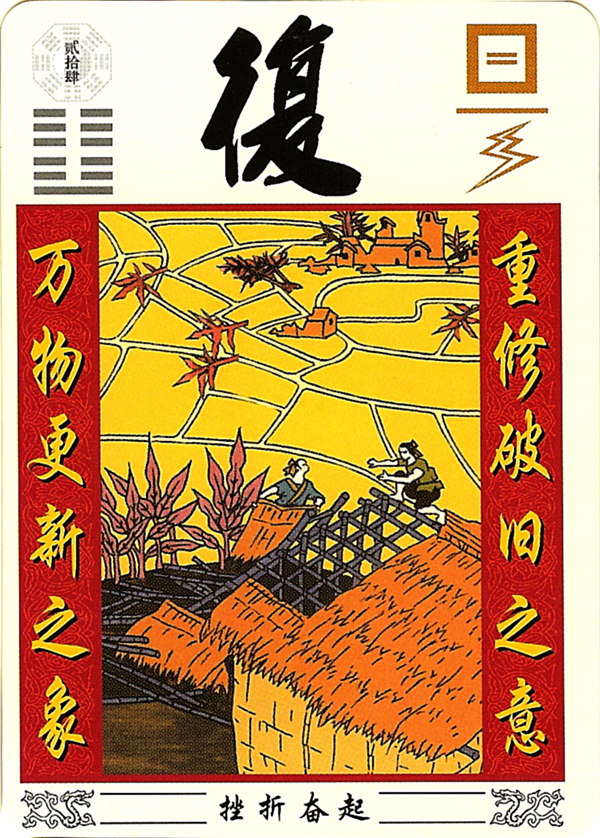
Hexagram of the Current Moment: "The Return" (From December 22nd to January 20th)


Risultati immagini per hexagram "The Return" (From December 22nd to January 20th)

Until the advent of the winter Solstice, the days get shorter and shorter and the Solstice itself is the shortest day of the whole year, after which the period of light gradually starts to increase again. This dynamic is visually represented by five broken lines with a single whole line at the base: the "light entering from below" returns.

"Root and trunk of the character" - the character is the extrinsic capacity; the whole line below the five broken lines represents the good as it is the root that begins to form the character. In this case the "ignoble" are still in the majority but one perceives the "inner light" or "good" that begins its ascent. In this circumstance we feel the call of the present good as conscience, as a substantial impulse to growth, and light as by its nature sets itself to amend what is unbecoming for the growth of our character.

The evolutionary capacity is the ability to get up again after each fall; it also represents every reversal of course, self-criticism, the knowledge of one's own characteristics: they turn their backs on the confusion of exteriority (appearing, wealth, etc.) and one sees the divine in the depths of the soul, or rather the 'One.

The aforementioned vision is in a germinal state but already possesses an intrinsic value with respect to external objects: the One is our nature and we find the identity in the evolutionary force that is fulfilled in existence.

The corresponding archetypal animal is the Buffalo (Capricorn); it represents the feminine and orderly minervin intelligence, the awakening of the individual soul. The order is meritocracy without abuse, the matriarchal mode. To obtain this type of order, the abandonment of emotion is necessary.
The buffalo also represents the stabilizing force in life's trials, integrity. It possesses self-control, dedication and loyalty; it is conservative and analytical.

Noble  and ignoble:
The Ways of the noble and the ignoble are produced by the movement within the collective psyche. The Noble cannot follow the path of the Ignobles to defeat the same as it would follow the "evil" in its path. What the Noble can do is to preserve the seed of intelligence, certainly not to seek results in the external world. This quality must be preserved in view of a subsequent development of consciousness in favor of evolution.

The mass always follows the dominant energy, whether positive or negative. At the moment when the mass reaches its maximum level of expansion, the following evolutionary level of consciousness is obtained. The evolutionary spiral is an eternal process that cannot be completed within the process itself as it takes place in space-time.

We are allowed to cultivate ourselves as long as we respect the conditions in which we find ourselves: we must not therefore renounce the performance of functions in the external sphere but carefully avoid suffering the fascination of all those mechanisms that weaken the power of conscience (also understood in a moral sense).

One finds the "right to act" by means of plausible efforts aimed at expanding and sharing the conscience that belongs to us; this attitude is typically Confucian while Taoism is more marked by observational detached institution.

The spiritual world is here in everyday life, it is always present in the event to represent the power of the event itself.

The identifications are all of an illusory nature but widening the field from the interest from exclusively personal to that of one's own family, of the land of origin to the continent, and so on, the boundaries of our mental “cage” widen up to transcend them, in a real process of expansion of consciousness ... which finally finds its fulfillment in itself.


Paolo D'Arpini  

Risultati immagini per paolo d'arpini lao tze


Testo italiano

Con l'avvento del Solstizio invernale, che quest'anno cade il 22 dicembre, avviene quel processo che è definito la "rinascita" del sole. Il termine solstizio viene dal latino "solstitium", che significa letteralmente "sole fermo" (da "sol", sole, e "sistere", stare fermo).

Infatti nell'emisfero nord a partire  dalla metà del mese  sino agli ultimi giorni di dicembre il sole sembra fermarsi in cielo (fenomeno tanto più evidente quanto più ci si avvicina all'equatore). In termini astronomici, in quel periodo il sole inverte il proprio moto nel senso della "declinazione", cioè raggiunge il punto di massima distanza dal piano equatoriale. Il buio della notte raggiunge la massima estensione e la luce del giorno la minima. Si verificano cioè la notte più lunga e il giorno più corto dell'anno.

Subito dopo il Solstizio, la luce del giorno torna gradatamente ad aumentare ed il buio della notte a ridursi fino al Solstizio d'estate, in giugno, quando avremo il giorno più lungo dell'anno e la notte più corta. Il giorno del solstizio invernale cade generalmente il 21 dicembre, quest'anno il 22, ma per l'inversione apparente del moto solare diventa visibile il terzo/quarto giorno successivo. 

Il sole, quindi, nel Solstizio d'inverno giunge nella sua fase più debole quanto a luce e calore, e pare precipitare nell'oscurità ma poi ritorna vitale e "invincibile" sulle stesse tenebre... Anticamente questo evento veniva celebrato come “Sol Invictus”. Tutto parte da una osservazione attenta del comportamento dei pianeti e del sole, e gli antichi, per quanto possa apparire sorprendente, conoscevano bene gli strumenti che permettevano loro di osservare e descrivere movimenti e comportamenti degli astri.

Nel contempo il significato esoterico è anche quello della vittoria del reale che smaschera il fittizio, cioè quel che vero, la crescita luminosa, diviene evidente mostrando così la finzione dell'apparire.

Questo cambiamento nella visione spirituale viene evidenziato anche attraverso diversi eventi religiosi che sono celebrati in tutto l'emisfero nord, il più sentito per noi italiani è il Natale, in cui si ricorda la nascita di Gesù, ma sono molti di più i saggi che sono fatti nascere nello stesso periodo, questo perché la simbologia del ritorno alla luce è troppo significativa per lasciarsi sfuggire l'occasione di marcare la supremazia di questo o quel saggio, o profeta o incarnazione divina. Tale simbologia, in forma astratta o laica, ha un collegamento anche nel calendario cinese e nel Libro dei Mutamenti, il più antico testo scritto dall'uomo, in cui dal 22 dicembre si ricorda il Ritorno alla Luce della Conoscenza, con l'esagramma “Il Ritorno”, di cui parleremo più avanti.

Il computo del tempo in Cina avviene attraverso un calendario lunare in cui l'inizio dell'anno è sancito dal passaggio di tredici lune (si considera il passaggio delle lune nuove o nere). Questo conteggio è ufficialmente iniziato e stabilito da oltre 6.000 anni.

Il Libro dei Mutamenti, come tradizione orale, addirittura precede la formazione del calendario cinese: si trattava inizialmente di un sistema divinatorio basato sulle coordinare spazio-temporali e su di un responso oracolare affermativo o negativo in cui la linea spezzata rappresentava il no e la linea intera rappresentava il si, in modo del tutto analogo al sistema divinatorio degli sciamani mongoli e tibetani (a cui è collegato) e successivamente a quello della Pizia o delle Sibille nel mondo mediterraneo.

I cicli di base del calendario cinese sono costituiti da sessanta anni. I Cinesi erano pragmatici ed il sistema lunare si rifà alla condizione spazio-temporale sulla terra, ai cicli stagionali che riguardano tutti gli esseri viventi; i movimenti dei pianeti, al contrario, non vengono analizzati perché si privilegia l'aspetto del qui ed ora in cui ci troviamo immersi.

I commentari oggi conosciuti sul Libro dei Mutamenti sono ad opera di Lao Tze e di Confucio e/o dei suoi discepoli (risalenti circa al 600 a.C.) Nell'I Ching si possono riconoscere anche successive influenze di tipo buddista.
Secondo la filosofia cinese gli aspetti negativi non vanno scartati ma per dare la giusta risposta è necessario tenere il giusto comportamento. Questo comportamento è rappresentativo dell'evoluzione. Secondo il criterio cinese ed anche indiano (soprattutto nel sistema Taoista ed Advaita) è necessario vivere la propria natura originaria liberandosi dalle sovrastrutture come le influenze religiose, culturali e sociali. Lo Zen stesso ci esorta a perseguire l'autenticità piuttosto che la perfettibilità.
A questo proposito rammento un antico proverbio popolare: “Il Meglio è nemico del Bene”, che recitavano i contadini, miei compaesani, di Calcata.


Inserisco qui alcune annotazioni sul come consultare il Libro dei Mutamenti:

Il Libro dei Mutamenti è un testo di conoscenza e andrebbe letto come un “romanzo” in cui i personaggi sono costituiti dagli esagrammi stessi. Lasciarsi pervadere dalle immagini evocate senza tentare un'analisi è il modo migliore per avvicinarsi ad esso; il testo va compreso sia per mezzo della razionalità che per mezzo dell'intuizione, usando cioè la mente con la sua parte sia logica che analogica ovvero Yang e Yin.
Il nostro studio ci porta ad analizzare tutti i modi espressivi della mente fino ad arrivare a comprendere che colui che osserva non è diverso da quello che è osservato (e questo viene corroborato persino dalle recenti scoperte della fisica quantistica).


Ambito di formazione del Libro dei Mutamenti:
Nel periodo iniziale della formazione del Libro dei Mutamenti vigeva ancora il matriarcato ed in esso se ne trovano delle tracce, per esempio nell'esagramma “Il Farsi Incontro”, riferito al momento del Solstizio estivo (22 giugno) in cui vediamo la donna prendere l'iniziativa nell'avvicinarsi ad un gruppo di uomini. Nella cultura greca assistiamo alla lotta tra Venere, rappresentante del fascino femminile (gradito al patriarcato), e Minerva che rappresenta l'intelligenza nelle sue qualità femminili (affini al matriarcato).

Al tempo della fondazione dell'impero cinese era già in vigore il patriarcato che arriverà in Europa con gli Indo-Europei scalzando il matriarcato (vedi studi dell'archeologa lituana Maria Ginbutas), le cui ultime vestigia sono ravvisabili a Creta ed in Sardegna, luoghi abitati delle ultime enclavi di stampo matriarcale.
Le divinità tipiche del periodo matriarcale sono le divinità ctonie (della terra e sotterranee) mentre quelle relative al periodo patriarcale sono le divinità “celesti” che “virtualizzano” il concetto stesso di divinità, per esempio il dio dei Giudei (che è poi lo stesso del cristianesimo e dell'islam).

Nel sistema zodiacale indiano e nel Libro dei Mutamenti il principio maschile e quello femminile sono considerati paritari salvo che per un lieve accento a favore della cultura patriarcale; come esempio portiamo il concetto, presente nel Libro dei Mutamenti, secondo il quale la Terra senza la fecondazione del Cielo non potrebbe produrre i suoi frutti. E' da notare comunque che la Devozione è la qualità principale della Terra e la Conoscenza è la qualità del Cielo. I due aspetti vanno integrati in quanto costituiscono una realtà unica.

Ricordiamo qui che il greco ed il latino sono lingue di derivazione sanscrita; parimenti la filosofia greca rappresenta un aspetto speculativo simile a quello della filosofia indiana. Infatti la cultura greca e latina sono di origine indoeuropea (tale civiltà parte dalla valle dell'Indo e del fiume Saraswati ora prosciugato e si estese fino alla Persia ed oltre). Altra popolazione indoeuropea furono gli Ittiti, che invasero la Mesopotamia e zone limitrofe.

Alcune considerazioni filosofiche:
Possiamo dire che la perfezione nella forma è una convenzione e come tale “perfettibile”; la perfezione per i Cinesi e gli Indiani risiede piuttosto nell'assoluto, nella coscienza interiore, nella fase che precede ogni attributo. Da qui il concetto di verità indefinibile ed ineffabile che può essere solo evocata e vissuta nello scioglimento del soggetto individuale nel soggetto universale. L'essere è espressione dell'assoluto che non si comprende né si descrive, ma all'interno del dualismo appare in forma di conoscenza empirica di un soggetto che conosce l'oggetto.

La nostra ricerca presente è basata sulla conoscenza degli aspetti concreti di questa manifestazione duale, salvo il negarlo di tanto in tanto per ricordarci che non è la verità ultima, questo percorso non è di apprendimento per conoscere quello che intimamente siamo, Coscienza Assoluta, ma ci serve soprattutto per “disintossicarci” dalla tendenza esternalizzante e da tutto ciò che essa produce (il senso di identificazione con la forma ed il nome) perché vogliamo dare meno valore a questo aspetto specifico. In realtà analizziamo l'esterno (ovvero gli aspetti riconoscibili della mente) solo allo scopo di poterne riconoscere la non-sostanzialità.

Reincarnazione e Buddismo:
La reincarnazione secondo il concetto buddista non è di tipo personale. L'incontro dello Yin con lo Yang porta alla manifestazione fisica e psichica senza che questo percorso formativo sia legato all'esistenza di un io individuale; si tratta piuttosto di un modo espressivo della coscienza che assume una determinata sembianza ed identità sulla base delle caratteristiche psicofisiche in cui si manifesta.

In altre parole l'io individuale è solo una tendenza mentale, un pensiero, una capacità identificativa, che non ha sostanza ed è solo un riflesso che si forma nella coscienza. Perciò secondo il criterio buddista non c'è alcun io individuale che si reincarna ma solo una sequenza di pensieri e tendenze mentali in una sorta di prosieguo evolutivo.

Per questa ragione si indica la realizzazione di Sé come un “ritrovare” ciò che si è sempre stati e non il raggiungimento di un qualcosa che si ottiene ex novo, questa “conoscenza di sé è allo stesso tempo imponderabile ed indefinibile ed onnicomprensiva. L'insieme di tutto ciò che è. Mentre credere in uno stato duale (dio e anima, creatore e creatura, io e l'altro, etc.) significa fissazione su un fotogramma mentale e quindi corrisponde alla morte (intesa come piena consapevolezza di Sé).
Qui si pone l'esempio dell'esame di un organismo, in cui non si tiene conto dell'insieme vitale, che è come il sezionare un cadavere per capirne il funzionamento. Ma la comprensione di quel che è vita può venire solo dalla diretta esperienza e non da una sterile analisi sul cadavere.

La coscienza è, non è coscienza di, e noi siamo coscienza.

Rappresentanze collegate alle linee che compongono gli esagrammi dell'i Ching:

Primo Trigramma:
(in basso)
1a linea (dal basso) - Terra/Gente Comune
2a linea - Uomo/ Professionista, Capacità Imprenditoriale
3a linea - Cielo/Funzionario, Sacerdote

Secondo trigramma:
(sovrastante)

1a linea (dal basso) - Terra/Ministro
2a linea - Uomo/Sovrano
3a linea - Cielo/Supremo

Si noti come tra il primo ed il secondo trigramma la scala gerarchica salga per abbracciare tutti i modi espressivi. La modalità “ottimale”, sulla base di una confacenza, viene esplicitata nell'esagramma 63 “Dopo il Compimento” ed evidenziata nella sua propensione al compimento nell'esagramma 64 “Prima del Compimento”. Il 64 è l'ultimo esagramma nel Libro dei Mutamenti ed è considerato di maggior valore rispetto al precedente perché il movimento insito in esso porta ad un senso di perenne accrescimento e ricerca di armonia.
Ma non dimentichiamo che tutti gli esagrammi sono formati dall'incontro della Terra con il Cielo.

Esagramma del Momento Corrente: “Il Ritorno” (Dal 22 dicembre al 20 gennaio)

Fino all'avvento del Solstizio invernale le giornate si accorciano sempre più ed il Solstizio stesso rappresenta la giornata più corta dell'intero anno, dopo la quale il periodo di luce prende gradualmente ad aumentare di nuovo. Questa dinamica viene rappresentata visivamente da cinque linee spezzate con una sola linea intera alla base: la “luce che entra dal basso” ritorna.

“Radice e tronco del carattere”- il carattere è la capacità estrinsecativa; la linea intera sottostante alle cinque spezzate rappresenta il bene in quanto essa è la radice che inizia a formare il carattere.
In questo caso gli “ignobili” sono ancora in maggioranza ma si percepisce la “luce interiore” o “bene” che inizia la sua ascesa.
In questa circostanza sentiamo il richiamo del bene presente come coscienza, come sostanziale impulso alla crescita, e la luce come da sua natura si pone ad emendare ciò che è disdicevole per la crescita del nostro carattere.

La capacità evolutiva è la capacità di rialzarsi dopo ogni caduta; rappresenta anche ogni inversione di rotta, l'autocritica, la conoscenza delle proprie caratteristiche: si voltano le spalle alla confusione dell'esteriorità (l'apparire, la ricchezza, ecc.) e si scorge il divino nel profondo dell'anima, ovvero l'Uno.

La suddetta visione è in stato germinale ma possiede già un valore intrinseco rispetto agli oggetti esteriori: l'Uno è la nostra natura e troviamo l'identità nella forza evolutiva che si compie nell'esistenza.

L'animale archetipale corrispondente è il Bufalo (Capricorno); esso rappresenta l'intelligenza minervina femminile ed ordinativa, il risveglio dell'anima individuale. L'ordinamento è meritocrazia senza prevaricazione, la modalità appunto matriarcale. Per ottenere questo tipo di ordine è necessario l'abbandono dell'emozionalità.
Il bufalo rappresenta inoltre la forza stabilizzatrice nelle prove della vita, l'integrità. Esso possiede autocontrollo, dedizione e fedeltà; è conservatore ed analitico.

Il Nobile e L'ignobile:
Le Vie del Nobile e dell'Ignobile sono prodotte dal movimento interno alla psiche collettiva. Il Nobile non può seguire la via degli Ignobili per sconfiggere i medesimi in quanto seguirebbe il “male” nel suo percorso. Ciò che il Nobile può fare è conservare il seme dell'intelligenza, non certo ricercare risultati nel mondo esterno. Questa qualità va preservata in vista di un successivo sviluppo della coscienza a favore dell'evoluzione.

La massa segue sempre l'energia dominante, positiva o negativa che sia. Al momento in cui la massa raggiunge il suo massimo livello di espansione si ottiene il seguente livello evolutivo della coscienza. La spirale evolutiva è un processo eterno che non può compiersi all'interno del processo stesso in quanto si svolge nello spazio-tempo.

Ci è concesso coltivare noi stessi a patto di rispettare le condizioni in cui ci troviamo: non dobbiamo quindi rinunciare allo svolgimento delle funzioni nell'ambito esterno ma evitare accuratamente di subire il fascino di tutti quei meccanismi che indeboliscono il potere della coscienza (qui intesa anche in senso morale).

Si trova il “retto agire” per mezzo di verosimili sforzi volti ad ampliare e condividere la coscienza che ci appartiene; questo atteggiamento è tipicamente confuciano mentre il Taoismo è più improntato all'osservazione distaccata.
Il mondo spirituale si trova qui nella vita quotidiana, è sempre presente nella manifestazione a rappresentare il potere della manifestazione stessa.
Le identificazioni sono tutte di carattere illusorio ma allargando il campo dall'interesse da esclusivamente personale a quello della propria famiglia, della terra di origine al continente, e così via, si allargano i confini della nostra “gabbia” mentale fino a trascenderli, in un vero e proprio processo di espansione della coscienza... che infine trova il compimento in se stessa. 

Paolo D'Arpini

lunedì 9 dicembre 2019

Short essay on Lay Spirituality - Breve saggio sulla Spiritualità Laica


Risultati immagini per Breve saggio sulla Spiritualità Laica

The purpose of this paper is to make clear some basic concepts about what I call "Lay Spirituality" which is certainly not a new philosophy, absolutely not! It is simply a way of expressing something that was already there, in my personalized way back home.

For a kind of sympathy that I perceive towards all the people with whom I can share emotions and feelings, I thought it could be useful (for me and for them) to clarify some aspects of self-knowledge that still appeal to the person. Since (in any case) from the person we must start as a depository of the first spark of Consciousness from which everything derives. I do not want therefore to diminish the value of this person, and like "this" also all the others that patiently follow and precede.

Knowing the embodied characteristics, knowing how to identify the impulses that distinguish our person, is certainly useful so as not to be fooled by the mind, so as not to fall into the trap of false identity. In fact all that can be described cannot be "we" but only the functional structure of the body / mind (in which we recognize ourselves). This psycho-physical apparatus is the result of the mixture of natural forces (or elements) and psychic qualities (which are elements of expression). In the multiform interconnection of these energies the infinite beings take shape ... Although - in truth - we are not dealing with "forces" or "beings" but with a single force and a single being that assumes various aspects during its unfolding in space-time.

But here it is necessary to describe the "separative capacity" (maya - yin and yang) which produces the illusion of diversity. It is the first concept that is formed in the mind (in fact it is the mind itself) simultaneously with the appearance of the thought "I". Attention it is not the Absolute Ego, Being and being aware of it beyond any identification, it is instead the first conscious reflection (of this Ego) in the mind and that allows the objectification and perception of exteriority through the senses. In this way the dissociative mechanism of "I am this" is implemented and what is observed "is other". Thus dualism takes on a semblance of reality and is corroborated by the consequential causality of the transformations that unfold in space / time. The dual formative process is easy to identify by the shrewd intellect (in the sense of attentive) but this consideration is still within the mirror reflection of the mind, so from the point of view of the Absolute Knowledge also this explanation (or understanding) it is futile, perhaps unnecessary and perhaps even misleading ... (due to the appropriating tendency of specular thinking) and here I return to the need to know one's own mind in order not to be deceived by its empirical ruminations, that is, aimed at demonstrating an objective reality.

At this point someone might ask: "... So why write all this? Why read it? "- But the answer is trivial, sometimes before throwing the garbage we feel the need to examine it in every detail so as not to have regrets ... Unfortunately in years and years of low flight we have developed a strong attachment to the ballast ... !

Paolo D’Arpini

Risultati immagini per Breve saggio sulla Spiritualità Laica

Post Scriptum.

The individual conscience is in constant movement and evolution, following the different ways of development of the society or the historical periods in which human events manifest themselves. Each transition resembles the overcoming of a level of learning, a bit like what happens in the DNA spiral. Consciousness, in this case better defined as mind, moves from the simplest expressions to the most complex ones. A sort of testimony-memory of the various sophisticated processes of life.


Testo italiano:

Lo scopo di questo  scritto è quello di mettere in chiaro alcuni concetti base su ciò che io chiamo "Spiritualità Laica" che non è certo una nuova filosofia, assolutamente no! Semplicemente è un modo di esprimere qualcosa che c'era già, nella mia via personalizzata del ritorno a casa.

Per una sorta di simpatia che percepisco verso tutte le persone con le quali riesco a condividere emozioni e sentimenti ho pensato che potesse essere utile (per me e per loro) chiarire alcuni aspetti dell'auto conoscenza che ancora si rivolgono alla persona. Poiché (comunque) dalla persona dobbiamo partire in quanto depositaria della prima scintilla di Coscienza dalla quale tutto deriva. Non voglio perciò sminuire il valore di questa persona, e come "questa" anche tutte le altre che pazientemente seguono e precedono.

Conoscere le caratteristiche incarnate, saper individuare le pulsioni che contraddistinguono la nostra persona, è sicuramente utile per non farci imbrogliare dalla mente, per non cadere nella trappola della falsa identità. Infatti tutto ciò che può essere descritto non può essere “noi” ma solo la struttura funzionale del corpo/mente (nella quale ci riconosciamo). Questo apparato psico-fisico è il risultato della commistione di forze naturali (od elementi) e di qualità psichiche (che degli elementi sono espressione). Nella multiforme interconnessione di queste energie gli infiniti esseri prendono forma…. Anche se –in verità- non si tratta di “forze” né di “esseri” bensì di una singola forza e di un solo essere che assume vari aspetti durante il suo svolgersi nello spazio-tempo.

Ma qui occorre descrivere la “capacità separativa” (maya – yin e yang) che produce l’illusione della diversità. Essa è il primo concetto che si forma nella mente (in effetti è la mente stessa) contemporaneamente all’apparire del pensiero “io”. Attenzione non si tratta dell’Io Assoluto, l’Essere ed esserne coscienti aldilà di ogni identificazione, si tratta invece del primo riflesso cosciente (di tale Io) nella mente e che consente l’oggettivazione e la percezione dell’esteriorità attraverso i sensi. In tal modo si attua il meccanismo dissociativo di “io sono questo” e quel che viene osservato “è altro”. Così il dualismo assume una sembianza di realtà e viene corroborato dalla causalità consequenziale alle trasformazioni che si srotolano nello spazio/tempo. Il processo formativo duale è di facile individuazione da parte dell’accorto intelletto (nel senso di attento) ma questa considerazione è ancora all’interno del riflesso speculare della mente, per cui dal punto di vista della Conoscenza Assoluta anche questa spiegazione (o comprensione) è futile, forse innecessaria e magari addirittura fuorviante… (a causa della tendenza appropriativa del pensiero speculare) e qui ritorno alla necessità di conoscere la propria mente per non rimanere ingannati dalle sue elucubrazioni empiriche, tese cioè a dimostrare una realtà oggettiva.

Qualcuno potrebbe chiedersi a questo punto: “…Allora perché scrivere tutto ciò? Perché leggerlo?” – Ma la risposta è banale, talvolta prima di gettare l’immondizia sentiamo il bisogno di esaminarla in ogni particolare in modo da non aver poi rimpianti… Purtroppo in anni ed anni di volo basso abbiamo sviluppato un forte attaccamento alla zavorra…!

Paolo D’Arpini

Post Scriptum.
La coscienza individuale è in costante movimento ed evoluzione, seguendo i diversi modi di sviluppo della società od i periodi storici nei quali si manifestano le vicende umane. Ogni transizione assomiglia al superamento di un livello d’apprendimento, un po’ come succede nella spirale del DNA. La coscienza, in questo caso meglio definirla mente, si muove dalle espressioni più semplici a quelle più complesse. Una sorta di testimonianza-memoria dei vari processi sofisticati della vita.

sabato 7 dicembre 2019

The light of Consciousness is reflected in the mind and creates the world - La luce della Coscienza si riflette nella mente e crea il mondo


Risultati immagini per La luce della Coscienza si riflette nella mente e crea il mondo

"Light and reflected light share the same fundamental nature, like existence and conscience, spirit and matter, they are one thing" (Saul Arpino)

The mind is a mirror that reflects the inner light to direct it towards external objects, these objects are identified by the mirror's emission and intensity capacity. As a child I loved playing with a mirror stolen from my mother, with it I caught the sunlight and directed it through a small window into a dark cellar. Only what was illuminated by the beam of light was visible while the rest of the walls and things piled up on the floor remained obscure. Exactly the same way the mind works, which illuminates the external world.

By analogy we see that the source of light, the sun, is like the supreme awareness while the mirror is the mind. But the mind itself is actually conscious, it is the reflective aspect of consciousness. I say "reflective" to indicate its propensity to turn towards the outside. The mind is nothing but the capacity of the conscience to externalize itself.

We can observe this projective process during the dream, in which the mind by itself and in itself creates a whole world, with various entities in relation to each other including a character identified by the dreamer as himself. This is the game of mind that brings out the form of the ego and the other. At this point the doubt arises "how is it possible that awareness can be trapped and limited by the mind?" In truth the limitation of consciousness is not real, in the same way that the light of the sun is not compromised or impaired by the mirror, likewise the pure awareness is untouched and not divided by the imaginary work of the individual mind.

Where are they internal and external to the supreme consciousness that both penetrate and overcome them? In reality the mere idea of ​​such a separation is unthinkable in the light source that alone is. Let us take as an example the dreamer who is not crippled or compromised by his dream, since he himself is projected into the dream and at the same time not being any, the individual conscience and pure awareness are also placed in the same terms of relationship.

Once, in response to the question "what prevents the undifferentiated light of consciousness from revealing itself directly to the individual who ignores it", the sage Ramana Maharshi replied "how water in a pot reflects the sun within the narrow limits of the container, thus the latent tendencies (mental predispositions), which act as a reflective medium, capture the all-pervading and infinite light of consciousness, presenting itself in the form of the phenomenon called mind ”. This essay response makes us perceive how the mind is nothing but a conglomeration of thoughts, in which the thought "I" stands out from which the false notion of a separate individual arises, which in reality is as illusory as the presumed separation of a character dreamed of compared to the dreamer.

Attention, we consider however that the attempt to understand intellectually this process is only one of the aspects of the "dream" and not the truth. In fact the essays indicate the truth as ineffable and incomprehensible to the mind (meaning the separative and externalized mind), as much as the image reflected in the mirror cannot understand or replace the person reflected in it. A reflection is only reflection is not substance.

So how is it possible to reach the "substance" that we are?

The observer, being in himself a consciousness, can never become an "object". Objectification is a component of externalized dualism: "knower, known". But this duality can be recomposed in a "unicum" in which, by disappearing diversification (that is, the reflective element aimed at externalization), simple "knowledge" remains. This is the undifferentiated awareness for which Ramana Maharshi advises: "When the ego (ego or mind) turns its attention to its source, accumulated mental tendencies or predispositions become extinct and in the absence of these (which are the reflecting medium ) also the phenomenon originated by the "reflection", that is the mind, disappears and is absorbed in the Light of the only Reality (the Heart) ".

Yet despite being basically simple and direct, self-knowledge remains an alien exam to most people. People refuse to know each other, prefer mystery and ignorance, evidently because of those famous mental tendencies accumulated by the mind, crammed into memory and imagination.

Paolo D'Arpini

Risultati immagini per La luce della Coscienza paolo d'arpini


Testo Italiano

“Luce e luce riflessa condividono la stessa natura fondamentale, come esistenza e coscienza, spirito e materia, sono un’unica cosa” (Saul Arpino)

La mente è uno specchio che riflette la luce interiore per dirigerla verso gli oggetti esterni, questi oggetti vengono identificati tramite la capacità di emissione ed intensità dello specchio. Da bambino adoravo giocare con uno specchietto rubato a mia madre, con esso catturavo la luce solare e la dirigevo, attraverso una finestrella, dentro una cantina buia. Solo ciò che era illuminato dal fascio luminoso era visibile mentre il resto delle pareti e delle cose accatastate sul pavimento restava oscuro. Esattamente allo stesso modo funziona la mente, che illumina il mondo esterno.

Per analogia vediamo che la sorgente di luce, il sole, è come la consapevolezza suprema mentre lo specchietto è la mente. Ma la mente stessa, in effetti, è cosciente, essa è l’aspetto riflettente della coscienza. Dico “riflettente” per indicare la sua propensione a rivolgersi verso l’esterno. La mente non è altro che la capacità della coscienza di esteriorizzare se stessa.

Questo processo proiettivo lo possiamo osservare durante il sogno, in cui la mente da se stessa ed in se stessa crea un intero mondo, con varie entità in rapporto fra loro incluso un personaggio identificato dal sognatore come se stesso. Questo è il gioco della mente che fa apparire la forma dell’io e dell’altro. A questo punto il dubbio sorge “com’è possibile che la consapevolezza possa venire intrappolata e limitata dalla mente?”. In verità la limitazione della coscienza non è reale, allo stesso modo in cui la luce del sole non risulta compromessa o menomata dallo specchio, parimenti la pura consapevolezza è intonsa e non divisa dall’operato immaginario della mente individuale.

Dove sono interno ed esterno per la coscienza suprema che entrambi li compenetra e li supera? In realtà la sola idea di una tale separazione è impensabile nella sorgente di luce che unicamente è. Prendiamo ad esempio il sognatore che non viene menomato o compromesso dal suo sogno, essendo lui stesso ogni cosa proiettata nel sogno ed allo stesso tempo non essendone alcuna, parimenti la coscienza individuale e la pura consapevolezza si pongono negli stessi termini di relazione.

Una volta, in risposta alla domanda “cosa impedisce all’indifferenziata luce della coscienza di rivelarsi direttamente all’individuo che l’ignora”, il saggio Ramana Maharshi rispose “come l’acqua in una pentola riflette il sole nei limiti ristretti del contenitore, così le tendenze latenti (predisposizioni mentali), che agiscono da mezzo riflettente, catturano l’onnipervadente ed infinita luce della coscienza presentandosi nella forma del fenomeno chiamato mente”. Questa risposta del saggio ci fa percepire come la mente non sia altro che un agglomerato di pensieri, in cui primeggia il pensiero “io” dal quale sorge la falsa nozione di un individuo separato, che in realtà è illusorio tanto quanto la presunta separazione di un personaggio sognato rispetto al sognatore.

Attenzione, consideriamo però che il tentativo di comprendere intellettualmente questo processo è solo uno degli aspetti del “sogno” e non la verità. Infatti i saggi indicano la verità come ineffabile ed incomprensibile alla mente (intendendo la mente separativa ed esteriorizzata), tanto quanto l’immagine riflessa nello specchio non può capire o sostituirsi alla persona che vi si riflette. Un riflesso è solo riflesso non è sostanza.

E dunque com’è possibile giungere alla “sostanza” che noi siamo?
Colui che osserva, essendo in se stesso coscienza, non può mai divenire un “oggetto”. L’oggettivazione è una componente del dualismo esternalizzato: “conoscitore, conosciuto”. Ma questa dualità può essere ricomposta in un “unicum” in cui, scomparendo la diversificazione (ovvero l’elemento riflettente rivolto all’esteriorizzazione) permane la semplice “conoscenza”. Questa è la consapevolezza indifferenziata per ottenere la quale Ramana Maharshi consiglia: “Quando l’io (ego o mente) rivolge la propria attenzione alla sua sorgente, le tendenze o predisposizioni mentali accumulate si estinguono ed in assenza di queste (che sono il mezzo riflettente) anche il fenomeno originato dalla “riflessione”, ossia la mente, scompare e viene assorbito nella Luce della sola Realtà (il Cuore)”.

Eppure malgrado sia in fondo semplice e diretta l’auto-conoscenza resta un esame alieno ai più. La gente rifiuta di conoscersi, preferisce il mistero e l’ignoranza, evidentemente a causa di quelle famose tendenze mentali accumulate dalla mente, stipate nella memoria e nell’immaginazione.


Paolo D'Arpini