venerdì 19 aprile 2019

From ecosophy to pantheism... - Dall'ecosofia al panteismo


Risultati immagini per Dall'ecosofia alla spiritualità laica

"Come le api producono il miele raccogliendo le essenze delle piante riducendone il succo in una sola qualità, così che le piante non avvertono più la distinzione: io sono il succo di questa pianta o di quella; così tutte queste creature viventi, immergendosi nell'Essere, non hanno la consapevolezza: siamo immerse nell'Essere: Qualunque sia la loro forma, di tigre, di lupo, di verme o di zanzara, quella forma tornano ad essere. Ciò che è infinitamente sottile: ha Quello (l'Essere) come essenza, Quello è la Realtà, l'atman e 'Tu sei Quello'..." (Chandogya Upanisad VI, 9)

Il concetto di  spiritualità è una attribuzione di carattere umano. Si dice che solo l’uomo sia in grado di sperimentare coscienza di sé ed intelligenza discriminativa e razionale. Questa capacità possiamo anche definirla “spirito”… Allo stesso tempo siccome non esiste cosa su questa terra e nell’universo, che possa dirsi separata -in quanto il tutto si manifesta nella totalità del “tutto”- e la vita stessa è inscindibile nelle sue varie manifestazioni, manifestando radici comuni in tutte le sue forme, di qualsiasi genere e natura, si può intuire che la caratteristica della “coscienza-intelligenza” sia presente in ogni elemento vivo, che dimostra nascita, crescita e morte, sia pur in diversi gradienti.

Facciamo l’esempio della crescita in “intelligenza e coscienza” come avviene nell’uomo. Cominciando dalla sua formazione in quanto unione di spermatozoo ed ovulo, passando per la sua fase embrionale, alla formazione completa degli organi, alla fuoriuscita dal grembo, all’inizio della sua capacità di apprendimento e discernimento… attraverso vari momenti evolutivi che -pur apparentemente differenti in qualità- rappresentano comunque una crescita del medesimo soggetto.

Se ciò avviene nell’uomo perché non ipotizzare che possa avvenire in ogni altra forma vitale, pur in una scala differenziata e di diversa qualità? Se accettiamo questa premessa come un presupposto di condivisione della stessa  “coscienza ed intelligenza”, ecco che improvvisamente possiamo riconoscere in tutto ciò che è vivo la qualità “spirituale”…

Ma ben inteso non in senso religioso… quella è un’assunzione che non compete noi laici. No, riconosciamo lo “spirito” in quanto capacità della vita di esprimere se stessa in forme energetiche dotate di coscienza.. e qui possiamo fermarci…

Poi, dal punto di vista poetico ed emozionale, perché non descrivere la vita di un albero come espressione spirituale della natura? Cosa c’è di male…

Innegabilmente anche  un albero è vivo e si esprime attraverso le sue funzioni biologiche e manifesta desideri e repulsioni, come noi umani…

Partendo da questo assioma arriviamo al concetto di "Ecosofia", una forma di pensiero para-spirituale-ecologico elaborata dal filosofo norvegese Arne Naess

"Arne Dekke Eide Næss (Oslo, 27 gennaio 1912 – Oslo, 14 gennaio 2009) è stato un filosofo norvegese. Ha studiato filosofia, matematica ed astronomia all'università di Oslo, alla Sorbona e a Vienna dove frequentò il locale Circolo. Docente di filosofia a Oslo fino al 1969, si è interessato di: storia della filosofia, filosofia della scienza, etica; nutrì particolare interesse per il pensiero di Spinoza e Gandhi. Ha fondato la rivista internazionale di filosofia Inquiry che ha diretto fino al 1975.  È stato il primo ad utilizzare il termine ecosofia (od ecologia profonda) il cui concetto è stato ampiamente sviluppato da filosofi come Raimon Panikkar e Félix Guattari." (Wikipedia)

I concetti   da Naess propugnati possono facilmente essere ricollegati al pensiero naturalistico, sia in termini prettamente materialistici che spirituali. In passato questa visione olistica è stata anche definita "panteismo".  Naess ha approfondito questo concetto, sostenendo l'unitarietà della vita e del substrato sottile che la compenetra, da qui anche l'uso  della parola "ecologia profonda" da lui  usata per significare lo studio della vita  e dell'ambiente sino alle sue più profonde origini e radici.

Il  filone dell'ecosofia ha poi trovato sinergie e collegamenti con altre filosofie, o meglio pratiche di vita,  naturalistiche e spirituali, come ad esempio  la "spiritualità  naturale o laica", che assieme all'ecosofia formano una sorta di "unità".

La meraviglia con cui i primi uomini hanno osservato e adorato gli aspetti molteplici della natura, degli animali, degli alberi e dell'habitat, a cui venivano dati nomi, qualità e sembianze divine, il riconoscersi parte integrante di questo insieme, il sapere che nulla può essere separato e che ogni cosa compartecipa ad ogni altra cosa in un afflato panteista, tutto ciò può essere definito ecologia profonda o ecosofia, neologismi  inventati da Arne Naesse per descrivere qualcosa che era già, che faceva parte del nostro sentire ancestrale. E' la meraviglia di sé, la coscienza di esistere e di essere consapevoli di esistere, la capacità di comprendere, di sentire emozioni profonde, di riconoscersi in tutto ciò che è, l'intuizione di essere presenti senza ombra di dubbio e di percepire la pienezza del proprio essere in tutto ciò che si manifesta, questo il sentire  della spiritualità naturale o laica.

Insomma parlando di ecologia profonda e di spiritualità laica si parla di corpo e di spirito, senza separazione alcuna fra l'uno e l'altro, due aspetti della stessa incredibile magia. Siccome il conosciuto ha bisogno di essere ricordato, conservato e riproposto, tempo dopo tempo, in forme sottili come avviene per la conoscenza filosofica o per le religioni, ed in forme materiali come avviene con il Dna e con il tramando delle arti e della capacità tecniche, ricorriamo alla simbologia archetipale come deposito di memoria e conoscenza.

Diceva il grande saggio non-dualista nostro contemporaneo,  Nisargadatta Maharaj: «Noi non possiamo essere altro che una parte integrante della manifestazione totale e del totale funzionamento ed in nessuna maniera possiamo esserne separati».  In ciò si coglie una similitudine con la Panarchia che pur essendo un pensiero comparso quasi due secoli prima, è stato dimenticato dalla storia.

Forse non abbiamo nemmeno bisogno di ricorrere alla storia che con le interpretazioni di chi riporta, narra, commenta, fatti e comportamenti umani, non ci fa vivere o rivivere esperienze aderenti alla realtà. Forse ci dobbiamo rivolgere a quel grande laboratorio che è la memoria collettiva. Di fatto, in questo momento possiamo entrare nella storia, possiamo guardare a tutte quelle "anime" presenti oggi nel mondo, che sono rappresentative di realtà che vanno da uno stato che non si discosta molto da quello primordiale a quello che rappresenta la condizione più avanzata della tecnologia. 

Questo gioco della natura ci consente un'osservazione diretta di sistemi di aggregazione sociale, culturale ed economica, di interpretarli e di cercare di capire che cosa fare per superare le vecchie e le nuove miserie e di essere attori entusiasti nel progetto di costruzione di un mondo equo, solidale, felice, e quindi con un futuro.
La natura (o la vita) di per se stessa è "non-duale"  e quali sono in estrema sintesi  i  legami tra la spiritualità laica e l'ecologia profonda di Naess?

Nel significato originale della parola ecologia, rispetto alla sua consimile ambientalismo, è già delineata una differenza d'intendimento e pure che l'esatta traduzione di ecologia è studio dell'ambiente. Mentre in ambientalismo si presume il criterio della semplice conservazione. Aggiungendo al termine ecologia l'aggettivo profonda, ecco che si tende ad ampliarne il significato originario, integrandovi il concetto di ulteriore ricerca all'interno della struttura ambientale. Insomma si va a scoprire il substrato e non si osserva solo la superficie, la pelle dell'ambiente.

Lo stesso dicasi per la parola spiritualità e la sua qualificazione laica. In questo caso si cerca di dare una connotazione libera alla spiritualità comunemente intesa come espressione della religione. La spiritualità è l'intelligenza coscienza che pervade la vita, è il suo profumo. Non è assolutamente un risultato della religione, anzi spesso la religione tende a tarpare e a nascondere questa naturale spiritualità presente in tutte le cose.

Da un punto di vista delle espressioni archetipali, la spiritualità laica e l’ecologia profonda affondano il loro esistere nella coscienza. L’uomo si è interrogato sulle forze della natura e sulla vita e questo interrogarsi ha prodotto la spiritualità, l’ecologia profonda è una forma  di approfondimento in senso materiale di questa ricerca.

Entrambi gli approcci partono dall’esistente, dal modo di percepire noi stessi e la realtà che ci circonda, il primo è un approccio in senso metafisico mentre il secondo prende in esame il fisico ma non v’è differenza fra i due aspetti, se non nel modo descrittivo. 

Nell’ecologia profonda come nella spiritualità naturale si sottintende un quid che impregna le trame della vita. Tale quid è stato descritto come sorgente di tutte le cose, indipendentemente dal chiamarlo spirito o forza vitale. In realtà lo spirito, in quanto coscienza intelligenza, è il modo espressivo, il profumo esistenziale, di ciò che dal punto di vista dell'osservazione empirica dell'ecologia definiamo materia  o habitat.  

Paolo D’Arpini

Risultati immagini per Dall'ecosofia alla spiritualità laica


Testo inglese:

"As the bees produce honey by collecting the essences of the plants reducing their juice in a single quality, so that the plants no longer feel the distinction: I am the juice of this plant or of that; so all these living creatures, immersing themselves in the Being, they do not have the awareness: we are immersed in the Being: Whatever their form, like a tiger, a wolf, a worm or a mosquito, that form returns to being, what is infinitely subtle: it has That (the Being) as essence, That is Reality, the atman is You are That '... "(Chandogya Upanisad VI, 9)

The concept of spirituality is an attribution of the human nature. It is said that only man is able to experience self-awareness and discriminative and rational intelligence. This ability we can also define as "spirit" ... At the same time as there is no such thing on this earth and in the universe, which can be said to be separate - in that the whole is manifested in the totality of the "whole" - and life itself is inseparable in its various manifestations, manifesting common roots in all its forms, of any kind and nature, one can sense that the characteristic of "consciousness-intelligence" is present in every living element, which demonstrates birth, growth and death, albeit in different gradients .

Let's take the example of growth in "intelligence and conscience" as it happens in man. Beginning with its formation as a union of sperm and egg, passing through its embryonic phase, to the complete formation of the organs, to the exit from the womb, to the beginning of its capacity for learning and discernment ... through various evolutionary moments which may seem different in quality - they still represent a growth of the same subject.

If this happens in man why not hypothesize that it can happen in any other vital form, even in a differentiated and different quality scale? If we accept this premise as a presupposition of sharing the same "conscience and intelligence", then suddenly we can recognize in all that is "spiritual" quality ...

But of course not in a religious sense ... that is an assumption that is not our responsibility as lay people No, we recognize the "spirit" as the capacity of life to express itself in energetic forms with consciousness ... and here we can stop ...

Then, from a poetic and emotional point of view, why not describe the life of a tree as a spiritual expression of nature? What's wrong ...

Undeniably even a tree is alive and is expressed through its biological functions and manifests desires and repulsions, like us humans ...

Starting from this axiom we come to the concept of "Ecosophy", a form of para-spiritual-ecological thought developed by the Norwegian philosopher Arne Naess

"Arne Dekke Eide Næss (Oslo, 27 January 1912 - Oslo, 14 January 2009) was a Norwegian philosopher. He studied philosophy, mathematics and astronomy at the University of Oslo, at the Sorbonne and in Vienna where he attended the local club. in Oslo until 1969, he was interested in: history of philosophy, philosophy of science, ethics, he had a particular interest in the thought of Spinoza and Gandhi He founded the international journal of philosophy Inquiry which he directed until 1975. It was the first to use the term ecosophy (or deep ecology) whose concept has been widely developed by philosophers such as Raimon Panikkar and Félix Guattari. " (Wikipedia)

The concepts proposed by Naess can easily be linked to naturalistic thinking, both in purely materialistic and spiritual terms. In the past this holistic view has also been called "pantheism". Naess has studied this concept in depth, supporting the unity of life and the subtle substrate that permeates it, hence also the use of the word "deep ecology" used by him to signify the study of life and the environment up to its deepest origins and roots.

The strand of ecosophy has then found synergies and connections with other philosophies, or better life practices, naturalistic and spiritual, such as for example "natural or secular spirituality", which together with ecosophy form a sort of "unity".

The wonder with which the first men observed and adored the multiple aspects of nature, animals, trees and habitat, which were given names, qualities and divine appearance, recognizing themselves as an integral part of this whole, knowing that nothing it can be separated and that everything shares in everything else in a pantheist afflatus, all this can be called deep ecology or ecosophy, neologisms invented by Arne Naesse to describe something that was already, that was part of our ancestral feeling. It is the wonder of oneself, the awareness of existing and being aware of existing, the ability to understand, to feel deep emotions, to recognize oneself in all that is, intuition to be present without a shadow of a doubt and to perceive the fullness of one's being in all that is manifested, this is the feeling of natural or secular spirituality.

In short, speaking of deep ecology and secular spirituality we speak of body and spirit, without any separation between one and the other, two aspects of the same incredible magic. Since the known needs to be remembered, preserved and re-proposed, time after time, in subtle forms as happens for philosophical knowledge or for religions, and in material forms as happens with the DNA and with the plotting of the arts and technical skills , we resort to archetypal symbolism as a repository of memory and knowledge.

The great non-dualist sage our contemporary used to say, Nisargadatta Maharaj: "We cannot be anything other than an integral part of total manifestation and total functioning and in no way can we be separated from it". In this we see a similarity with the Panarchy, which despite being a thought that appeared almost two centuries earlier, has been forgotten by history.

Perhaps we do not even need to resort to history which, with the interpretations of those who report, narrate, comment, facts and human behaviors, does not make us live or relive experiences that adhere to reality. Perhaps we must turn to that great laboratory which is the collective memory. In fact, at this moment we can enter into history, we can look at all those "souls" present today in the world, which are representative of realities ranging from a state that does not differ much from the primordial one to that which represents the most advanced condition of technology.

This game of nature allows us to directly observe systems of social, cultural and economic aggregation, to interpret them and to try to understand what to do to overcome the old and new miseries and to be enthusiastic actors in the project of building a world fair, supportive, happy, and therefore with a future.
The nature (or life) of itself is "non-dual" and what are the ties between the secular spirituality and the deep ecology of Naess?

In the original meaning of the word ecology, compared to its similar environmentalism, a difference of understanding has already been outlined and also that the exact translation of ecology is a study of the environment. While in environmentalism the criterion of simple conservation is presumed. Adding to the term ecology the deep adjective, here we tend to expand the original meaning, integrating the concept of further research into the environmental structure. In short, the substrate is discovered and not only the surface, the skin of the environment is observed.

The same applies to the word spirituality and its secular qualification. In this case we try to give a free connotation to spirituality commonly understood as an expression of religion. Spirituality is the intelligence that pervades life, it is its scent. It is absolutely not a result of religion, indeed religion often tends to clip and hide this natural spirituality present in all things.

From the point of view of archetypal expressions, secular spirituality and deep ecology sink their existence into consciousness. Man has asked himself about the forces of nature and life and this questioning has produced spirituality, deep ecology is a form of deepening in a material sense of this research.

Both approaches start from the existing, from the way we perceive ourselves and the reality that surrounds us, the first is an approach in a metaphysical sense while the second examines the physical but there is no difference between the two aspects, if not in the descriptive way. In profound ecology as in natural spirituality a quid is implied that permeates the plots of life. This quid has been described as the source of all things, regardless of calling it spirit or life force. In reality the spirit, as intelligence consciousness, is the expressive way, the existential perfume, of what we define as matter or habitat from the point of view of the empirical observation of ecology.

Paolo D’Arpini   


giovedì 11 aprile 2019

The various forms of prayer and meditation - Le varie forme di preghiera e di meditazione


Risultati immagini per Le varie forme di preghiera e di meditazione

"Only those who put the whole mind as an offering in the shining fire that is the Self can be considered as the one who really performs the Agnihotra, while all the others carry only the name." (Sadacara 12)

Meditation is a way of observing ourselves, paying attention to inner inspirations, to unconscious messages. Meditation is a form of silence from which the hidden sounds of the introverted mind emerge in itself. Prayer could be called a form of extroverted meditation, an outward-looking quest. But the exterior, even in this case, is only a projection of the interior. We ask ourselves and ask for a light, a grace, for the God we imagine outside of us.

In reality, both in prayer and in meditation, a subtle contact, a combination, of consciousness in the Conscious takes place.

Thus, whenever we feel the need to reconnect internally, we resort to internal dialogue. This dialogue, in the dualistic faiths, has been called "prayer". Obviously we do not talk about the prayer that is usually addressed to the Creator or to the saints to ask for their intercession to obtain favors or material advantages, the one that speaks well is not prayer but religious commerce.

True prayer is kindly and lovingly placing oneself to oneself, to recognize one's own ideality. In more subtle forms this gesture of love towards the Self takes the form of self-inquiry (atma vichara) or meditation (dhyan).

Prayer addressed to God has often been used as an instrument of pacification, of dialogue with the world, of empathic consideration towards the other, of good will and love for others.

In truth our life is linked to a series of circumstances of which we have no control but, as Nisargadatta said, we are an integral part of the total manifestation and of the total functioning and in no way can we be separated. Consequently, being consciousness in consciousness, we are able to recognize the energy flow in which we are immersed and to ensure that our thought and action are in harmony with the quality of the lived space-time.

After all, even the church is questioning itself about a new way of expressing prayer. In many Christians of our time, the desire to learn to pray in an authentic and in-depth way is alive, despite the many difficulties that modern culture poses to the perceived need for meditation.

Forms of meditation connected to certain Eastern philosophies, and to their peculiar ways of prayer, have aroused great interest even among Christians in these years. This is not a small sign of the need for a deep contact with the divine within us.

In Catholicism one of the most important supporters of silent prayer, Teresa d 'Avila, stated: "Mental prayer [oración mental] is nothing but an intimate sharing between friends; it means frequently dedicating time to being alone with the one we know loves us. "Because the emphasis is on love rather than thought.

The meaning of Buddhist prayer is very different. In this case it is a means of interior cleansing that occurs through the concentration and repetition of a sacred formula, usually imparted by the master. Very significant in this sense is the story of the monk Cudapanthaka who, being of limited intelligence, could not keep the teachings in mind, despite his good will. The Buddha, having come to know this, went to Cudapanthaka and said to him: "I will instruct you myself ...". The Buddha did not bother to give him the concepts, but simply asked him to clean the Vihara, telling him: Cudapanthaka sweeps the ground. As you do so, read: "I sweep away the impurities". Now, it must be remembered that it is useless to sweep the dust from the soil of the Vihara, which is a temple in the forest, since it is built right in the forest! It is not that at the time of the Buddha a Vihara had concrete floors, so that it could be cleaned, it was dirty! So basically the Buddha asked him to wipe away the dirt from one end of the Vihara to the other. And so Cudapanthaka did. He swept the dirt back and forth. He swept all day, saying, "I sweep away the impurity ... I sweep it away." And this was the prayer that allowed him to center himself in the Self.

But not all Buddhist teachings are specifically aimed at realization. In Tibetan Buddhism, which has an animist and shamanic origin, prayer remains as a way of ingratiating oneself with divinity. Perhaps one begins to pray for the attainment of powers and advantages, then slowly the great concentration leads to the cancellation of the "questuant" ego. The devotion to Tara, which means Liberatrice, Salvatrice, is very favorable. Tara was the first being who achieved enlightenment in a female form. It is a principle enlightened and, even if there are no realizations to be able to see it, it is present everywhere. Therefore one should not think that Tara is just a symbol painted on tangas or a deity living in a Pure Land. It represents the fully realized potential of our mind. Praying Tara and meditating on her brings great benefits.

There is also a form of "itinerant" prayer which, although accepted by Christianity, has its origins even in the Paleolithic. It is the way to Santiago de Compostela. The most popular route is certainly the Camino Frances which from the Roncesvalles abbey reaches Santiago passing through the provinces of Navarra, Rioja, Castilla and Galicia. In reality Roncesvalles is difficult to access directly, especially for those coming from foreign countries, and therefore it is preferred to start from St.Jean Pied de Port, at the foot of the French side of the Pyrenees. However, the St. Jean / Roncesvalles route is very beautiful and there is the satisfaction of the complete crossing of the Pyrenees through a pass rich in historical and literary memories.

Praying walking has many origins and ways. It should not be forgotten, in fact, the philocalia of the wandering monks of the Orthodox Christian tradition. The philocalia is one of the most admired and fruitful printed testimonies of Orthodox Christian piety. The faithful are continuously referred to it in the famous "Tales of a Russian Pilgrim".

There is no lack of new age prayers, which refer a little to the pagan tradition, or even to the presence of superior beings from other worlds. Even in the bible there are many mentions to angels and demons and fantastic beings who should be graced with offerings and prayers. According to the new spirituality of nature, instead, we pray to Mother Earth, who is considered a living being endowed with conscience, now at the end due to the offenses caused by pollution and atomic bombs, etc. To her is a prayer known as the Great Invocation of the White Brotherhood, which they say is very powerful.

Even in lay spirituality there are forms of prayer, however, aimed at overcoming dualism. As the syncretic poet Sant Kabir said: "The path of love is tight: there are two of them!" And it is true ...! Dualism and a sense of separation are the cause of all ills. If it is not a personal egoism, ours is perhaps an egoism of caste, religion, race, culture, ideology. The secular prayer is therefore leaning towards the exit of this ideological cage. How to get out of it? Well, we have to grope in the dark of experimentation, we need to understand ourselves from ourselves. At this moment growth and change can no longer be a recipe given to us by a sage, a teacher, a leader, a powerful man of the earth.

Osho said: "Do not depend on the light of another. It's even better if you grope in the dark, but at least it's your darkness! " In short, we must pray to ourselves.

The human species is constantly evolving and so we should be able to become aware that our life takes place in an inseparable context. In fact it is only so that we must understand it and live it consciously, first on a personal level and then on a community level. We are on a journey and, joined by other similar companions to us, we go forward feeling united in thought and evolutionary action that requires an individual maturation and a rapprochement with one's original nature that cannot be the result of a "choice" or a "creed" ...

The spiritual journey, as Mariana Caplan said, is a process of gradual disillusionment in which all our ideas about who we are, what life is, what God is, what Truth is and what the spiritual journey itself is dismantled and destroyed. The spiritual path is alive; changes and evolves before our eyes. Since we cannot have certainties about our progress and our spiritual achievements, our task is to quietly face the inner and outer situations that present themselves before us: "Be quiet and know that I am God ..."

"Observing yourself in everyday life - stated Nisargadatta Maharaj - with careful interest, with the intention of understanding rather than judging, in the complete acceptance of whatever may emerge, by the mere fact that it is there, you give way to what is deep to come to the surface and to enrich your life and your conscience with its imprisoned energies ... ".

Ultimately in whatever way you pray or meditate what matters is the sincerity, perseverance and honesty of our approach.

Paolo D’Arpini

Risultati immagini per Le varie forme di preghiera e di meditazione


Testo italiano

“Soltanto chi pone la mente intera come offerta nel fuoco splendente che è il Sé può essere considerato come colui che compie davvero l’Agnihotra, mentre tutti gli altri ne portano solo il nome.” (Sadacara 12)

La meditazione è un modo di osservare noi stessi facendo attenzione alle ispirazioni interiori, ai messaggi inconsci. La meditazione è una forma di silenzio da cui  emergono i suoni nascosti della mente introversa in se stessa.  La preghiera potrebbe essere definita una forma di meditazione estroversa, una  ricerca rivolta  all'esterno. Ma l'esterno, anche in questo caso,  è solo  una proiezione dell'interno. Ci si interroga e si chiede un lume, una grazia,  al Dio che immaginiamo al di fuori di noi.

In realtà sia nella preghiera che nella meditazione avviene un contatto sottile, una combinazione, della coscienza  nella Coscienza.

Così, ogni qualvolta si sente il bisogno di riconnettersi interiormente, si ricorre al dialogo interno. Questo dialogo, nelle fedi dualistiche,  è stato definito “preghiera”. Ovviamente non si parla della preghiera che solitamente viene rivolta al Creatore od ai santi per chiedere la loro intercessione  per ottenere favori o vantaggi materiali, quella a ben parlare  non è preghiera ma commercio religioso.

La vera preghiera è il porsi gentilmente ed amorevolmente verso se stessi, per riconoscere la propria idealità. In  forme più sottili questo gesto d’amore verso il Sé assume la forma di auto-indagine (atma vichara) o di meditazione (dhyan).

La preghiera rivolta al Dio è stata utilizzata  spesso come strumento  di pacificazione, di dialogo con il mondo, di considerazione empatica verso l’altro, di buona volontà ed amore per il prossimo.

In verità la nostra vita è legata ad una serie di circostanze di cui non abbiamo il controllo ma, come diceva Nisargadatta, noi siamo parte integrante della manifestazione totale e del totale funzionamento ed in nessuna maniera possiamo esserne separati. Di conseguenza, essendo coscienza nella coscienza, siamo in grado di riconoscere il flusso energetico nel quale siamo immersi e far sì che il nostro pensiero e la nostra azione siano in sintonia con la qualità dello spazio-tempo vissuto.

In fondo anche la chiesa si sta interrogando su un nuovo modo di esprimere la preghiera. In molti cristiani del nostro tempo è vivo il desiderio di imparare a pregare in modo autentico e approfondito, nonostante le non poche difficoltà che la cultura moderna pone all’avvertita esigenza di di raccoglimento.

Forme di meditazione connesse a talune filosofie orientali, e ai loro peculiari modi di preghiera,  in questi anni hanno suscitato anche tra i cristiani un grande interesse. Questo   è un segno non piccolo del bisogno di un profondo contatto col divino dentro di noi.

Nel cattolicesimo una delle fautrici più importanti della preghiera silenziosa, Teresa d’Avila, affermò: “La preghiera mentale [oración mental] non è altro che una condivisione intima tra amici; significa dedicare frequentemente del tempo ad essere soli con colui del quale sappiamo che ci ama.” Poiché l’enfasi è sull’amore piuttosto che sul pensiero.

Il senso della preghiera buddista è ben diverso. In questo caso è un mezzo di pulizia interiore che avviene attraverso la concentrazione e la ripetizione di una formula sacra, solitamente impartita dal maestro. Molto significativa in questo senso è la storia del monaco Cudapanthaka che, essendo di intelligenza limitata, non riusciva a tenere a mente gli insegnamenti, malgrado la sua buona volontà.  Il Buddha, essendo venuto a sapere ciò andò da Cudapanthaka e gli disse: “Ti istruirò io stesso…”. Il Buddha non si preoccupò di dare a lui i concetti, ma semplicemente gli chiese di pulire il Vihara, dicendogli: Cudapanthaka spazza il terreno. Mentre lo fai, recita: “Io spazzo via le impurità”. Ora, occorre rammentare che è inutile spazzare la polvere dal suolo del Vihara, che è un tempio nella foresta, dal momento che è costruito proprio nella foresta! Non è che al tempo del Buddha un Vihara avesse pavimenti di cemento, così da poter esser ripulito, esso era sporco! Quindi sostanzialmente il Buddha gli chiese di spazzare via lo sporco da un’estremità all’altra del Vihara. E così Cudapanthaka fece. Egli spazzò via la sporcizia avanti e indietro. Egli spazzò tutto il giorno, dicendo: “Io spazzo via l’impurità… io la spazzo via”. E questa fu la preghiera che gli consentì di centrasi nel Sé.

Ma non tutti gli insegnamenti buddisti sono specificatamente diretti alla realizzazione. Nel buddismo tibetano, che ha un’origine animista e sciamanica, permane la preghiera come modo di ingraziarsi la divinità. Magari si comincia a pregare per l’ottenimento di poteri e di vantaggi poi pian piano la grande concentrazione porta alla cancellazione dell’io “questuante”. Molto propizia è considerata la devozione nei confronti di Tara, che significa Liberatrice, Salvatrice. Tara fu il primo essere che ottenne l’illuminazione in forma femminile. E’ un principio illuminato e, anche se mancano le realizzazioni per poterla vedere, essa è presente ovunque. Perciò non si deve pensare che Tara sia solo un simbolo dipinto sulle tanghe od una divinità che vive in una Terra Pura. Essa rappresenta il potenziale pienamente realizzato della nostra mente. Pregare Tara e meditare su di lei procura grandi vantaggi.

C’è poi una forma di preghiera “itinerante” che pur essendo stata accettata dal cristianesimo ha le sue origine addirittura nel paleolitico. Si tratta del cammino di Santiago di Compostela. Il percorso più frequentato è sicuramente il Camino Frances che dall’abbazia di Roncesvalles giunge a Santiago passando per le province della Navarra, Rioja, Castilla e Galicia. In realtà Roncesvalles è di difficile accesso diretto, specialmente per chi proviene da paesi stranieri, e quindi si preferisce iniziare da St.Jean Pied de Port, ai piedi del versante francese dei Pirenei. Comunque il percorso St. Jean / Roncesvalles è molto bello e si prova la soddisfazione del completo attraversamento dei Pirenei attraverso un valico ricco di memorie storiche e letterarie.

Il camminare pregando ha molte origini e modi. Non va infatti dimenticata la filocalia dei monaci erranti di tradizione cristiana ortodossa. La filocalia è una delle più ammirate e feconde testimonianze a stampa della pietà cristiana ortodossa. All’assidua lettura di essa da parte dei fedeli si fa continuamente riferimento nei celebri  "Racconti di un pellegrino russo".

Non mancano le preghiere new age, che un po’ si rifanno alla tradizione pagana, o addirittura alla presenza di esseri superiori provenienti da altri mondi. Persino nella bibbia abbondano le menzioni ad angeli e demoni ed esseri fantastici che vanno ingraziati con offerte e preghiere. Secondo la nuova spiritualità della natura invece si prega la Madre Terra, che è considerata un essere vivente dotato di coscienza, ora allo stremo in seguito alle offese causate da inquinamento e bombe atomiche, etc. A lei va una preghiera conosciuta come La Grande Invocazione della fratellanza bianca, che dicono essere molto potente.

Anche nella spiritualità laica esistono forme di preghiera, tese però al superamento del dualismo. Come affermava il poeta sincretico Sant Kabir: “Stretto è il sentiero dell’amore: in due non ci stanno!” Ed è vero…! Il dualismo e il senso di separazione sono la causa di tutti i mali. Se non è un egoismo personale, il nostro, magari è un egoismo di casta, di religione, di razza, di cultura, di ideologia. La preghiera laica è quindi protesa verso l’uscita di questa gabbia ideologica. Come Uscirne fuori? Beh, dobbiamo brancolare nel buio della sperimentazione, dobbiamo capire noi stessi da noi stessi. In questo momento la crescita ed il cambiamento non possono più essere una ricetta che ci viene fornita da un saggio, da un maestro, da un duce, da un potente della terra. 


Diceva Osho: “Non dipendere dalla luce di un altro. È persino meglio che tu brancoli nel buio, ma che almeno sia il tuo buio!”. Insomma dobbiamo pregare noi stessi.

La specie umana è in continua evoluzione e così dovremmo poter prendere coscienza che il nostro vivere si svolge in un contesto inscindibile. Di fatto è così solo che dobbiamo capirlo e viverlo consapevolmente, prima a livello personale e poi a livello di comunità. Siamo in un viaggio e, affiancati da altri compagni a noi affini, andiamo avanti sentendoci uniti nel pensiero e nell’azione evolutiva che richiede una maturazione individuale ed un riavvicinamento alla propria natura originale che non può essere il risultato di una “scelta” o di un “credo”…

Il cammino spirituale, come disse Mariana Caplan,  è un processo di graduale disillusione nel quale tutte le nostre idee riguardo chi siamo, cos’è la vita, cos’è Dio, cos’è la Verità e cos’è lo stesso cammino spirituale vengono smontate e distrutte.  Il cammino spirituale è vivo; muta e si evolve davanti ai nostri occhi. Poiché sul nostro progresso e le nostre conquiste spirituali non possiamo avere certezze, il nostro compito è affrontare  quietamente  le situazioni interiori ed esteriori  che si presentano di fronte a noi:  "Be quiet and know that I am God..."

"Osservandoti nella vita quotidiana - affermava Nisargadatta Maharaj - con attento interesse, con l'intenzione di capire piuttosto che di giudicare, nell'accettazione completa di qualunque cosa possa emergere, per il solo fatto che è lì, tu dai modo a ciò che è profondo di venire in superficie e di arricchire la tua vita e la tua coscienza con le sue energie imprigionate...".

In definitiva in qualsiasi modo si preghi o si mediti quel che conta è la sincerità, perseveranza ed onestà del nostro approccio.

Paolo D’Arpini


mercoledì 10 aprile 2019

Visnuism and Shaivism in the "Sanatana Dharma" (the Eternal Lore of India) - Visnuismo e Shivaismo nel "Sanatana Dharma" (la Tradizione Eterna dell'India)


Risultati immagini per deuses brahma vishnu e shiva

The two most significant strands of classical Hinduism are Shaivism and Vishnuism, which take their name from their forefathers or Vishnu the Conservator and Shiva the Destroyer. To tell the truth there is also a third divinity in the Indian Trimurti, Brahma who is the Creator, who however has no school to follow. Often some spiritualist friends ask me why temples to Brahma, or the creative aspect of the Divinity, are not dedicated in Indian religion...

To begin with, it is necessary to explain that the Trimurti literally means "one who has three aspects". With this term we refer to a Supreme  Body which in itself, as a single deity, gathers three aspects of three different deities. The three important Deva archetypes: Brahma, Vishnu and Shiva are related to the same and unique God also called Iśvara or Saguna Brahman. But this still does not explain the disappearance of Brahma from the official cult.

There are myths and legends that tend to prove the supremacy of Vishnu over the other gods of the trimurti and to explain why the god Brahma is not the object of worship in India. There are obviously shivaite myths and traditions that claim exactly the opposite and that is that Shiva is the greatest of the gods, which is the Absolute, the beginning of all things. 

In short, the Skanda Purana, the Lingam Purana or the Vayu Purana narrate this story:

At the origin of the times, when nothing had been created or, more precisely, in the period between the destruction / absorption of the Universe and the creation of a new universe, Vishnu was lying on the serpent Ananta convinced that he was the most powerful god. Suddenly, however, Brahma appeared, attacked with an umbilical cord to Vishnu, the new born declared himself to be the creator of the universe, the one from whom all things would be created. A dispute arose between the two gods. But while the discussion was going on, in the immensity of the spaces there was a deafening roar, accompanied by a beam of light, and suddenly a shining column appeared that from the underworld came up to the supernal spaces piercing the oceans and the earth. It was an infinite and shining, fiery and powerful lingam that left the two gods astonished and terrified.

"What is it?" Vishnu and Brahma wondered. To understand it Vishnu turned into a boar and threw himself into the ocean, Brahma turned into a wild goose and flew into the celestial spaces. Their journey lasted more than a thousand years, but no matter how hard they tried, they could not reach the ends of the column of fire that continued to grow.

Returning to the surface, the two looked at each other, Vishnu admitted that he could not find the beginning of the lingam, Brahma instead, who wanted to win the challenge, lied saying he had reached the summit of the flaming lingam. At that moment, however, in the column of fire a slit opened from which came out Shiva, the lord of the lingam, who manifested himself and proclaimed his supremacy as Absolute, as creator, preserver and destroyer of the universe and all that exists including the two gods who at that point, prostrated before the great God, adored him recognizing his supremacy.

But it didn't end there. Shiva in fact launched an anathema against Brahma who had lied by falsely claiming to have reached the summit of the fire lingam. No cult would have existed in his honor. And so it was.

Risultati immagini per Vishnuismo e Shivaismo nel  "Sanathana Dharma" (la Tradizione Eterna dell'india)

Making a more in-depth analysis of the tradition of Sanatana Dharma (the Eternal Lore) we discover, however, that both Vishnu and Shiva are actually two deities prior to the Vedic Brahmanical culture, brought to India by the Arian invasion of pastoral and warrior populations from the Caucasus, the same as in the era late Neolithic invaded Europe, erasing the pre-existing Matristic culture, replacing it with their patriarchal culture and their male divinities.

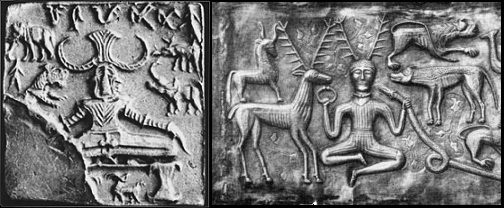
In fact in the Indian Vedic tradition we discover the presence of Indra, the god of lightning (equivalent to Jupiter) as head of the gods, Varuna, the god of foams (equivalent to Poseidon), Agni the god of fire (equivalent to Vulcan), etc. Vishnu and Shiva (the latter with the name of Rudra) were later inserted into the Vedic Pantheon. From which it is assumed that these were indigenous deities absorbed only later in the Gotha. In particular the consideration must be made that Rudra (an aspect of Shiva) was considered a terrible god, evidently badly seen by the first brahmins. We have the evidence of the very ancient presence of this divinity in India following the excavations carried out at Mohenjo Dharo and Harappa in the Indus valley (now Pakistan) where his images were found in which he exhibited long horns and wears animal skins, he was in fact considered the Lord of the animals (Pasupata).

Risultati immagini per colonna di fuoco shiva

Strangely, the Vedic culture that at first tried to colonize India as the centuries went by had to reintegrate the ancient autochthonous divinities until even these assumed the predominance on all the other imported gods. So strong was the change by which one can guess why the creator Brahma was no longer the object of adoration, he remained only as an appellation stuck to the caste of the priests, called brahmins, who actually became officiant of the cults of Vishnu and Shiva.

The story of Vishnu is also lost in the mists of time, its main incarnations, among many others, were Rama and Krishna, two divine characters, comparable to our Christ, who lived several thousand years before the Christian era. The two main Indian epics were dedicated to them, the Ramayana and the Mahabharata, which together with the Vedas are considered the sacred Indian scriptures par excellence. Shiva also has several sacred scriptures, such as the Shiva Puranas and other more recent texts written by the sage Shankaracharya which is considered an emanation of his.

If we were to examine and describe in a few words the aspects that distinguish these two lines of Hindu thought, we can say that Vishnu represents devotion to the ideal, the duty of doing good, love of neighbor, adherence to ethics, etc. Shiva instead represents the Master, the primordial Guru, who imparts the knowledge of the Self, and directs the adepts towards the realization of the non-dual Absolute.

Let it be clear that in both traditions there have been saints and realized, because as it is said in various contexts and writings devotion and knowledge are like two wings that help man to rise from ignorance and animality.

The Vishnuite approach, however, starts from dualistic worship, called Dvaita Vedanta (dualistic Vedanta) which belongs to the path of Bhakti (devotion). From the point of view of beliefs this is the path that has a greater affinity with religions of Semitic origin: Judaism, Christianity and Islam. That is, the faithful believe in a personal God called Vishnu (or his incarnations Rama and Krishna). In Judaism this function is covered in part by Moses, in Christianity by Jesus and in Islam by the prophet Muhammad.

In the dualistic Vishnuite mythology, as in the Semitic religions, souls always remain separated from their creator and the greatest possible good is the ascent to a "paradise" in which to permanently enjoy the divine presence.

Immagine correlata

However, it is clear that this paradise, almost a space-time place, must be earned, with works of faith, hope and charity, and the entry visa is released by the divine incarnations, the Avatars, hence the need to be to them devotees to please their favors. Not all Vishnuite philosophy is totally dualistic there is also Vishishtadvaita, or differentiated non-dualism. However Vishnuism is linked to the formulation of a personal God, a simple religious form to be accepted by people who do not understand or ignore the upanishadic high philosophical speculations, but feel the need for a dialogue with the divine world. This is why dualistic Vishnuism is opposed to the Advaita Vedanta philosophy (non-dualistic Vedanta), akin to Shaivism.

The theology of the dualist school is based on pancabheda or five differentiations. According to this doctrine the divine is different from the jivas and the prakriti (nature). The jivas are different from each other and from the prakriti, and the various evolved from it are also different from one another. The dvaita metaphysics formulates two categories, to the first, independent reality, belongs only God, to the second, dependent reality, belongs all the rest. Vishnu is interpreted as a personal God, but in the highest sense he does not have a physical form, an anthropomorphic image, but he manifests himself through his avatars, among which Rama and Krishna are his main impersonators.

Fortunately in India all schools are considered valid for the purpose of a personal evolution, each school leads its students to the point where their mind is able to accept a truth, so all are useful for evolution. A little like what happens in scholastic culture, we go from kindergarten to university, following a course of teaching that does not exclude the various educational aspects, from asticle to the most profound scientific speculations. But in the end the "degree", that is the realization of the Self, is not achieved due to the accumulation of knowledge but due to the rise of a transcendental mystical experience that makes its way into the heart of the researcher to the point of overcoming any conceptualization.

In Shaivism, in fact, there is still a devotional approach, but it is directed towards the inner Shiva, the Self, or the consciousness-being that we all are, as well described in the mantra given by Shankaracharya: "Shivo-ham", I I'm Shiva. But this, exposed by Shankaracharya, can be understood as the purest form of Shaivism, obviously not intended as a monastic or priestly system in the typical Hindu religious structure.

However, from the point of view of inner research, I do not see substantial differences between the path of secular spirituality which I often mention and Shaivism, especially in its Kashmir form. The very definition of "lay spirituality" serves to establish its absolute and total independence from all beliefs (including atheism). In truth, different forms of lay spirituality are recognizable in Kashmir Shaivism and in the advaita vedanta which are the most ancient expressions of this spirituality ...

Risultati immagini per Shankaracharya

Shankaracharya, we said, is one of Shiva's manifestations. Shiva from the traditional point of view is considered the aspect of the Trinity in charge of destruction. But this destruction is directed above all towards the ego, or rather that separate identity that prevents man from recognizing himself as One with the Absolute. Therefore Shankara, which is one of the names of Shiva, means "favorable, favorable". He is the Absolute Himself, the inexpressible love that arises from the "I" principle devoid of all identification, the pure awareness of Self (in Sanskrit Atman). Shiva is also defined as "Satyam-Shivam-Sundaram" that is True, Auspicious and Enchanting.

It cannot be said that Nondualism can be perfected, but as far as the descriptive way is concerned we can say that this statement is appropriate in the case of the teachings of Ramana Maharshi, the sage who lived at the foot of Arunachala, the sacred mountain emanating from Shiva (who it is said to be the remnant of the column of fire described at the beginning of this article), where he remained in permanent retreat in the first half of the last century. Ramana is universally recognized as the modern divulger of Nondualist Saivism beyond the borders of India. In the X verse of his 'Forty Verses on Existence' he says: "There is no knowledge separate from ignorance, there is no ignorance separate from knowledge. Whose knowledge and ignorance are these? True Knowledge is that which knows the consciousness that knows, which is the basic principle ".

Paolo D'Arpini


Testo italiano: 

I due filoni più significativi dell'induismo classico sono lo Shivaismo ed il Vishnuismo, che prendono il nome dai loro capostipiti ovvero Vishnu  il Conservatore e Shiva  il Distruttore.  A dire il vero nella Trimurti indiana c'è anche una terza divinità, Brahma che è il Creatore,  il quale  non ha però nessuna scuola al suo seguito.  Spesso alcuni amici spiritualisti laici mi chiedono come mai nella filosofia indiana non vengano dedicati templi a Brahma, ossia all'aspetto creativo della Divinità?

Tanto per cominciare occorre spiegare che la Trimurti letteralmente significa «colui che è dotato di tre aspetti». Con tale termine si allude ad un Ente che aduna in sé, come un’unica divinità, tre aspetti di tre divinità differenti. I tre importanti Deva archetipi: Brahma, Vishnu e Shiva  sono riconducibili allo stesso e unico Dio detto anche Īśvara o Saguna Brahman.  Ma questo ancora non spiega la scomparsa di Brahma dal culto ufficiale.

Esistono miti e leggende  che tendono a comprovare la supremazia di Vishnu sugli altri dèi della trimurti e per spiegare il motivo per cui il dio Brahma non è oggetto di culto in India. Esistono ovviamente miti e tradizioni shivaite che sostengono esattamente il contrario e cioè che Shiva è il più grande tra gli dèi, che è l’Assoluto, il principio di tutte le cose. Insomma lo Skanda Purana, Il Lingam Purana o il Vayu Purana narrano  questa  storia:

All’origine dei tempi, quando niente era stato creato o, più precisamente, nel periodo che intercorreva tra la distruzione/assorbimento dell’Universo e la creazione di un nuovo universo, Vishnu stava sdraiato sul serpente Ananta convinto di essere il più potente dio. All'improvviso apparve però   Brahma, attaccato con un cordone ombelicale a Vishnu, il nuovo nato dichiarò di essere il creatore dell’universo, colui dal quale tutte le cose sarebbero state create. Tra i due dèi nacque una disputa.  Ma mentre la discussione  andava avanti, nell’immensità degli spazi si sentì un rombo assordante, un fragore accompagnato da un fascio di luce, e comparve improvvisamente una colonna rifulgente che dagli inferi arrivò fino agli spazi superni trafiggendo gli oceani e la terra. Era un lingam infinito e splendente, fiammeggiante e possente che lasciò stupefatti e terrificati i due dèi.


“Ma cos’è?” si domandarono attoniti Vishnu e Brahma. Per capirlo  Vishnu si trasformò in cinghiale e si gettò nell’oceano, Brahma si trasformò in oca selvatica e volò negli spazi celesti. Il loro viaggio durò più di mille anni, ma per quanto si sforzassero, non riuscirono a raggiungere le estremità della colonna di fuoco che continuava a crescere. 
Ritornati in superficie i due si guardarono, Vishnu ammise di non essere riuscito a trovare l’inizio del lingam, Brahma invece, che voleva vincere la sfida, mentì dicendo di essere arrivato in vetta al lingam fiammeggiante.  In quel momento però nella colonna di fuoco si aprì una fenditura dalla quale uscì Shiva, il signore del lingam,  che si auto manifestò e proclamò la propria supremazia come Assoluto, come creatore, preservatore e distruttore dell’universo e di tutto ciò che esiste inclusi i due dèi che a quel punto, prostrati al cospetto del grande dio, lo adorarono riconoscendone la supremazia.

Ma non finì qui. Shiva infatti lanciò un'anatema contro Brahma che aveva mentito sostenendo falsamente di aver raggiunto la vetta del lingam di fuoco. Nessun culto sarebbe più esistito in suo onore. E così fu.

Facendo un'analisi più approfondita sulla tradizione del Sanatana Dharma (la Tradizione Eterna) vediamo però che sia Vishnu che Shiva sono in realtà due divinità antecedenti alla cultura vedica brahmanica, portata in India dall'invasione ariana di popolazioni pastorali e guerriere provenienti dal Caucaso, le stesse che in epoca tardo neolitica invasero l'Europa cancellando la cultura matristica preesistente sostituendola con la loro cultura patriarcale e con le loro divinità maschili. 

Infatti nella tradizione vedica indiana scopriamo la presenza di  Indra, il dio della folgore (equivalente a Giove) come capo degli dei, Varuna, il dio degli espansi  (equivalente a Poseidone), Agni il dio del fuoco (equivalente a Vulcano), etc. Vishnu e Shiva (quest'ultimo con il nome di Rudra) furono inseriti successivamente nel Pantheon vedico. Dal che si presume che queste fossero divinità autoctone assorbite solo più tardi nel Gotha. In particolare va fatta la considerazione che  Rudra (un aspetto di Shiva) era considerato un dio terribile, evidentemente mal visto dai primi brahmani. Della presenza molto antica in India di questa divinità ne abbiamo le prove in seguito agli scavi compiuti a Mohenjo Dharo ed Harappa nella valle dell'Indo (ora Pakistan) ove furono rinvenute sue immagini  in cui esibisce lunghe corna e indossa pelli di animali, egli era infatti considerato il Signore degli animali (Pasupata).  

Stranamente la cultura Vedica che in un primo tempo tentò di colonizzare l'India a mano a mano che i secoli passavano dovette reintegrare le antiche divinità autoctone finché addirittura queste  non assunsero la predominanza  su tutti gli altri dei importati.  Così forte fu il cambiamento  dal che  si può  intuire come mai il creatore Brahma non fu più oggetto di adorazione, egli restò solo come appellativo appiccicato alla casta dei sacerdoti, detti appunto brahmani, che in verità divennero officianti dei culti  di Vishnu e Shiva.

La storia di Vishnu si perde anch'essa nella notte dei tempi, sue incarnazioni principali, tra le  numerose altre,  furono Rama e Krishna, due personaggi divini, comparabili al nostro Cristo, vissuti diverse migliaia di anni prima dell'era cristiana. Ad essi vennero dedicati le due principali epiche indiane il Ramayana ed il Mahabharata che assieme ai Veda vengono considerate le scritture indiane sacre per eccellenza.  Anche a Shiva sono dedicate parecchie sacre scritture, come gli Shiva Purana ed altri  testi più recenti scritti dal saggio  Shankaracharya che viene considerato una sua  emanazione.

Se dovessimo in poche parole esaminare e descrivere  gli aspetti che contraddistinguono questi due filoni di pensiero induisti possiamo dire che Vishnu rappresenta la devozione all'ideale, il dovere del compiere il bene, l'amore verso il prossimo, l'aderenza all'etica, etc. Shiva invece rappresenta il Maestro, il Guru primordiale, che impartisce la conoscenza del Sé, ed indirizza gli adepti verso la realizzazione dell'Assoluto non-duale.

Sia ben chiaro che in entrambe le tradizioni vi sono stati santi e realizzati, poiché come è detto in vari contesti e scritture la devozione e la conoscenza sono come due ali che aiutano l'uomo a sollevarsi dall'ignoranza e dalla animalità.

L'approccio vishnuita comunque parte dall'adorazione dualistica, definita  Dvaita Vedanta (Vedanta dualistico)  che appartiene al sentiero della Bhakti (devozione).  Dal punto di vista delle credenze questo  è il sentiero  che ha una maggiore affinità con le religioni di origine semitica:  ebraismo, cristianesimo e islam. Cioè i fedeli credono in un Dio personale denominato Vishnu (o le sue incarnazioni Rama e Krishna). Nell'ebraismo questa funzione è rivestita in parte da Mosè, nel cristianesimo da Gesù e nell'islamismo dal profeta Maometto. 

Nella mitologia dualistica vishnuita, come nelle religioni semite, le anime restano sempre separate dal loro creatore ed il massimo bene possibile è l'ascesa ad un "paradiso" in cui godere permanentemente  della presenza divina.

Chiaro però che  tale  paradiso, quasi un luogo spazio-temporale,  occorre guadagnarselo, con opere di fede, di speranza e di carità, ed il visto d'accesso  viene rilasciato dalle incarnazioni  divine, gli Avatar, da qui la necessità di essere a loro devoti per ingraziarsene i favori. Non tutta la filosofia vishnuita è totalmente dualistica esiste anche il Vishishtadvaita, ovvero il non dualismo differenziato. Comunque il  Vishnuismo   è legato alla formulazione di un Dio personale, una forma religiosa  semplice da accettare da parte di persone che non comprendono od ignorano le alte speculazioni filosofiche upanishadiche, ma sentono l'esigenza di un dialogo con il mondo divino. Ecco perché il Vishnuismo dualista si contrappone alla filosofia Advaita Vedanta (Vedanta non-dualistico),  affine allo Shivaismo.

La teologia della scuola dualista è basata sui pancabheda o cinque differenziazioni. Secondo questa dottrina il divino è differente dai jiva e dalla prakriti (natura). I jiva sono differenti l'uno dall'altro e dalla prakriti, e i vari evoluti da essa sono anche differenti l'uno dall'altro. La metafisica dvaita formula due categorie, alla prima, realtà indipendente, appartiene solo Dio, alla seconda, realtà dipendente, appartiene tutto il resto.  Vishnu è sì interpretato come un Dio personale, ma nell'accezione più alta non ha una forma fisica, un'immagine antropomorfica, ma si manifesta attraverso i suoi avatar, fra cui Rama e Krishna sono i suoi principali impersonificatori.

Per fortuna in India tutte le scuole sono considerate valide al fine di una evoluzione personale,  ogni scuola conduce i suoi allievi sino al punto in cui la loro mente è in grado di accettare una verità, quindi tutte sono utili all'evoluzione. Un po' come avviene nella cultura scolastica in sui si va avanti dalla scuola d'infanzia sino all'università seguendo una trafila d'insegnamento che non esclude i diversi aspetti educativi, dalle  asticciole alle elucubrazioni scientifiche più profonde.  Ma alla fine la "laurea", ovvero la realizzazione di Sé, non viene raggiunta per l'accumulo di conoscenze bensì per il sorgere di  una esperienza  mistica trascendentale che si fa strada nel cuore del ricercatore sino al punto di superare ogni concettualizzazione.

Nello Shivaismo, in effetti,  esiste lo stesso un approccio devozionale, ma viene indirizzato verso lo Shiva interiore, il Sé, ovvero l'essere-coscienza che noi tutti siamo,  come ben descritto nel mantra impartito da Shankaracharya:  "Shivo-ham", Io sono Shiva. Ma questa, esposta da Shankaracharya, può essere intesa come la forma più pura dello Shivaismo,  non intesa  ovviamente come un  sistema monastico  o sacerdotale  nella tipica struttura religiosa induista. 

Comunque, dal punto di vista della ricerca interiore, non vedo sostanziali differenze tra la via della spiritualità laica di cui spesso faccio menzione e lo Shivaismo, soprattutto nella sua forma kashmiri.  La definizione stessa di   “spiritualità laica” serve a  stabilire la sua assoluta e totale indipendenza da ogni credo (ateismo compreso). In verità diverse forme di spiritualità laica sono riconoscibili nello shivaismo del Kashmir e nell’adavaita vedanta che di tale spiritualità  sono  le espressioni più antiche...

Shankaracharya, dicevamo, è una delle manifestazioni di Shiva. Shiva dal punto di vista tradizionale viene considerato l’aspetto della Trinità preposto alla distruzione. Ma tale distruzione è indirizzata soprattutto verso l’ego, ovvero quell’identità separata che impedisce all’uomo di riconoscersi Uno con l’Assoluto. Perciò Shankara, che è uno degli appellativi di Shiva, sta a significare “favorevole, propizio” . Egli è l’Assoluto stesso, l’amore indicibile che sorge dal principio “Io” privo di ogni identificazione, la pura consapevolezza di Sé (in sanscrito Atman). Shiva viene anche definito: “Satyam-Shivam-Sundaram” cioè Vero, Auspicioso e Incantevole.

Non si può affermare che il Nondualismo possa venir perfezionato, ma per quanto concerne il modo descrittivo possiamo dire che questa affermazione è appropriata nel caso degli insegnamenti  di Ramana Maharshi, il saggio che visse ai piedi di Arunachala, la montagna sacra emanazione di Shiva (che si dice essere il residuo della colonna di fuoco descritta all'inizio di questo articolo), ove egli restò in ritiro permanente nella prima metà del secolo scorso. Ramana è universalmente riconosciuto come il moderno divulgatore dello Shivaismo nondualista oltre i confini dell’India. Egli, nella strofa X del suo ‘Quaranta Versi sull’Esistenza’ così afferma: “Non vi è conoscenza separata dall’ignoranza, non vi è ignoranza separata dalla conoscenza. Di chi sono questa conoscenza e quest’ignoranza? Vera Conoscenza è quella che conosce la coscienza che conosce, che è il principio base”.

Paolo D'Arpini


Canto devozionale Visnuita:   https://www.facebook.com/caterina.regazzi/videos/10217576114265173/