Visualizzazione dei post in ordine di pertinenza per la query creazione ed arte. Ordina per data Mostra tutti i post

giovedì 24 ottobre 2019

Nature, art and spirituality - Natura, arte e spiritualità


Risultati immagini per Natura, arte e spiritualità

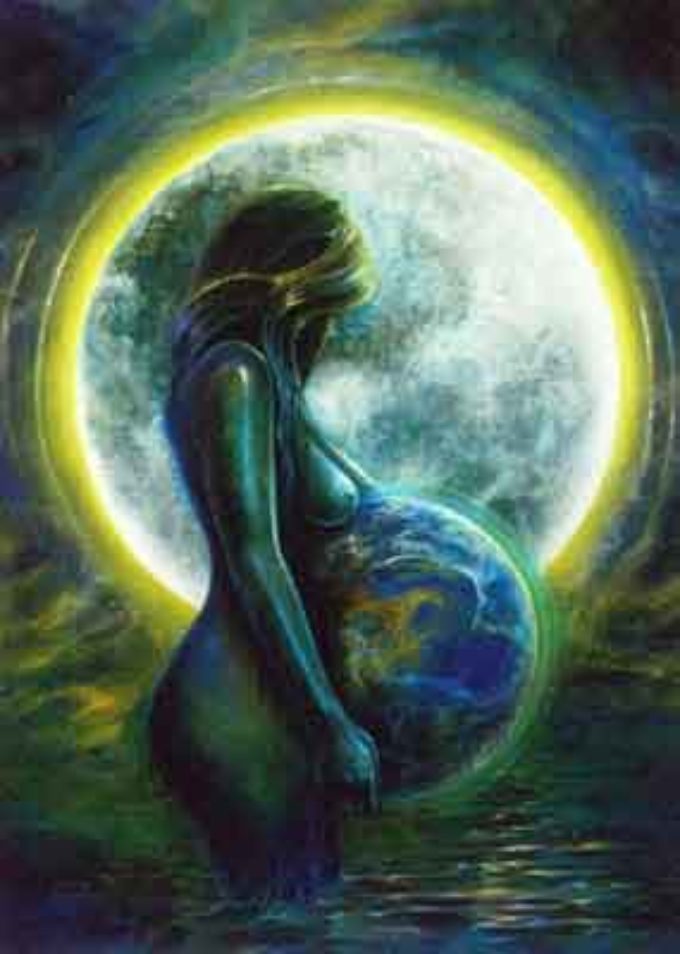
Often what is represented in nature also finds its correspondence in the conscience of man, in fact the creative act, whether ascribed to a God or to Mother Nature, has often been compared to that of an artist who produces his work.

This happens because in the Logos of the manifested world a design or a purpose is recognized and it is exactly what happens with the artistic production. But an essential difference could be noted, in fact in the case of artistic work, such as painting, there are many distinct causes. The material: the canvases, the color, etc. The formal: the configuration, etc. The efficient: the artist, the brush, etc. And the final: honoring someone, earning a living, etc. But in the case of the manifestation of the world there are no distinct causes, the original being only one, whether it is defined natural Energy or God.

"He painted the picture of the existent in himself and on himself, with the brush of his will, and he was immediately delighted" affirms an ancient Indian writing referring to the Creator. But even in other philosophical and scientific texts painting is often used as an example to signify the progressive carrying capacity of life.

Following the concept of the three successive stages of the cosmic manifestation, we observe that at the beginning there is the "latency" or "causal energy" then the "subtle" or "thought form" takes over and finally the "gross" or "matter". These stages are compared with 1) lightening of the canvases and strengthening them with starch; 2) the sketch of the contours of the figures on the canvas; 3) filling of images with color.

The "consciousness" or creative will is the coefficient cause of the work, which is like the bleached canvas; the operative "capacity" is the subtle cause, represented by the features that are barely sketched but present in the author's imagination, as the fetus is present in the maternal uterus; and finally the final form which is like the manifested birth or appearance and can be compared to the finished painting.

However, we must remember that these creative functions, in the case of the "creation of the universe", all belong to the same Force or expressive capacity. The artist, the material, the work, the critic, the client ... etc. they all originate from the same primordial Energy (or God).

"The image of name and form, the observer, the screen on which he sees, and the light for which he sees ... all these are Himself" Ramana Maharshi stated.

Paolo D'Arpini

Risultati immagini per Natura, arte e spiritualità paolo d'arpini


Testo italiano

Spesso quel che è rappresentato nella natura trova anche una sua corrispondenza nella coscienza dell’uomo, infatti l’atto creativo, sia esso ascritto a un  Dio od a Madre Natura, è stato spesso paragonato a quello di un artista che produce la sua opera.

Ciò avviene poiché nel Logos del mondo manifesto si riconosce un disegno od uno scopo ed è esattamente quel che avviene con la produzione artistica. Ma potrebbe essere notata una differenza essenziale, infatti nel caso del lavoro artistico, come ad esempio la pittura, vi sono molte cause distinte. La materiale: le tele, il colore, etc.  La formale: la configurazione, etc. L’efficiente: l’artista, il pennello, etc. E la finale: l’onorare qualcuno, guadagnarsi da vivere, etc. Ma nel caso della manifestazione del mondo non vi sono cause distinte, essendo l’originale una sola, sia essa definita Energia naturale o Dio.

“Egli dipinse il quadro dell’esistente in se stesso  e su se stesso, con il pennello della sua volontà, e fu subito lieto” Afferma una antica scrittura indiana riferendosi al Creatore. Ma anche in altri testi filosofici e scientifici spesso la pittura è usata come esempio per significare la progressiva capacità realizzatrice della vita.


Seguendo il concetto dei tre stadi successivi della manifestazione cosmica, osserviamo che all’inizio vi è la “latenza” o “energia causale” poi subentra il “sottile” o “forma pensiero” ed infine il “grossolano” o “materia”. Questi stadi vengono comparati con 1) lo schiarimento delle tele ed il rafforzarle con l’amido; 2) lo schizzo dei contorni delle figure sulla tela; 3) riempitura delle immagini con il colore.

La “coscienza” o volontà creatrice è la causa coefficiente dell’opera, che è come la tela sbiancata;  la “capacità” operativa è la causa sottile, rappresentata dalle sembianze appena  schizzate ma presenti nella fantasia dell’autore, come è presente il feto nell’utero materno; ed infine la forma finale che è come la nascita o apparizione manifesta e si può paragonare alla pittura finita.

Dobbiamo però ricordare che queste funzioni creatrici, nel caso della “creazione dell’universo” appartengono tutte alla medesima Forza o capacità espressiva. L’artista, il materiale, l’opera, il  critico, il cliente.. etc. sono originati tutti dalla stessa Energia primordiale  (o Dio).

“L’immagine di nome e forma, l’osservatore, lo schermo sul quale egli vede, e la luce per la quale egli vede… tutti questi sono Egli stesso” Affermava Ramana Maharshi.


Paolo D'Arpini

domenica 11 dicembre 2022

I religiosi, Schopenhauer e la spiritualità laica... - Religious, Schopenhauer and lay spirituality...


Lasciatemi dire qualcosa di Schopenhauer, un filosofo che per altro molto piacque ai religiosi che in lui vedevano un “giudicatore del creato”, un moralista che sapeva distinguere fra bene e male, che conosceva il significato di raggiungere un traguardo: “.. se uno correndo tutto i giorno, giunge a sera, può dirsi soddisfatto. Ebbene, ora ce l’ho fatta, il crepuscolo della mia vita diventa l’alba della mia fama” (Senilia pag. 84 del manoscritto originale del 1856).

Egli si definiva nelle sue memorie uno “sprezza-uomini” uno che disprezzava la stupidità umana apprezzando per contro la sua intelligenza personale.

Questo orgoglio intellettuale separativo è sicuramente poco “laico” ed infatti la sua “arte di conoscere se stessi” è tutta rivolta alla conoscenza della “persona” come entità avulsa dal contesto, un’individualità “prescelta”, evidentemente da dio. E questo atteggiamento piacque molto ai dottori della chiesa che -anch’essi- si sentono “benedetti” e privilegiati e protetti per la loro fede in dio (per altro cieca).

Ma dal punto di vista della realtà assoluta sia la persona che la creazione possono manifestarsi “progressivamente” solo nell’ambito della durata, essendo il concetto dell’esistenza spazio temporale puramente figurativo, non ha cioè vera sostanza essendo un configurarsi di eventi costruiti e proiettati nella mente.

Perciò nella visione della assoluta Esistenza-Coscienza la persona e la creazione “appaiono” simultaneamente all’osservatore (il Sé) rivelandosi nello svolgimento apparente dello scorrere del tempo nello spazio. La manifestazione è di fatto un semplice riflesso nella mente del percepiente che riesce a captarla ed elaborarla “fermando” il fotogramma, passo dopo passo nella coscienza.

Quel singolo fotogramma (persona e creazione) è in realtà una forma momentanea, all'interno della totale manifestazione, che -sia pur sempre presente nella sua interezza assoluta- viene illuminata dalla coscienza individuale, vista con l'occhio nella mente e srotolata nel contesto denominato “processo del divenire”.

Da ciò se ne deduce che la descrizione di una persona e dei suoi ipotetici risultati è relativa ed illusoria tanto quanto la visione “creazionista” (in quanto emanazione di un dio separato). Con buona pace del filosofo Schopenhauer e di tutti i preti suoi estimatori.

Paolo D'Arpini


English text

Let me say something about Schopenhauer, a philosopher who, moreover, was greatly appreciated by the religious who saw in him a "judger of creation", a moralist who knew how to distinguish between good and evil, who knew the meaning of reaching a goal: ".. if one running all day, arriving in the evening, he can be said to be satisfied. Well, now I've done it, the twilight of my life becomes the dawn of my fame” (Senilia page 84 of the original manuscript of 1856).

He described himself in his memoirs as a "despiser of men" one who despised human stupidity while appreciating his personal intelligence.

This separative intellectual pride is certainly not very "lay" and in fact its "art of knowing oneself" is entirely aimed at the knowledge of the "person" as an entity detached from the context, an individuality "chosen", evidently by God. And this attitude was very pleasing to the doctors of the church who - they too - feel "blessed" and privileged and protected for their faith in God (moreover blind).

But from the point of view of absolute reality both the person and the creation can manifest themselves "progressively" only in the context of duration, being the concept of purely figurative space-time existence, that is, it has no real substance being a configuration of constructed and projected events in the mind.

Therefore in the vision of the absolute Existence-Consciousness the person and the creation "appear" simultaneously to the observer (the Self) revealing themselves in the apparent unfolding of the passage of time in space. The manifestation is in fact a simple reflection in the mind of the perceiver who manages to capture and process it by "stopping" the frame, step by step in consciousness.

That single frame (person and creation) is actually a momentary form, within the total manifestation, which -although always present in its absolute entirety- is illuminated by the individual consciousness, seen with the eye in the mind and unrolled in the context called the "process of becoming".

From this it can be deduced that the description of a person and his hypothetical results is as relative and illusory as the "creationist" vision (as an emanation of a separate god). With all due respect to the philosopher Schopenhauer and all the priests who admire him.

Paul D'Arpini