mercoledì 10 aprile 2019

Visnuism and Shaivism in the "Sanatana Dharma" (the Eternal Lore of India) - Visnuismo e Shivaismo nel "Sanatana Dharma" (la Tradizione Eterna dell'India)


Risultati immagini per deuses brahma vishnu e shiva

The two most significant strands of classical Hinduism are Shaivism and Vishnuism, which take their name from their forefathers or Vishnu the Conservator and Shiva the Destroyer. To tell the truth there is also a third divinity in the Indian Trimurti, Brahma who is the Creator, who however has no school to follow. Often some spiritualist friends ask me why temples to Brahma, or the creative aspect of the Divinity, are not dedicated in Indian religion...

To begin with, it is necessary to explain that the Trimurti literally means "one who has three aspects". With this term we refer to a Supreme  Body which in itself, as a single deity, gathers three aspects of three different deities. The three important Deva archetypes: Brahma, Vishnu and Shiva are related to the same and unique God also called Iśvara or Saguna Brahman. But this still does not explain the disappearance of Brahma from the official cult.

There are myths and legends that tend to prove the supremacy of Vishnu over the other gods of the trimurti and to explain why the god Brahma is not the object of worship in India. There are obviously shivaite myths and traditions that claim exactly the opposite and that is that Shiva is the greatest of the gods, which is the Absolute, the beginning of all things. 

In short, the Skanda Purana, the Lingam Purana or the Vayu Purana narrate this story:

At the origin of the times, when nothing had been created or, more precisely, in the period between the destruction / absorption of the Universe and the creation of a new universe, Vishnu was lying on the serpent Ananta convinced that he was the most powerful god. Suddenly, however, Brahma appeared, attacked with an umbilical cord to Vishnu, the new born declared himself to be the creator of the universe, the one from whom all things would be created. A dispute arose between the two gods. But while the discussion was going on, in the immensity of the spaces there was a deafening roar, accompanied by a beam of light, and suddenly a shining column appeared that from the underworld came up to the supernal spaces piercing the oceans and the earth. It was an infinite and shining, fiery and powerful lingam that left the two gods astonished and terrified.

"What is it?" Vishnu and Brahma wondered. To understand it Vishnu turned into a boar and threw himself into the ocean, Brahma turned into a wild goose and flew into the celestial spaces. Their journey lasted more than a thousand years, but no matter how hard they tried, they could not reach the ends of the column of fire that continued to grow.

Returning to the surface, the two looked at each other, Vishnu admitted that he could not find the beginning of the lingam, Brahma instead, who wanted to win the challenge, lied saying he had reached the summit of the flaming lingam. At that moment, however, in the column of fire a slit opened from which came out Shiva, the lord of the lingam, who manifested himself and proclaimed his supremacy as Absolute, as creator, preserver and destroyer of the universe and all that exists including the two gods who at that point, prostrated before the great God, adored him recognizing his supremacy.

But it didn't end there. Shiva in fact launched an anathema against Brahma who had lied by falsely claiming to have reached the summit of the fire lingam. No cult would have existed in his honor. And so it was.

Risultati immagini per Vishnuismo e Shivaismo nel  "Sanathana Dharma" (la Tradizione Eterna dell'india)

Making a more in-depth analysis of the tradition of Sanatana Dharma (the Eternal Lore) we discover, however, that both Vishnu and Shiva are actually two deities prior to the Vedic Brahmanical culture, brought to India by the Arian invasion of pastoral and warrior populations from the Caucasus, the same as in the era late Neolithic invaded Europe, erasing the pre-existing Matristic culture, replacing it with their patriarchal culture and their male divinities.

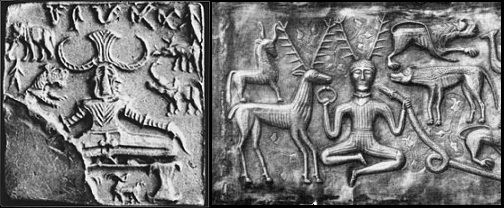
In fact in the Indian Vedic tradition we discover the presence of Indra, the god of lightning (equivalent to Jupiter) as head of the gods, Varuna, the god of foams (equivalent to Poseidon), Agni the god of fire (equivalent to Vulcan), etc. Vishnu and Shiva (the latter with the name of Rudra) were later inserted into the Vedic Pantheon. From which it is assumed that these were indigenous deities absorbed only later in the Gotha. In particular the consideration must be made that Rudra (an aspect of Shiva) was considered a terrible god, evidently badly seen by the first brahmins. We have the evidence of the very ancient presence of this divinity in India following the excavations carried out at Mohenjo Dharo and Harappa in the Indus valley (now Pakistan) where his images were found in which he exhibited long horns and wears animal skins, he was in fact considered the Lord of the animals (Pasupata).
Risultati immagini per colonna di fuoco shiva

Strangely, the Vedic culture that at first tried to colonize India as the centuries went by had to reintegrate the ancient autochthonous divinities until even these assumed the predominance on all the other imported gods. So strong was the change by which one can guess why the creator Brahma was no longer the object of adoration, he remained only as an appellation stuck to the caste of the priests, called brahmins, who actually became officiant of the cults of Vishnu and Shiva.

The story of Vishnu is also lost in the mists of time, its main incarnations, among many others, were Rama and Krishna, two divine characters, comparable to our Christ, who lived several thousand years before the Christian era. The two main Indian epics were dedicated to them, the Ramayana and the Mahabharata, which together with the Vedas are considered the sacred Indian scriptures par excellence. Shiva also has several sacred scriptures, such as the Shiva Puranas and other more recent texts written by the sage Shankaracharya which is considered an emanation of his.

If we were to examine and describe in a few words the aspects that distinguish these two lines of Hindu thought, we can say that Vishnu represents devotion to the ideal, the duty of doing good, love of neighbor, adherence to ethics, etc. Shiva instead represents the Master, the primordial Guru, who imparts the knowledge of the Self, and directs the adepts towards the realization of the non-dual Absolute.

Let it be clear that in both traditions there have been saints and realized, because as it is said in various contexts and writings devotion and knowledge are like two wings that help man to rise from ignorance and animality.

The Vishnuite approach, however, starts from dualistic worship, called Dvaita Vedanta (dualistic Vedanta) which belongs to the path of Bhakti (devotion). From the point of view of beliefs this is the path that has a greater affinity with religions of Semitic origin: Judaism, Christianity and Islam. That is, the faithful believe in a personal God called Vishnu (or his incarnations Rama and Krishna). In Judaism this function is covered in part by Moses, in Christianity by Jesus and in Islam by the prophet Muhammad.

In the dualistic Vishnuite mythology, as in the Semitic religions, souls always remain separated from their creator and the greatest possible good is the ascent to a "paradise" in which to permanently enjoy the divine presence.

Immagine correlata

However, it is clear that this paradise, almost a space-time place, must be earned, with works of faith, hope and charity, and the entry visa is released by the divine incarnations, the Avatars, hence the need to be to them devotees to please their favors. Not all Vishnuite philosophy is totally dualistic there is also Vishishtadvaita, or differentiated non-dualism. However Vishnuism is linked to the formulation of a personal God, a simple religious form to be accepted by people who do not understand or ignore the upanishadic high philosophical speculations, but feel the need for a dialogue with the divine world. This is why dualistic Vishnuism is opposed to the Advaita Vedanta philosophy (non-dualistic Vedanta), akin to Shaivism.

The theology of the dualist school is based on pancabheda or five differentiations. According to this doctrine the divine is different from the jivas and the prakriti (nature). The jivas are different from each other and from the prakriti, and the various evolved from it are also different from one another. The dvaita metaphysics formulates two categories, to the first, independent reality, belongs only God, to the second, dependent reality, belongs all the rest. Vishnu is interpreted as a personal God, but in the highest sense he does not have a physical form, an anthropomorphic image, but he manifests himself through his avatars, among which Rama and Krishna are his main impersonators.

Fortunately in India all schools are considered valid for the purpose of a personal evolution, each school leads its students to the point where their mind is able to accept a truth, so all are useful for evolution. A little like what happens in scholastic culture, we go from kindergarten to university, following a course of teaching that does not exclude the various educational aspects, from asticle to the most profound scientific speculations. But in the end the "degree", that is the realization of the Self, is not achieved due to the accumulation of knowledge but due to the rise of a transcendental mystical experience that makes its way into the heart of the researcher to the point of overcoming any conceptualization.

In Shaivism, in fact, there is still a devotional approach, but it is directed towards the inner Shiva, the Self, or the consciousness-being that we all are, as well described in the mantra given by Shankaracharya: "Shivo-ham", I I'm Shiva. But this, exposed by Shankaracharya, can be understood as the purest form of Shaivism, obviously not intended as a monastic or priestly system in the typical Hindu religious structure.

However, from the point of view of inner research, I do not see substantial differences between the path of secular spirituality which I often mention and Shaivism, especially in its Kashmir form. The very definition of "lay spirituality" serves to establish its absolute and total independence from all beliefs (including atheism). In truth, different forms of lay spirituality are recognizable in Kashmir Shaivism and in the advaita vedanta which are the most ancient expressions of this spirituality ...

Risultati immagini per Shankaracharya

Shankaracharya, we said, is one of Shiva's manifestations. Shiva from the traditional point of view is considered the aspect of the Trinity in charge of destruction. But this destruction is directed above all towards the ego, or rather that separate identity that prevents man from recognizing himself as One with the Absolute. Therefore Shankara, which is one of the names of Shiva, means "favorable, favorable". He is the Absolute Himself, the inexpressible love that arises from the "I" principle devoid of all identification, the pure awareness of Self (in Sanskrit Atman). Shiva is also defined as "Satyam-Shivam-Sundaram" that is True, Auspicious and Enchanting.

It cannot be said that Nondualism can be perfected, but as far as the descriptive way is concerned we can say that this statement is appropriate in the case of the teachings of Ramana Maharshi, the sage who lived at the foot of Arunachala, the sacred mountain emanating from Shiva (who it is said to be the remnant of the column of fire described at the beginning of this article), where he remained in permanent retreat in the first half of the last century. Ramana is universally recognized as the modern divulger of Nondualist Saivism beyond the borders of India. In the X verse of his 'Forty Verses on Existence' he says: "There is no knowledge separate from ignorance, there is no ignorance separate from knowledge. Whose knowledge and ignorance are these? True Knowledge is that which knows the consciousness that knows, which is the basic principle ".

Paolo D'Arpini


Testo italiano: 

I due filoni più significativi dell'induismo classico sono lo Shivaismo ed il Vishnuismo, che prendono il nome dai loro capostipiti ovvero Vishnu  il Conservatore e Shiva  il Distruttore.  A dire il vero nella Trimurti indiana c'è anche una terza divinità, Brahma che è il Creatore,  il quale  non ha però nessuna scuola al suo seguito.  Spesso alcuni amici spiritualisti laici mi chiedono come mai nella filosofia indiana non vengano dedicati templi a Brahma, ossia all'aspetto creativo della Divinità?

Tanto per cominciare occorre spiegare che la Trimurti letteralmente significa «colui che è dotato di tre aspetti». Con tale termine si allude ad un Ente che aduna in sé, come un’unica divinità, tre aspetti di tre divinità differenti. I tre importanti Deva archetipi: Brahma, Vishnu e Shiva  sono riconducibili allo stesso e unico Dio detto anche Īśvara o Saguna Brahman.  Ma questo ancora non spiega la scomparsa di Brahma dal culto ufficiale.

Esistono miti e leggende  che tendono a comprovare la supremazia di Vishnu sugli altri dèi della trimurti e per spiegare il motivo per cui il dio Brahma non è oggetto di culto in India. Esistono ovviamente miti e tradizioni shivaite che sostengono esattamente il contrario e cioè che Shiva è il più grande tra gli dèi, che è l’Assoluto, il principio di tutte le cose. Insomma lo Skanda Purana, Il Lingam Purana o il Vayu Purana narrano  questa  storia:

All’origine dei tempi, quando niente era stato creato o, più precisamente, nel periodo che intercorreva tra la distruzione/assorbimento dell’Universo e la creazione di un nuovo universo, Vishnu stava sdraiato sul serpente Ananta convinto di essere il più potente dio. All'improvviso apparve però   Brahma, attaccato con un cordone ombelicale a Vishnu, il nuovo nato dichiarò di essere il creatore dell’universo, colui dal quale tutte le cose sarebbero state create. Tra i due dèi nacque una disputa.  Ma mentre la discussione  andava avanti, nell’immensità degli spazi si sentì un rombo assordante, un fragore accompagnato da un fascio di luce, e comparve improvvisamente una colonna rifulgente che dagli inferi arrivò fino agli spazi superni trafiggendo gli oceani e la terra. Era un lingam infinito e splendente, fiammeggiante e possente che lasciò stupefatti e terrificati i due dèi.


“Ma cos’è?” si domandarono attoniti Vishnu e Brahma. Per capirlo  Vishnu si trasformò in cinghiale e si gettò nell’oceano, Brahma si trasformò in oca selvatica e volò negli spazi celesti. Il loro viaggio durò più di mille anni, ma per quanto si sforzassero, non riuscirono a raggiungere le estremità della colonna di fuoco che continuava a crescere. 
Ritornati in superficie i due si guardarono, Vishnu ammise di non essere riuscito a trovare l’inizio del lingam, Brahma invece, che voleva vincere la sfida, mentì dicendo di essere arrivato in vetta al lingam fiammeggiante.  In quel momento però nella colonna di fuoco si aprì una fenditura dalla quale uscì Shiva, il signore del lingam,  che si auto manifestò e proclamò la propria supremazia come Assoluto, come creatore, preservatore e distruttore dell’universo e di tutto ciò che esiste inclusi i due dèi che a quel punto, prostrati al cospetto del grande dio, lo adorarono riconoscendone la supremazia.

Ma non finì qui. Shiva infatti lanciò un'anatema contro Brahma che aveva mentito sostenendo falsamente di aver raggiunto la vetta del lingam di fuoco. Nessun culto sarebbe più esistito in suo onore. E così fu.

Facendo un'analisi più approfondita sulla tradizione del Sanatana Dharma (la Tradizione Eterna) vediamo però che sia Vishnu che Shiva sono in realtà due divinità antecedenti alla cultura vedica brahmanica, portata in India dall'invasione ariana di popolazioni pastorali e guerriere provenienti dal Caucaso, le stesse che in epoca tardo neolitica invasero l'Europa cancellando la cultura matristica preesistente sostituendola con la loro cultura patriarcale e con le loro divinità maschili. 

Infatti nella tradizione vedica indiana scopriamo la presenza di  Indra, il dio della folgore (equivalente a Giove) come capo degli dei, Varuna, il dio degli espansi  (equivalente a Poseidone), Agni il dio del fuoco (equivalente a Vulcano), etc. Vishnu e Shiva (quest'ultimo con il nome di Rudra) furono inseriti successivamente nel Pantheon vedico. Dal che si presume che queste fossero divinità autoctone assorbite solo più tardi nel Gotha. In particolare va fatta la considerazione che  Rudra (un aspetto di Shiva) era considerato un dio terribile, evidentemente mal visto dai primi brahmani. Della presenza molto antica in India di questa divinità ne abbiamo le prove in seguito agli scavi compiuti a Mohenjo Dharo ed Harappa nella valle dell'Indo (ora Pakistan) ove furono rinvenute sue immagini  in cui esibisce lunghe corna e indossa pelli di animali, egli era infatti considerato il Signore degli animali (Pasupata).  

Stranamente la cultura Vedica che in un primo tempo tentò di colonizzare l'India a mano a mano che i secoli passavano dovette reintegrare le antiche divinità autoctone finché addirittura queste  non assunsero la predominanza  su tutti gli altri dei importati.  Così forte fu il cambiamento  dal che  si può  intuire come mai il creatore Brahma non fu più oggetto di adorazione, egli restò solo come appellativo appiccicato alla casta dei sacerdoti, detti appunto brahmani, che in verità divennero officianti dei culti  di Vishnu e Shiva.

La storia di Vishnu si perde anch'essa nella notte dei tempi, sue incarnazioni principali, tra le  numerose altre,  furono Rama e Krishna, due personaggi divini, comparabili al nostro Cristo, vissuti diverse migliaia di anni prima dell'era cristiana. Ad essi vennero dedicati le due principali epiche indiane il Ramayana ed il Mahabharata che assieme ai Veda vengono considerate le scritture indiane sacre per eccellenza.  Anche a Shiva sono dedicate parecchie sacre scritture, come gli Shiva Purana ed altri  testi più recenti scritti dal saggio  Shankaracharya che viene considerato una sua  emanazione.

Se dovessimo in poche parole esaminare e descrivere  gli aspetti che contraddistinguono questi due filoni di pensiero induisti possiamo dire che Vishnu rappresenta la devozione all'ideale, il dovere del compiere il bene, l'amore verso il prossimo, l'aderenza all'etica, etc. Shiva invece rappresenta il Maestro, il Guru primordiale, che impartisce la conoscenza del Sé, ed indirizza gli adepti verso la realizzazione dell'Assoluto non-duale.

Sia ben chiaro che in entrambe le tradizioni vi sono stati santi e realizzati, poiché come è detto in vari contesti e scritture la devozione e la conoscenza sono come due ali che aiutano l'uomo a sollevarsi dall'ignoranza e dalla animalità.

L'approccio vishnuita comunque parte dall'adorazione dualistica, definita  Dvaita Vedanta (Vedanta dualistico)  che appartiene al sentiero della Bhakti (devozione).  Dal punto di vista delle credenze questo  è il sentiero  che ha una maggiore affinità con le religioni di origine semitica:  ebraismo, cristianesimo e islam. Cioè i fedeli credono in un Dio personale denominato Vishnu (o le sue incarnazioni Rama e Krishna). Nell'ebraismo questa funzione è rivestita in parte da Mosè, nel cristianesimo da Gesù e nell'islamismo dal profeta Maometto. 

Nella mitologia dualistica vishnuita, come nelle religioni semite, le anime restano sempre separate dal loro creatore ed il massimo bene possibile è l'ascesa ad un "paradiso" in cui godere permanentemente  della presenza divina.

Chiaro però che  tale  paradiso, quasi un luogo spazio-temporale,  occorre guadagnarselo, con opere di fede, di speranza e di carità, ed il visto d'accesso  viene rilasciato dalle incarnazioni  divine, gli Avatar, da qui la necessità di essere a loro devoti per ingraziarsene i favori. Non tutta la filosofia vishnuita è totalmente dualistica esiste anche il Vishishtadvaita, ovvero il non dualismo differenziato. Comunque il  Vishnuismo   è legato alla formulazione di un Dio personale, una forma religiosa  semplice da accettare da parte di persone che non comprendono od ignorano le alte speculazioni filosofiche upanishadiche, ma sentono l'esigenza di un dialogo con il mondo divino. Ecco perché il Vishnuismo dualista si contrappone alla filosofia Advaita Vedanta (Vedanta non-dualistico),  affine allo Shivaismo.

La teologia della scuola dualista è basata sui pancabheda o cinque differenziazioni. Secondo questa dottrina il divino è differente dai jiva e dalla prakriti (natura). I jiva sono differenti l'uno dall'altro e dalla prakriti, e i vari evoluti da essa sono anche differenti l'uno dall'altro. La metafisica dvaita formula due categorie, alla prima, realtà indipendente, appartiene solo Dio, alla seconda, realtà dipendente, appartiene tutto il resto.  Vishnu è sì interpretato come un Dio personale, ma nell'accezione più alta non ha una forma fisica, un'immagine antropomorfica, ma si manifesta attraverso i suoi avatar, fra cui Rama e Krishna sono i suoi principali impersonificatori.

Per fortuna in India tutte le scuole sono considerate valide al fine di una evoluzione personale,  ogni scuola conduce i suoi allievi sino al punto in cui la loro mente è in grado di accettare una verità, quindi tutte sono utili all'evoluzione. Un po' come avviene nella cultura scolastica in sui si va avanti dalla scuola d'infanzia sino all'università seguendo una trafila d'insegnamento che non esclude i diversi aspetti educativi, dalle  asticciole alle elucubrazioni scientifiche più profonde.  Ma alla fine la "laurea", ovvero la realizzazione di Sé, non viene raggiunta per l'accumulo di conoscenze bensì per il sorgere di  una esperienza  mistica trascendentale che si fa strada nel cuore del ricercatore sino al punto di superare ogni concettualizzazione.

Nello Shivaismo, in effetti,  esiste lo stesso un approccio devozionale, ma viene indirizzato verso lo Shiva interiore, il Sé, ovvero l'essere-coscienza che noi tutti siamo,  come ben descritto nel mantra impartito da Shankaracharya:  "Shivo-ham", Io sono Shiva. Ma questa, esposta da Shankaracharya, può essere intesa come la forma più pura dello Shivaismo,  non intesa  ovviamente come un  sistema monastico  o sacerdotale  nella tipica struttura religiosa induista. 

Comunque, dal punto di vista della ricerca interiore, non vedo sostanziali differenze tra la via della spiritualità laica di cui spesso faccio menzione e lo Shivaismo, soprattutto nella sua forma kashmiri.  La definizione stessa di   “spiritualità laica” serve a  stabilire la sua assoluta e totale indipendenza da ogni credo (ateismo compreso). In verità diverse forme di spiritualità laica sono riconoscibili nello shivaismo del Kashmir e nell’adavaita vedanta che di tale spiritualità  sono  le espressioni più antiche...

Shankaracharya, dicevamo, è una delle manifestazioni di Shiva. Shiva dal punto di vista tradizionale viene considerato l’aspetto della Trinità preposto alla distruzione. Ma tale distruzione è indirizzata soprattutto verso l’ego, ovvero quell’identità separata che impedisce all’uomo di riconoscersi Uno con l’Assoluto. Perciò Shankara, che è uno degli appellativi di Shiva, sta a significare “favorevole, propizio” . Egli è l’Assoluto stesso, l’amore indicibile che sorge dal principio “Io” privo di ogni identificazione, la pura consapevolezza di Sé (in sanscrito Atman). Shiva viene anche definito: “Satyam-Shivam-Sundaram” cioè Vero, Auspicioso e Incantevole.

Non si può affermare che il Nondualismo possa venir perfezionato, ma per quanto concerne il modo descrittivo possiamo dire che questa affermazione è appropriata nel caso degli insegnamenti  di Ramana Maharshi, il saggio che visse ai piedi di Arunachala, la montagna sacra emanazione di Shiva (che si dice essere il residuo della colonna di fuoco descritta all'inizio di questo articolo), ove egli restò in ritiro permanente nella prima metà del secolo scorso. Ramana è universalmente riconosciuto come il moderno divulgatore dello Shivaismo nondualista oltre i confini dell’India. Egli, nella strofa X del suo ‘Quaranta Versi sull’Esistenza’ così afferma: “Non vi è conoscenza separata dall’ignoranza, non vi è ignoranza separata dalla conoscenza. Di chi sono questa conoscenza e quest’ignoranza? Vera Conoscenza è quella che conosce la coscienza che conosce, che è il principio base”.

Paolo D'Arpini


Canto devozionale Visnuita:   https://www.facebook.com/caterina.regazzi/videos/10217576114265173/

sabato 6 aprile 2019

Catholicism and Buddhism compared - Cattolicesimo e buddismo a confronto


Immagine correlata

The word "Catholicism" should indicate a sort of "universalism", in a religious sense, in reality there is no more sectarian and closed faith than this. I am not speaking of "Christianity" in the strict sense but of its deviated form managed by the Vatican and its Pope. Christianity could still have its dignity, in consideration of the Gnostic doctrine and the apocryphal gospels, while the papal dome is a simple apparatus of power that over the centuries has shown its true intentions: world domination.

Finally all the knots come to a head and the Vatican congregation has added thousands of knots. I refer not only to recent scandals, such as pedophilia or economic speculation, but to the innumerable faults accumulated over the centuries: doctrinal fictions, the sale of indulgences, the inequality between males and females, the persecution of heretics and witches, the prevarication and intimidation of the succumbed and frightened masses, obscurantism, holy wars, historical falsehoods about innumerable facts and people ... See for example the fable of the "legacy of Constantine", on the alleged donation of lands to the church of Rome.

The Donation of Constantine (Constitutum Constantini) was used by the Church to legalize alleged rights to territorial possessions and only in 1440 did Valla prove that this document was a forgery, even if it was necessary to wait until 1517 for its conclusions to be published; but only from non-Catholic circles, having been inserted by the Church - coincidentally - from 1559 in the index of prohibited books. A fake, therefore, today universally recognized as such, but lasting about 500 years. The foregoing to show that a fake, if well designed and defended indefinitely by those who know how to manipulate popular credulity, can resist for a long time.

The rest is under the eyes of all the repeated media pounding thanks to which many "truths" imposed by the propaganda are uncritically shared by the majority of the population, which does not even receive the echo of contrary thesis, often without adequate means of diffusion, when not even criminalized by the priests of "official truths".

Another example of falsification is the manipulation of the physical existence of Jesus, at least that described in the canonical gospels. Of course, everyone is free to think what they believe, but as far as the "story of Christ" is concerned, I agree with the researcher Luigi Cascioli (https://it.wikipedia.org/wiki/Luigi_Cascioli) who brought clear evidence on the historically dubious figure accepted however by the church. This for many reasons.

Between the Catholic mythology and that of many other religions, previous or contemporary, we note the absolute absence of references to Christ in the works of contemporary authors (the canonical Gospels were written and approved centuries after the alleged birth and death of Jesus) and yes they show obvious absurdities - logical, linguistic and geographical - in the Gospels themselves; attempts at falsification made by the Church by introducing references to the figure of Christ, with the evident purpose of documenting its existence. In the historical work "The Jewish Wars" by Flavio Giuseppe the author had not considered it appropriate to quote it, despite being a meticulous reporter of far less interesting events.

The only pairings that could be made with a hypothetical "Jewish messiah" - identifiable at least in part with the Catholic Jesus - are those referring to a master described in the Qumran Scrolls of the Essenes (https://it.wikipedia.org/wiki/ Storia_dei_manoscritti_di_Qumran), whose value is however denied by the church, although these documents are considered historically valid and genuine by respectable lay researchers.

Fedor Dostoevskij wrote: "Atheism is limited to preaching nothing, Catholicism goes further, and preaches a distorted Christ, a slandered and outraged Christ, a Christ who is the antithesis of the Son of God. Catholicism preaches the Antichrist , I assure you, I swear to you! This is my personal opinion and I know how much I suffered in realizing it! Roman Catholicism believes and proclaims that, without a temporal power capable of embracing the whole earth, the Church cannot exist ... "No possumus! No, Roman Catholicism is not a religion, it is the continuation of the Western Roman Empire. In Catholicism, in fact, everything is subordinated to this idea. The Pope took over the land, occupied a terrestrial throne, he took up the sword and surrounded himself with a following composed of lies, intrigues, impostures, fanaticism, superstitions and wickedness, in the hands of the Church of Rome, the most sacred, the most naive and the most just feelings people have become weapons. The Vatican has done all this for money, with the sole purpose of consolidating its earthly domain. And what is this if not the doctrine to the Antichrist? "

After so many lies unmasked by science and history it would seem that the Catholic religion has no escape and is simply destined to disappear into a smoky cloud of shame. Yet the millions of duped by the "faith", or for fear of hellish promises promised by the pope to non-believers, continue to follow the Catholic dictates, the commandments imposed in the form of a legal threat.

But here we should consider that the ethics imposed does not lead to any improvement in the level of individual and collective consciousness. The ecclesiastical norm that grants only to priests and prelates the religious management, making them "judges" and confessors of the sins of the people, have made secularism, secularism, a sort of lower category of human society. Secularism is a sin, says the pope, especially if it is true secularism, not that accepted by the church that would indicate the position of a member of religion but not ordained in the ecclesiastical hierarchy.

The Catholic deviations began by masking and denying the matrix of the Christian religion and they also continued after it. The rabbis were obliged to marry and so it will have been for the figure of Jesus. In the first centuries after Christ the priests were regularly married then the obligation of celibacy took over for the sole purpose of maintaining the wealth accumulated by the church, which otherwise would have been dispersed to the carnal heirs. Hence the tendency of Catholic priests to satisfy their desires with young confreres.

The consequence of this "unnatural" rule of priestly celibacy is what we see today in the form of pedophilia and homophilia inside the church. The prelates maintain a facade of chastity by ensuring that sexual needs are met with the same members of the church (and every day we read the news on all media).

But the cause of all this, or the need to "preserve the riches inside the church" began when the Roman Empire, for purely political reasons, established religious unity under the aegis of Christianity, and the rule of celibacy to the clergy was a way not to disperse the properties that the papacy was amassing. The Roman papacy, among other things, is also a late institution with respect to the formation of Christianity. At first the bishop of Rome was elected by all the faithful, in democratic form, and was not recognized as head of the whole of Christianity. Later it became a "royal" position sanctioned by the high prelates, or church princes.

In truth the pope of Rome replaced the emperor of Rome and to guarantee continuity there should have been no internal family diatribes, the pope was elected in a context of celibates. This system, excellent from the point of view of the maintenance of the Entity, is absolutely harmful instead for the preservation of spiritual values, basing its doctrine on the simple concept of "sin".

In this regard said Osho: "Religious thought is the key to human failure ... Religious preachers have convinced the whole world:" You are sinners! "And this is good for them, because if you were not convinced their business did not You may be a sinner, only in this way will churches continue to exist. Your staying in the sense of sin is their good "season", your guilt is the foundation of the most powerful churches, the more guilty you feel and the more churches will continue to consolidate themselves. They are built on your faults, on your sin, on your inferiority complex. Thus they have created an inferior humanity. "

But let us leave these considerations aside, which could continue indefinitely, since it is now clear that Catholicism is absolutely not spiritual values ​​or universal love. The true spirituality in Catholicism is opposed and often denied, see for example the persecutions against innovators like Giordano Bruno or Tommaso Campanella.

For the pope secular spirituality is a heresy to be fought with anathemas and denunciations of deviation, behaving like the mischievous midwife who throws the newborn along with the placenta and hot water.

Risultati immagini per Buddhism compared paolo d'arpini

In Buddhism, on the other hand, there are no doctrinal indications comparable to our commandments, the most important thing is instead to save the "child", that is the human being from ignorance and suffering. In Buddhism the only concession that is made to the existence of a "god" is in the form of a compensation power inherent in the law of cause and effect. He is therefore described as the neutral dispenser of karmic retribution. The belief in a "creator and lord god" propagated by monolatric religions, such as Catholicism, is both a consolation to one's hypothetical inferiority (with respect to our perceiving ourselves as particles present in the world) and a functional speculative thought to the separative lusion. In truth the "Sunya" or Absolute is an inseparable whole and as in a hologram every single particle contains that Whole in an integral way. This is also true in a logical sense since the Whole can never be split, even though it manifests itself in apparent differences.

Indeed even when we believe we are a part and separated from the Whole we cannot help affirming it through the consciousness that is the root of our feeling and the only proof of our existence. This consciousness is a common characteristic of every living form and is inherent in nature itself. In fieri, or in latency, in the so-called inorganic material and in evidence in the organic forms, that of the matter are a biochemical transformation. And it is precisely in this Consciousness - better to call it Awareness - that manifestation takes shape and therefore becomes a sensory experience. And this Consciousness, as a natural expression of the Absolute, is unique and indivisible, it represents the true reality of every being. Be it a hypothetical "god" or an amoeba or a germ or a stone ...

Buddha can therefore be defined as a true "lay person", he married and also had a son. And both the mother and father of the Buddha that his wife and son followed in his footsteps thus demonstrating that celibacy is useless, what is needed is sincerity and honesty in spiritual pursuit. Love does not mean the annulment of human relations but the elevation of them.

The purpose of Buddhism is to help people overcome "suffering". Buddhism is fundamentally a life practice with the aim of reducing and eventually erasing the suffering due to emotional and intellectual attachment. But the ultimate reality cannot be described and a "god" is not the ultimate reality. This is why in Buddhism there is no talk of believing or worshiping a "god", but there are indications of how to rediscover one's true spiritual nature, merging into universal consciousness.

Everyone has the power to reach awakening within himself. It is therefore a matter of becoming what we already are: "Look inside yourself: you are a Buddha".

"Happiness without desires. The mind is the source of all happiness, the creator of all good intentions, or, if misused, the generator of all misfortunes. In Buddhist view, judgment is not the highest faculty, and the mind that produces it is not the 'ultimate principle'. Behind the mind there is a neutral, judgmentless gaze that observes the incessant movement of thought.The spiritual practice consists in trying to focus on reality from the point of view of that neutral look ... "(Dalai Lama)

There have been many Buddhas, the Dalai Lama - for example - is considered a manifestation of the Buddha, and many will still be there. Buddhism does not recognize any authority to ascertain the truth, except the intuition of the individual. Everyone must suffer the consequences of their actions and learn from them, while helping their fellows to achieve the same liberation. Buddhist adepts are masters, not in the classical sense, they serve as an example but in no way are they intermediaries between ultimate reality and the person.

Maximum tolerance is practiced towards every other religion and philosophy, because nobody has the right to interfere in the journey of his neighbor towards the goal. Buddhism is a system of thought, a spiritual science and an art of living, reasonable and practical and all-encompassing. For two thousand five hundred years it has satisfied the spiritual needs of about one third of humanity. It has a fascination for the West because it has no dogmas, it satisfies both reason and the heart, insists on the need to rely on oneself and to be tolerant of other people's opinions, embraces science, philosophy, psychology, ethics and art, believes that man is the creator of his current life and the author of his own destiny.

Therefore Buddhism cannot be considered as a religion in the strict sense, since it lacks the idea of ​​a "god-person" and therefore of a theology. Its fundamental assumptions are similar to those of many other secular and "mystical" spiritual paths developed in every part of the world and in every historical epoch.

Buddha had founded his community for about two centuries at the time of the arrival of the Macedonian Phalanges in the Indus valley, while the memory of the "Veda" the sacred books of Hinduism was already millennial, and indeed the Buddhist teaching is not it differs from the Mahavakya (great declarations) of the Upanishads.

Buddhism is based on the belief that suffering and bad-to-exist derive precisely from the false dualistic notion and from the attachment to the illusion of an individual and collective identity.

Desire and suffering are intrinsically connected and Buddhism tends to the extinction of individuality, to the unmasking of the illusory nature.

"Those who cling a to the mind does not see the truth that lies beyond the mind. Whoever strives to practice Dharma does not find the truth that is beyond practice. To know what is beyond both the mind and the practice, we need to cut the root of the mind and look naked; we must abandon all distinctions and remain calm. "(Tilopa)

Paolo D'Arpini

Risultati immagini per Catholicism and Buddhism compared paolo d'arpini


Testo italiano

La parola "cattolicesimo" dovrebbe indicare una sorta di "universalismo", in senso religioso, in realtà non c'è una fede più settaria e chiusa  di questa.  Non sto parlando del "cristianesimo" in senso stretto ma della sua forma deviata  gestita dal vaticano e dal suo papa. Il cristianesimo potrebbe ancora avere una sua dignità, in considerazione della dottrina gnostica  e dei vangeli apocrifi, mentre la cupola  papalina è un semplice  apparato di potere che nei secoli ha dimostrato le sue vere intenzioni: il dominio del mondo.

Infine tutti i nodi vengono al pettine e la congrega vaticana ha sommato migliaia di nodi.  Non mi riferisco solo agli scandali recenti, come ad esempio la pedofilia o le speculazioni economiche, ma  alle innumerevoli colpe accumulate nei secoli: le finzioni dottrinali, la vendita delle indulgenze, la sperequazione fra maschi e femmine, la persecuzione di eretici e streghe, la prevaricazione e l’intimidazione delle masse succubi ed impaurite, l’oscurantismo, le guerre sante,   le falsità storiche su innumerevoli fatti e persone... Vedasi ad esempio la favola del "lascito di Costantino", sulla presunta donazione di terre alla chiesa di Roma.

La Donazione di Costantino (Constitutum Constantini) fu utilizzata dalla Chiesa per legalizzare presunti diritti su possedimenti territoriali e soltanto nel 1440 il Valla dimostrò che tale documento era un falso, anche se bisognerà aspettare il 1517 perché le sue conclusioni vengano pubblicate; ma solo da ambienti non cattolici , essendo state inserite dalla Chiesa – guarda caso – dal 1559 nell’indice dei libri proibiti. Un falso, dunque, oggi universalmente riconosciuto come tale, ma durato circa 500 anni. Quanto precede per dimostrare che un falso, se ben architettato e difeso ad oltranza da chi sa come manipolare la credulità popolare, può resistere a lungo.

Del resto è sotto gli occhi di tutti il reiterato martellamento mediatico grazie al quale molte “verità” imposte dalla propaganda vengono condivise acriticamente dalla maggioranza della popolazione, cui non arriva neanche l’eco di tesi contrarie, spesso sprovviste di adeguati mezzi di diffusione, quando non addirittura criminalizzate dai sacerdoti delle “verità ufficiali”.

Altro esempio di falsificazione è la manipolazione  sull'esistenza fisica di Gesù, per lo meno quello descritto nei vangeli canonici.  Certo, ognuno è  libero di pensare quel che crede, ma per quanto attiene alla “favola di Cristo” mi trovo d’accordo con il ricercatore   Luigi Cascioli (https://it.wikipedia.org/wiki/Luigi_Cascioli)  il quale ha portato prove evidenti sulla figura storicamente dubbia accettata però  dalla chiesa. Questo  per molteplici motivi.

Tra la mitologia cattolica e quella di altre numerose religioni, precedenti o contemporanee, si nota l'assoluta assenza di riferimenti a Cristo nelle opere di autori coevi (i Vangeli canonici  furono scritti  e approvati secoli  dopo la presunta nascita e morte di Gesù) e si rilevano  palesi assurdità – di tipo logico, linguistico e geografico – nei Vangeli stessi; tentativi di falsificazione operati dalla Chiesa introducendo riferimenti alla figura di Cristo, coll’evidente scopo di documentarne l’esistenza. Nell'opera storica  “Le guerre giudaiche” di Flavio Giuseppe l'autore   non aveva ritenuto opportuno citarlo, pur essendo minuzioso cronista di eventi di gran lunga meno interessanti.

Gli unici abbinamenti che potrebbero essere fatti con un ipotetico  "messia giudaico"  -identificabile almeno in parte  con il Gesù cattolico-, sono quelli riferentesi ad un maestro descritto nei Rotoli esseni  di Qumran (https://it.wikipedia.org/wiki/Storia_dei_manoscritti_di_Qumran),  il cui valore è però negato  dalla chiesa, malgrado  tali documenti  siano ritenuti storicamente validi e genuini da ricercatori laici di tutto rispetto.

Scriveva  Fedor Dostoevskij:  "L’ateismo si limita a predicare il nulla; il Cattolicesimo va oltre, e predica un Cristo travisato, un Cristo calunniato e oltraggiato, un Cristo che è l’antitesi del Figlio di Dio. Il Cattolicesimo predica l’Anticristo, ve lo assicuro, ve lo giuro! Questa è la mia opinione personale e io so quanto ho sofferto nel rendermene conto! Il Cattolicesimo romano crede e proclama che, senza un potere temporale capace di abbracciare tutta la terra, la Chiesa non possa sussistere… Non possumus! No, il Cattolicesimo romano non è una religione, è la continuazione dell’Impero Romano d’Occidente. Nel Cattolicesimo, infatti, tutto è subordinato a questa idea. Il Papa si è impadronito della terra, ha occupato un trono terrestre, ha impugnato la spada e si è circondato di un seguito composto da menzogne, intrighi, imposture, fanatismi, superstizioni e scelleratezze. Nelle mani della Chiesa di Roma, i più sacri, i più ingenui e i più giusti sentimenti popolari sono diventati delle armi. Il vaticano ha fatto tutto questo per denaro, con il solo scopo di consolidare il suo dominio terreno. E che cos’é questa se non la dottrina dell’Anticristo?"

Dopo tante bugie smascherate  dalla scienza e dalla storia   sembrerebbe che la religione cattolica non abbia scampo e sia destinata semplicemente a scomparire in una nuvola fumosa di vergogna. Eppure i milioni di abbindolati dalla "fede", o per paura delle pene infernali promesse dal papa ai non credenti, continuano a seguire i dettami cattolici, i comandamenti imposti in forma di minaccia legale.

Ma qui dovremmo considerare che l'etica imposta non porta ad alcun miglioramento del livello di coscienza individuale e collettiva. La norma ecclesiastica che concede  solo ai sacerdoti ed ai prelati la gestione religiosa, rendendoli "giudici" e confessori dei peccati del popolo, hanno reso il secolarismo, la laicità, una sorta di categoria inferiore della società umana. La laicità è peccato, dice il papa, soprattutto se è la vera laicità, non quella accettata dalla chiesa che indicherebbe la posizione di un appartenente alla religione ma non ordinato nella gerarchia ecclesiastica.    
Le devianze cattoliche  sono iniziate mascherando  e negando la  matrice  della religione cristiana e sono pure continuate dopo di essa. I rabbini erano obbligati al matrimonio e così sarà stato per la figura di Gesù. Nei primi secoli dopo Cristo i sacerdoti si coniugavano regolarmente poi subentrò l'obbligo del celibato al solo scopo del mantenimento delle ricchezze accumulate dalla chiesa, che altrimenti sarebbero andate disperse agli eredi carnali. Da qui la tendenza dei preti cattolici a soddisfare le proprie voglie con  i  giovani confratelli.

Conseguenza di questa regola “innaturale” del celibato sacerdotale   è quel che oggi osserviamo in forma di pedofilia ed omofilia interna alla chiesa. I prelati mantengono una facciata di castità provvedendo a soddisfare le esigenze sessuali  con gli stessi componenti della chiesa (ed ogni giorno ne leggiamo le cronache su tutti i media).

Ma la causa di tutto ciò, ovvero la  necessità di "conservare le ricchezze interne alla chiesa" iniziò nel momento in cui  l’impero romano, per motivi squisitamente politici, stabilì l’unità religiosa sotto l’egida del cristianesimo,  e la regola di celibato al clero era un  modo per non disperdere le  proprietà che il papato andava ammassando. Il papato romano tra l’altro è anch’esso un’istituzione tardiva rispetto alla formazione del cristianesimo. All'inizio il vescovo di Roma veniva eletto da tutti i fedeli, in forma democratica,  e non era riconosciuto a capo di tutta la cristianità. Successivamente divenne una carica "regale"  sancita dagli alti prelati, o principi della chiesa.

In verità il papa di Roma sostituì l’imperatore di Roma e per garantire la continuità non dovevano esserci diatribe familiari interne, il papa veniva eletto in un contesto di celibi.  Questo sistema, ottimo dal punto di vista del mantenimento dell’Ente, è assolutamente deleterio invece per la conservazione dei valori spirituali,  basando la sua dottrina sul semplice concetto di "peccato".

A questo proposito  disse Osho: "Il pensiero religioso è la chiave del fallimento umano…  I predicatori religiosi hanno convinto il mondo intero: “Voi siete peccatori!”. E ciò va bene per loro, poiché se non ne foste convinti i loro affari non potrebbero prosperare. Dovete essere peccatori, solo così continueranno ad esistere chiese. Il vostro permanere nel senso del peccato è la loro buona “stagione”, la vostra colpa è il fondamento delle chiese più potenti, più vi sentite in colpa e più le chiese continueranno a consolidarsi. Esse sono costruite sule vostre colpe, sul vostro peccato, sul vostro complesso di inferiorità. Così hanno creato un’umanità inferiore".

Ma lasciamo da parte queste considerazioni, che potrebbero continuare all'infinito, poiché è ormai evidente che il cattolicesimo non rappresenta assolutamente valori spirituali o di amore universale. La vera spiritualità nel cattolicesimo è osteggiata e spesso negata, vedasi  ad esempio le persecuzioni contro innovatori come Giordano Bruno o Tommaso Campanella.

Per il papa la spiritualità laica  è una eresia da combattere con anatemi e denunce di deviazionismo, comportandosi  come la levatrice  maliziosa che getta il neonato assieme alla placenta ed all'acqua calda.

Nel buddismo, al contrario,  non esistono indicazioni dottrinali paragonabili ai nostri comandamenti, la cosa più importante è invece quella di salvare il "bambino", cioè l'essere umano dall'ignoranza e dalla sofferenza.  Nel buddismo l’unica concessione che viene fatta all’esistenza di un “dio” è nella forma di un potere di compensazione insito nella legge di causa-effetto. Egli viene perciò descritto come il neutrale dispensatore della retribuzione karmica.   La  credenza in un "dio creatore e signore" propagata dalle religioni monolatriche, come il cattolicesimo,  è sia una consolazione alla propria ipotetica inferiorità (rispetto al nostro percepirci come particelle presenti nel mondo) sia un pensiero speculativo funzionale all’illusione separativa. In verità  il "Sunya" o Assoluto  è un tutto inscindibile e come in un ologramma ogni singola particella contiene quel Tutto in modo integrale. Questo è vero anche in senso logico poiché il Tutto non può essere mai scisso, pur manifestandosi nelle differenze apparenti.

Invero anche quando riteniamo di essere una parte e separati dal Tutto non possiamo fare a meno di affermarlo attraverso la coscienza che è la radice del nostro sentire e l’unica prova del nostro esistere. Tale coscienza è caratteristica comune di ogni forma vivente ed è connaturata nella natura stessa. In fieri, o in latenza, nella materia cosiddetta inorganica ed in evidenza nelle forme organiche, che della materia sono una trasformazione biochimica. Ed è appunto in questa Coscienza -meglio definirla Consapevolezza-  che la manifestazione prende forma e quindi diventa esperienza sensoriale. E tale Coscienza, in quanto naturale espressione dell’Assoluto, è unica ed indivisibile, essa rappresenta la vera realtà di ogni essere. Sia esso un ipotetico "dio" od un’ameba od un germe od una pietra…

Buddha può essere definito quindi un vero "laico", egli  si sposò ed ebbe anche un figlio. E sia la madre ed il padre del Buddha che la  moglie ed il figlio seguirono le sue orme dimostrando così che il celibato non serve, quel che serve è la sincerità e l'onestà nel perseguimento spirituale. Amore non significa annullamento delle relazioni umane ma elevazione delle stesse.

Lo scopo del buddismo è quello di aiutare le persone a superare la   "sofferenza".  Il buddismo è fondamentalmente  una prassi di vita con il fine di ridurre ed infine cancellare la sofferenza dovuta all'attaccamento emotivo e intellettuale. Ma la realtà ultima non si può descrivere e un "dio" non è la realtà ultima. Per questo nel buddismo non si parla di credere o adorare un "dio", ma si danno indicazioni di come ritrovare la propria vera natura spirituale,  fondendosi nella coscienza universale.

Tutti hanno dentro di sé la facoltà di raggiungere il risveglio. Si tratta quindi di diventare quello che già si è: "Guarda dentro di te: tu sei un Buddha".

"La felicità senza desideri. La mente è la fonte di tutte le felicità, la creatrice di tutti i buoni propositi, oppure, se mal usata, la generatrice di tutte le disgrazie. Nell'ottica buddhista, il giudizio non è la somma facoltà, e la mente che lo produce non è il ‘principio ultimo’. Dietro alla mente esiste uno sguardo neutrale, privo di giudizio, che osserva l'incessante movimento del pensiero. La pratica spirituale consiste nel cercare di mettere a fuoco la realtà dal punto di vista di quello sguardo neutro..." (Dalai Lama)


Ci sono stati molti Buddha, il Dalai Lama -ad esempio-  è considerato  una manifestazione del Buddha,  e molti ce ne saranno ancora. Il buddismo non riconosce alcuna autorità per accertare il vero, tranne l'intuizione del singolo. Ognuno deve subire le conseguenze dei propri atti e trarne ammaestramento, mentre aiuta i propri simili a raggiungere la stessa liberazione. Gli adepti  buddisti sono maestri, non nel senso classico, essi fungono da esempio  ma in nessun modo sono intermediari tra la realtà ultima e la persona.

E' praticata la massima tolleranza verso ogni altra religione e filosofia, perché nessuno ha il diritto  di intromettersi nel viaggio del suo prossimo verso la meta. Il buddismo è un sistema di pensiero, una scienza spirituale e un'arte di vivere, ragionevole e pratica e onnicomprensiva. Per duemila e cinquecento  anni ha soddisfatto i bisogni spirituali di circa un terzo dell'umanità. Esercita un fascino per l'occidente perché non ha dogmi, soddisfa al tempo stesso la ragione e il cuore, insiste sulla necessità di fare affidamento su se stessi e d'essere tolleranti verso le altrui opinioni, abbraccia scienza,  filosofia, psicologia, etica e arte, ritiene che l'uomo sia il creatore della propria vita attuale e l'artefice del proprio destino.

Perciò il buddismo non  può essere considerato alla stregua di  una religione in senso stretto, in quanto privo dell'idea di un "dio-persona" e quindi di una teologia. I suoi assunti fondamentali sono simili a quelli di molte altre vie spirituali laiche e "mistiche" sviluppatisi in ogni parte del mondo ed in ogni epoca storica.

Buddha aveva fondato la sua comunità da circa due secoli  al momento dell'arrivo delle Falangi macedoni nella valle dell'Indo, mentre la memoria dei "Veda" i libri sacri dell'induismo era già millenaria, ed in verità l'insegnamento buddista non si discosta affatto dalle Mahavakya (grandi dichiarazioni)  nondualistiche delle Upanishad.

Il buddismo si fonda sulla convinzione che la sofferenza e il mal-di-esistere derivano proprio dalla falsa nozione dualistica  e  dall'attaccamento all'illusione di una identità  individuale e collettiva.

Desiderio e sofferenza sono intrinsecamente connessi e il buddismo tende all'estinzione dell'individualità, allo smascheramento della natura illusoria.

"Chi si aggrappa alla mente non vede la verità che sta oltre la mente. Chi si sforza di praticare il Dharma non trova la verità che è aldilà della pratica. Per conoscere ciò che è aldilà sia della mente che della pratica bisogna tagliare di netto la radice della mente e, nudi, guardare; bisogna abbandonare ogni distinzione e restare tranquilli." (Tilopa)

Paolo D'Arpini - spiritolaico@gmail.com

martedì 2 aprile 2019

Sudden illumination in unconditional surrender. The example of Mahakashyapa - Illuminazione improvvisa nella resa senza condizioni. L’esempio di Mahakashyapa


Several times I have spoken of Lay Spirituality as a way in which there can be no dogmas or religious indications. This is the way in which no way is followed. The path is completely absent, in lay spirituality what matters is the simple presence to oneself and this cannot be a path but a simple attention to the state in which one is. Consciousness is aware of consciousness.

To accept oneself as something completely unfathomable and unknowable, not conformable to any precise axiom of intellectual or religious derivation, means to remain suspended in the void being empty.  Impossible to see the boundaries of one's being.

This lack of identification in any structural form (of thought or otherwise) is at the same time also the "strength" of spiritual secularism. There are no safe ports of call, there is no boat, there is no sea, no one and nothing to look for ... only the current of life, of conscience, only the sense of being present. In this lack of conditions it is possible to feel our self surrendering, our mind melting away, thus discovering the center that is not a center because it is all that it is.

This, it seems to me, is also the experience described in the Buddhist history of Mahakashyapa's encounter with the Buddha. It happened that Mahakashyapa approached the Buddha and from these he was simply touched, nothing more, no education, no glance, a trivial touch, perhaps unnoticed, a light shuffle as can occur between two people who meet. Yet at that precise moment Mahakashyapa became aware of himself, of his perennial presence in himself, at the contact of such a wonder he simply began to dance. How would a drunk or a madman do? In fact even a madman is only conscious of his reality, ignoring that of the world, but in the madman contingency and speculation still exist, the world for him is "different" is not how others perceive it but "his personal world" like him imagine continues to exist ... And this is the inner difference between a so-called "madman" and Mahakashyapa. From the point of view of the external observer - though - the reaction can be the same. And so also appeared in the eyes of Ananda, the faithful disciple of the Buddha. Ananda complained to the Buddha, saying, "What is this? Perhaps he is a madman, perhaps he had a profound experience, but it is the first time that he sees you, how is it possible that he was so impressed? I have lived for forty years together with you and I touched your feet with devotion countless times, yet none of this has ever happened to me .. ".

The Buddha did not answer, he could not answer Ananda's question, because Ananda himself was his own and precise obstacle to achieving Awareness. The fact is that Ananda was the elder brother of the Buddha (some say he was the cousin - ed) and when he introduced himself to him to be initiated he asked him: "I am your elder brother, before accepting to become your disciple I ask you a please, because afterwards I could no longer do it, I ask you to always be in your presence, to be able to sleep in your own room and to be able to introduce any person at any time without you being able to say - now is not the time for me to speak with this person - promise me this before accepting me as a follower. " The Buddha agreed and this was the constant impediment of Ananda to reach awareness, evidently it was his destiny, and in fact it was realized only after the Buddha left the body.

In truth, Ananda could at any time renounce his pre-conditions, he could have been light and out of any "context" just as Mahakashyapa had been, but this was not possible and it is right that it should be so because he could do so. his destiny in an exemplary way, as happens to each of us. To tell the truth, it is not necessary for each of us to conform to a model or to conform to a hypothetical ideal, this is not the purpose of secular spirituality, but rather that of letting go and being whatever one is, without placing conditions of arose, it is enough to be what we are, and to be consciously and lovingly.

I wrote this story thinking of a speech I made with a friend about "what to do" to be yourself ... We can think of "doing" something if in any case it was possible for us to change what we are, but is this possible? Can we change ourselves? Apparently, through our own compliance with natural internal drives, we can change what are the outward forms of our manifesting ourselves, but how can we change the intrinsic reality of consciousness that we are always and in any case?

Paolo D'Arpini

Risultati immagini per Mahakashyapa paolo d'arpini


Testo italiano:

Più volte ho parlato della Spiritualità Laica come di una via in cui non possono esserci dogmi o indicazioni religiose. Questa è la via in cui non si segue nessuna via. Il percorso è completamente assente, nella spiritualità laica ciò che conta è la semplice presenza a se stessi e questo non può essere un percorso ma una semplice attenzione allo stato in cui si è. La coscienza è consapevole della coscienza. 

Accettare se stessi come qualcosa di completamente insondabile ed inconoscibile, non conformabile ad alcun preciso assioma di derivazione intellettuale o religiosa, significa restare sospesi nel vuoto essendo vuoto.  Impossibile poter scorgere i confini del proprio essere. 

Questa mancanza di identificazione in qualsiasi forma strutturale (di pensiero e non) è contemporaneamente anche la "forza" della laicità spirituale. Non vi sono porti sicuri di approdo, non vi è barca, non c’è un mare, nessuno e nulla da ricercare… solo la corrente della vita, della coscienza, solo il senso di essere presenti. In questa mancanza di condizioni è possibile sentire il nostro io arrendersi, la nostra mente sciogliersi, scoprendo così il centro che non è un centro perché è tutto ciò che è.

Questa, mi sembra, è anche l’esperienza descritta nella storia buddhista dell’incontro di Mahakashyapa con il Buddha. Avvenne che Mahakashyapa si avvicinasse al Buddha e da questi semplicemente fu toccato, nulla di più, nessuna istruzione, nessuno sguardo, un banale tocco, forse inavvertito, uno struscio leggero come può avvenire fra due persone che si incontrano. Eppure in quel momento preciso Mahakashyapa divenne consapevole di se stesso, della sua perenne presenza in se stesso, al contatto di tale meraviglia si mise semplicemente a danzare. Come farebbe un ubriaco od un matto. Infatti anche un matto è solo cosciente della sua realtà, ignorando quella del mondo, ma nel matto esiste ancora contingenza e speculazione, il mondo per lui è "diverso" non è come gli altri lo percepiscono ma il "suo mondo personale" come lui lo immagina continua ad esistere…. E questa è la differenza interiore fra un cosiddetto "matto" e Mahakashyapa. Dal punto di vista dell’osservatore esterno –però- la reazione può essere la stessa. E così apparve anche agli occhi di Ananda, il fedele discepolo del Buddha. Ananda si lamentò con il Buddha dicendogli: "Cos’è questo? Forse è un pazzo, forse ha avuto una profonda esperienza, ma è la prima volta che egli ti vede, com’è possibile che sia stato così colpito? Io son vissuto per quaranta anni assieme a te ed ho toccato i tuoi piedi con devozione innumerevoli volte, eppure nulla di tutto ciò mi è mai accaduto..".

Il Buddha non rispose, non poteva rispondere alla domanda di Ananda, perché Ananda stesso era il suo proprio e preciso ostacolo al raggiungimento della Consapevolezza. Il fatto è che Ananda era il fratello maggiore del Buddha (alcuni dicono che fosse il cugino – n.d.r.) e quando si presentò a lui per essere iniziato gli chiese: "Io sono tuo fratello maggiore, prima di accettare di divenire tuo discepolo ti chiedo un favore, poiché dopo non potrei più farlo, ti chiedo di poter stare sempre alla tua presenza, di poter dormire nella tua stessa stanza e di poter introdurti qualsiasi persona in qualsiasi momento senza che tu possa dire –ora non è il momento per me di parlare con questa persona- promettimi questo prima di accettarmi come seguace".  Il Buddha acconsentì e questo fu il costante impedimento di Ananda a raggiungere la Consapevolezza, evidentemente era il suo destino, ed infatti si realizzò solo dopo che il Buddha lasciò il corpo.

In verità Ananda avrebbe potuto in ogni momento rinunciare alle sue pre-condizioni, avrebbe potuto essere leggero e fuori da ogni "contesto" proprio come lo era stato Mahakashyapa ma la cosa non fu possibile ed è giusto che sia così poiché in tal modo poté svolgere il suo destino in modo esemplare, come avviene ad ognuno di noi. A dire il vero, non è necessario che ognuno di noi si uniformi ad un modello o si conformi ad un ipotetico ideale, non è questo lo scopo della spiritualità laica, bensì quello di lasciarsi andare ed essere qualsiasi cosa si è, senza porre condizioni di sorta, basta essere ciò che siamo, ed esserlo coscientemente e amorevolmente.

Ho scritto questa storia pensando ad un discorso da me fatto con un'amica  al proposito del "cosa fare" per essere se stessi… Possiamo pensare di "fare" un qualcosa se in ogni caso fosse possibile per noi modificare quel che noi siamo, ma è possibile ciò? Possiamo noi cambiare noi stessi? Apparentemente, attraverso il nostro stesso accondiscendere alle naturali pulsioni interne, possiamo modificare quelle che sono le forme esteriori del nostro manifestarci, ma come possiamo cambiare l’intrinseca realtà della coscienza che sempre e comunque siamo? 


Paolo D’Arpini