lunedì 14 gennaio 2019

Karma, cause and effect and liberation from the sense of separation - Karma, causa ed effetto e liberazione dal senso di separazione


Risultati immagini per Karma, causa ed effetto e liberazione dal senso di separazione

When we talk about the law of cause and effect, or karma, and its consequences, some "religious" people believe that there is an underlying injustice on the part of the divinity, which allows the formation of an evil that must then be taken for granted by the souls, on this earth or in another world, through a "cruel destiny", personal and collective.

In truth it happens that precisely because of the exploitation of this alleged cruelty all forms of extremist ideology are born, which aim to prove the "reality" of the dream of manifestation. These ideologies can be religious or atheistic, it does not matter, they can be turned to modify the quality of the dream or tout court to ignore the aspects turning their attention to a hypothetical "afterlife". So in one way or another it is taken for granted that what we live or "live" (in this world or the other) is the only possible reality ... and that is how karma, the destiny of man, is perpetuated and all that surrounds him.

The trouble with the concept of "God" is that we think of it as an alien entity, separate from us, for this reason, looking with the eyes of lay spirituality, I do not much appreciate the theistic religions. In turning round verse what we are, in the "path" of the return to our fullness, which we have never lost but only forgotten, we seem to touch the "stages".

Sometimes we like to stand in the concept of ethics but the concept of good and evil is a counter-altar to be skipped. Yin and Yang are aspects related to the event, as the positive and negative pole of the electric energy that moves the world.

Let's leave aside any moral explanation that would do nothing but create further confusion because it lies within the illusion, in the dual mirror of the mind, we leave aside any conceptualization, let's see if there is anything left?

Something remains for sure, it is the Consciousness that allows every visualization and perception, which is the "perception" itself.

In each of us it is the only real presence that illuminates the sense of the I (and of the you). Without such conscience nothing could exist. You are - I am - that conscience is enough.

... Consciousness is not what appears in the conscience, it is not - by intuition - feeling, thought, emotion, intuition, vision, but it is that light that makes every perception possible. Therefore even this explanation made of words can not qualify or indicate consciousness. And even this mine is a futile attempt to define the indefinable ... every definition is contained and can never be a container.

Pursuing the concept of Consciousness we can not follow a solid path, but we can at least establish what "not" is consciousness, we deny every construct, axiom, assumption, claim to describe and embody the conscience. And it is precisely in these terms that my opposition to religions and ideologies is configured. But there is no obligation to remain bogged down in a "creed" (the moment you understand the consequences). Only the one who insists on wanting to believe is co-participant of the good and evil of that belief.

Yet, is not it also a belief? And did not we say a little while ago that consciousness can never be "represented" by a thought, by an image?

So, why remain clinging to something that is mere illusion, a dual symbol of "good and evil"? And besides, is it not even said in the Bible that man was turned away from the earthly paradise for wanting to feel the fruit of good and evil? And it is not said, again, this time in the gospel, 'blessed are the poor in spirit because of them is the kingdom of heaven?' And in this case it is perhaps not the spirit of stubbornness and illusion to consider themselves separate that prevents access to that kingdom?

The only thing to do is abandon the separative arrogance and fearlessly return to our true home (which we never left) ...

Paolo D'Arpini

Risultati immagini per Karma, paolo d'arpini


Testo Italiano

Quando si parla della legge di causa ed effetto, ovvero di karma e sue conseguenze,  alcune persone “religiose” ritengono che ci sia una ingiustizia di fondo, da parte della divinità,  che consente la formazione di un male  che poi deve essere scontato dalle anime, su questa terra o in un altro mondo, attraverso un “destino crudele”, personale e collettivo.

In verità succede che proprio per la strumentalizzazione di questa presunta crudeltà nascono tutte quelle forme di ideologia estremistica che  si prefiggono di comprovare la “realtà” del sogno. Queste ideologie possono essere religiose od atee, non ha importanza, possono essere rivolte a modificare la qualità del sogno oppure tout court ad ignorarne gli aspetti rivolgendo la propria attenzione al un ipotetico “aldilà”. Insomma in un modo o nell’altro si da per scontato che quello che viviamo o “vivremo” (in questo mondo o nell’altro) sia l’unica realtà possibile… ed è così che si perpetua il karma, il destino dell’uomo e di tutto ciò che lo circonda.

Il guaio del concetto di “Dio” è che noi lo riteniamo  un ente alieno, separato da noi, per questo, guardando con gli occhi della spiritualità laica, io non apprezzo molto le religioni teiste. Nel girare in tondo versò ciò che siamo, nel “percorso” del ritorno alla nostra pienezza, che non abbiamo mai perso ma solo dimenticato, ci sembra di toccare delle “tappe”.

Talvolta ci piace sostare nel concetto dell’etica ma il concetto di bene e di male è un contro-altare da saltare a piè pari. Yin e Yang sono aspetti relativi alla manifestazione, come il polo positivo e negativo dell’energia elettrica che fa muovere il mondo.

Lasciamo da parte ogni spiegazione morale che non farebbe altro che creare ulteriore confusione poiché sta all’interno dell’illusione, nello specchio duale della mente, lasciamo da parte ogni concettualizzazione, vediamo se resta qualcosa?

Qualcosa resta di sicuro, è la Coscienza che consente ogni visualizzazione e percezione, che è la “percezione” stessa.

In ognuno di noi è la sola presenza reale  che illumina il senso dell’io (e del tu). Senza detta coscienza non potrebbe esistere alcunché. Tu sei -io sono- quella coscienza e basta.

….La coscienza non è ciò che appare nella coscienza, non è -per intenderci- sensazione, pensiero, emozione, intuizione, visione ma è quella luce che rende possibile ogni percepire. Perciò anche questa spiegazione fatta di parole non può qualificare o indicare la coscienza. E perfino questo mio è un futile tentativo di definire l’indefinibile… ogni definizione è contenuto e mai può essere contenitore.

Inseguendo il concetto di Coscienza non possiamo seguire un tracciato solido, ma possiamo almeno stabilire ciò che “non” è coscienza, neghiamo ogni costrutto, assioma, assunzione, pretesa di  descrivere ed incarnare la coscienza. Ed è proprio in questi termini che si configura la mia opposizione nei confronti delle religioni e delle ideologie. Ma non vi è alcun obbligo a restare impantanati in un “credo” (il momento che ne hai capito le conseguenze). Solo colui che insiste nel voler credere è compartecipe del bene e del male di quel credo.

Eppure, non è il credere anch’esso un pensiero? E non dicevamo poco fa che la coscienza  non può mai essere “rappresentata” da un pensiero, da una immagine?

Quindi, perché restare avvinghiati a qualcosa che è mera illusione, un simbolo duale del “bene e male”? Ed inoltre, non è forse detto persino nella bibbia che l’uomo fu allontanato dal paradiso terrestre per aver voluto tastare il frutto del bene e del male? E non è detto, ancora, stavolta nel vangelo, ‘beati i poveri di spirito perché di essi è il regno dei cieli?’ Ed in questo caso non è forse lo spirito della caparbietà e dell’illusione di considerarsi separati che impedisce l’accesso a quel regno?
La sola cosa da fare è abbandonare l’arroganza separativa e senza paura tornare alla nostra vera  casa (che non abbiamo mai lasciato)…

Paolo D’Arpini

lunedì 7 gennaio 2019

The original meaning of lay spirituality

Risultati immagini per The original meaning of lay spirituality
I wish to clarify the original meaning of “lay spirituality” which has been misinterpreted and has been misused to define spiritual expressions of lay members belonging to any religion….
In reality this lay term comes from the Greek word “laikos” which means “not belonging to any religious, philosophical or even political model whatsoever”. Therefore, “lay” means “away from any socially structured context”, similar to the Sanskrit term “pariah”. Hence it is unconceivable for members of any religion to express spirituality in a lay manner .
Therefore Lay Spirituality expresses “natural spirituality”, man’s spontaneous search for his origin and for the mysterious meaning of life. This longing is brought about by the acknowledgement of self. The meaning of “layman” is “common man” and the closest term to express the concept of Lay Spirituality is “awe”. To begin with, I would like to clarify that to me the word “spirit” means “synthesis between intelligence and consciousness”. All the more I confirm that I am not under any circumstance a believer. What I declare is based on what I have experienced in my existence and in being conscious of it. I need no confirmation from others and this is true for all of us.
There is no need to “believe” in order to say “I am”, we already know that without a shadow of doubt. But, to pass judgement on faith or the lack of it we need to use the term “to believe” or “not to believe”. This brings us to the conclusion that “to be” and being simultaneously conscious of this is natural and undoubtedly true. While to support something which is rooted in our thoughts (in mental speculations) can only be considered a process or a way of conceptualizing
I do not want to be difficult but it is obvious that no one will ever say “I believe to exist and I believe I am aware”. To make any other statements (or abstract/concrete thought forms) we always use the term “believe in this or in religion or in … atheism” or any other thing that we are to believe ….. “I am” is such a pure and simple truth. There is therefore no room to explain the possible reasons for this “being” because this process of explanation (or interpretations) is only a speculation, and is therefore questionable.
Let the sophists say that consciousness is the result of the divine spark or the random path of the material that turns into life.
“I am” is the only reality that does not need any proof or discussion. It is on this basis that I want to stay fixed. It makes no sense then to argue about “modes “….. or ” hypothesis “. I say this to silence (and to avoid) any confrontation on the reality of the contingent fact that I expressed (and we can all be aware of this when our minds are at ease). This is laity of the spirit.”Lay spirituality” is a simple and trivial “recognition” of the spontaneous state of each one of us …. (consciousness or self-knowledge.) To recognize the characteristics which are embodied and to recognize the impulses that characterize our personality is certainly useful for us so as not to fool the mind and not to fall into the trap of false identities. Everything describable cannot be part of “us”, but only the functional structure of the body / mind (in which we recognize ourselves). This psycho-physical apparatus is the result of the merge of natural forces (or elements) and psychic qualities (which are expressions of the elements). With the interconnection of these diverse energies the infinite beings … take shape. Although in reality they are not “forces” or “beings” but a single force and a single being who takes on various aspects during its development in space-time.
But here we need to describe the “capacity to separate” (Mayan – yin and yang) that produces the illusion of diversity. It is the first concept that is formed in the mind (in fact it is the mind itself) together with the appearance of the thought “I”. Please note this is not the “I”- the Absolute, the Being, or to be aware beyond any identification. It is instead the first conscious reflexion (by the “ I”) in the mind and allows the objectification and the perception of exteriority through our senses. This is how the mechanism of dissociation is applied in which “I am this” and what is observed “is another.” Thus dualism takes on a semblance of reality and is merged to the sequential causality of the transformations that unroll in space / time. The dual training process is easily detected by the attentive intellect (in the sense of paying attention) but this is still considered within the specular reflection of the mind. So from the standpoint of Absolute Knowledge this explanation (or understanding) is futile, perhaps even unnecessary or misleading … (because of the appropriative tendency of the mirror of thought) and here we return to the necessity of knowing one’s mind to avoid being duped by its empirical fantasies, which aim to demonstrate an objective reality.
You may be wondering at this point: “… So why write this? Why read it? “- But the answer is obvious. Sometimes before throwing away wastes we feel the need to examine them in every detail, as not to have regrets later … Unfortunately, in years and years of flying low, we have all developed a strong attachment to our dead weights …! A century and a half ago, in 1859, Charles Darwin published his still controversial but revolutionary “Origin of Species”. The controversy is not yet stilled, but what sounds odd – I think – is the opposite virulent opposition to the theory of evolution by so-called “creationists” (or believers) of religious nature. I will explain later the reasons of my astonishment. I must point out that strictly speaking I don’t consider myself a follower of the Darwinian theory in the sense that at the most I see it as an explanation of the demonstration of the so-called empirical reality … or causality.
The assumption of evolution is based on the observation of the process of transformation of matter and life resulting from the alteration or expansion of space / time. In a sense, this theory must always allow for a “beginning” and thus is close to another theory, the gradual creation of the world, however, based on the presence of a creator God of the universe. According to the speculation of the Big Bang, the beginning of the creative moment is set in the explosion of the primordial nucleus of matter, after which the process of manifestations of life slowly begins.
As a matter of fact, the religious appreciate the Big Bang theory as “proof” of the creative will of God but to be consistent with their beliefs they should also accept the evolutionary process of the various forms of life envisioned by Darwin and his successors. Moreover, if Creation were true “ad personam” made by God for each living organism, separate from any other (a fish is a fish, a donkey is a donkey, a man is a man, etc..). One might accuse the Most High of being partial, not only for the hierarchy among the various species but also because some forms of life have even disappeared from the face of the earth as if they were “unpopular” or “neglected” by the creator himself, which doesn’t seem like a sign of justice towards all creatures …. “If one, after running around all day gets to the evening, he should be pleased … Well, now I’ve made it, the twilight of my life has become the dawn of my fame” (Schopenhauer, Senilia, p.. 84 of the original manuscript of 1856).
From the standpoint of the Absolute reality (but also in quantum reality) creation can be “progressive” only to become part of time in space. As Einstein also pointed out, this concept (the existence of space-time) is purely figurative, in other words, its events are all constructed and screened by the mind.
Therefore, in view of the Absolute Existence-Consciousness, creation is the outward appearance which occurs simultaneously although the observer may consider it the mere flow of time in space. This idea is really just a reflection in the mind of the perceiver who can perceive it only when he is able to focus it in his conscience. A single picture of the total event, which is still present in its entirety, is illuminated by the individual conscience, seen in the mind and unwound in the context of space and time which is called “the process of becoming.”
Hence we can deduce that Darwin’s description of evolution is “relative” as much as the religious vision of creation. So much for the philosopher Schopenhauer. I imagined a sort of equation to visualise this point. If we take everything as a whole, in which everything is and is manifested, and we define this as 1 (One) whether we add or subtract to it, one always remains. Example: 1 + 1 = 1
Moreover, this concept has been expressed very clearly in the Upanishads where it is says: “If you take Everything away from Everything, Everything still remains.”
Paolo D’Arpini - spiritolaico@gmail.com

giovedì 27 dicembre 2018

Living in our own Core - Vivere nel proprio Centro


Immagine correlata

"Conscious joy in the world is the same as ecstasy in Samadhi" (Shivasutra)

Our life is not separated from Life. Our individual existence is part of the total Existence, inseparably connected.

There is in Hinduism a beautiful image that depicts the Creator, Brahma, attached with an umbilical cord to Vishnu. Vishnu in this case represents the One from which everything proceeds and not just the Conservative aspect of God. And we are also connected to the navel of the cosmos, because we are a vital expression of the entireness of life, dependent on the Source.

In one form of Zen meditation we focus on the navel, hara in Japanese, which is considered the meeting point of vital energy: ki. In Tantra, that point corresponds to the chakra in which the eternal fire burns, Manipura (solar plexus). According to other schools the base of connection with the infinite, of which we are the manifestation, is indicated in other areas or chakras: in the base of the spinal column, in the heart, in the pineal gland or on the top of the head (the fontanelle).

It does not matter its hypothetical "location" -that is only a descriptive convenience because how it can be "located" what everything contains? - what matters is that surely for each of us there is a "Core", a root that nourishes the our being. We may not be aware of it but the "Core" exists and is expressed in the form of Consciousness.

According to Abraham Maslow "self-realization" means becoming aware of this "Center".

To live far from one's "Center", which is the bridge that unites our individual existence with the Universal one, corresponds to the feeling of being separated, "thrown into this world" -using the words of Sartre. That is to say to be strangers and devoid of roots with existence. From this derives a condition of perennial restlessness, which we try to satisfy with desires and choices, but the result is only frustration, fear, uncertainty and struggle ... and it is a struggle that knows only defeat! In fact, how can one rebel or try to modify life when we ourselves are emanating from it?

Therefore, in lay spirituality, realization, integrity, "holiness" (if you prefer this term) is to reside in your own "Center". In letting go deep down to the roots of the ego.

It's difficult? It seems impossible?

In truth it is the simplest thing in this world, because - as stated by Ramana Maharshi - we can not do without being what we already are, just become aware of it: "Go down to the very roots of the I. Experience what you are deep inside ".

Paolo D'Arpini


Testo italiano: 

“La gioia consapevole nel mondo è la stessa dell’estasi nel Samadhi” (Shivasutra)

La nostra vita non è separata dalla Vita. La nostra esistenza individuale è parte dell’Esistenza totale, inscindibilmente connesse, inseparabili.

C’è nell’induismo una bellissima immagine che raffigura il Creatore, Brahma, attaccato con un cordone ombelicale a Vishnu. Vishnu in questo caso raffigura l’Uno da cui tutto procede e non soltanto il Conservatore. Ed anche noi siamo collegati all’ombelico del cosmo, poiché siamo un’espressione vitale dell’interezza della vita, dipendenti dalla Sorgente.

In una forma di meditazione zen ci si concentra sull’ombelico, hara in giapponese, che viene considerato il punto d’incontro dell’energia vitale, ki. Nel Tantra quel punto corrisponde al chakra in cui brucia il fuoco eterno, Manipura (plesso solare). Secondo altre scuole la base di collegamento con l’infinito, di cui siamo la manifestazione, è indicato in altre aree o chakra: nella base della colonna spinale, nel cuore, nella ghiandola pineale o sulla sommità della testa (la fontanella).

Poco importa la sua ipotetica “ubicazione” –che è solo una convenienza descrittiva in quanto come può essere “ubicato” quello che tutto contiene?- ciò che conta è che sicuramente per ognuno di noi esiste un “Centro”, una radice che nutre il nostro essere. Possiamo non esserne consapevoli ma il “Centro” esiste e si esprime in forma di Coscienza.

Secondo Abraham Maslow “l’attuazione di sé” significa divenire consapevoli di questo “Centro”.

Vivere lontano dal proprio “Centro”, che è il ponte che unisce la nostra esistenza individuale con quella Universale, corrisponde al sentirsi separati, “gettati su questo mondo” –usando le parole di Sartre. Ovvero ritenersi estranei e privi di radici con l’esistenza. Da ciò deriva una condizione di perenne inquietudine, che cerchiamo di soddisfare con i desideri e le scelte, ma il risultato é solo frustrazione, paura, incertezza e lotta… ed è una lotta che conosce solo sconfitta! Infatti come ci si può ribellare o tentare di modificare la vita quando noi stessi siamo una sua emanazione?

Perciò, nella spiritualità laica, la realizzazione, l’integrità, la “santità” (se preferite questo termine) consiste nel risiedere nel proprio “Centro”. Nel lasciarsi andare in profondità sino alle radici dell’Io.

E’ difficile? Sembra impossibile?

In verità è la cosa più semplice di questo mondo, poiché –come affermava Ramana Maharshi- non possiamo fare a meno di essere quel che già siamo, basta divenirne consapevoli: “Scendete alle radici stesse dell’io. Sperimentate ciò che siete nel profondo”.

Paolo D’Arpini


mercoledì 19 dicembre 2018

Monolatric religions and false syncretism - Religioni monolatriche e falso sincretismo


In  the spiritual field the syncretic idea would be the most equitable and lay and this idea was also present in ancient Rome and in all the countries of the old continent, at least up to the supremacy of the dominant monolithic cults (Judaism, Christianity and Islam).

Sincretism  it is the the only form of thought that guarantees equal dignity to every religious or atheist belief, considering it part of the moral and philosophical patrimony of humanity. 

Unfortunately in Italy we have not yet come to a freeing from religious dominance ... Indeed, Christian dominance has been joined by Muslim and today we are witnessing a race for supremacy, with the state trying to save goat and cabbage by erasing established popular traditions, such as of the nativity scene realized in the schools, favoring at the same time halal "parties", with public slaughter of animals without stunning.

Here I would like to add some other "dirty reason" that imposes on Italy the subjection to the monolatric religions,  improperly called monotheists:  Judaism, Christianity and Islam. The motivations are different and weigh on the choices of each political center, right or left that is ... Yes, you read that correctly…  

First of all there is the subjection to Zionist Judaism, which has economic   reasons, since the big banks and financial powers are held by Zionists, then there is the traditional respect for the Vatican, which is also endowed with vast estates, real estate and gold deposits.  Also because of the papal control exercised on so many believers (despite the continuous defection of disappointed faithful the Catholic church maintain a strong political weight).  Finally in recent years the religious  race has  seen the advancement  of Muslim power especially in the center-left party , due to its favorable immigration policy, to the construction of new mosques and to the "substitution" of citizens (due to the decline of the native population and the conspicuous decline in popular votes in that area).

In short, if before the laity had to oppose only the Catholic ecclesiastical, today they are attacked by many parties, Zionist and American consumerism, the Vatican and the Muslim imam. Among other things, the three strains threaten a "fusion" falsely defined "syncretic" (since it includes only the creed of monolatric matrix but not other non-theistic philosophies, such as Buddhist, Taoist, etc.), this false sincretism is functional to a NWO  political, economic  and fake-religious.

Paolo D'Arpini 


Testo italiano:

In ambito spirituale l’idea sincretica sarebbe la più laica… e questa idea era presente anche a Roma ed in tutti i paesi del vecchio continente, almeno sino alla supremazia dei  culti monolatrici oggi dominanti (giudaismo, cristianesimo ed islam), essa è l’unica forma di pensiero che garantisce pari dignità ad ogni credo religioso o ateo, considerandolo parte del patrimonio morale e filosofico dell’umanità.

Purtroppo  in Italia non siamo ancora giunti ad un affrancamento dalla dominanza religiosa… Anzi alla dominanza cristiana si è affiancata quella musulmana ed oggi assistiamo ad una gara per la supremazia,  con lo stato che cerca di salvare capra e cavoli cancellando consolidate tradizioni popolari, come quella del presepe realizzato nelle scuole, favorendo allo stesso tempo "feste" halal, con sgozzamento pubblico di animali senza stordimento. 

Vorrei qui aggiungere  qualche altra “ragione sporca” che impone all’Italia la sudditanza alle religioni monolatriche (ebraismo, cristianesimo  e islam). Le motivazioni sono  diverse e pesano sulle scelte  di ogni compagine di centro, di destra o di sinistra che sia…

Sì avete letto bene…

In primis c'è la  sudditanza all'ebraismo sionista, che  ha ragioni economiche, poiché le grandi banche ed i potentati finanziari sono retti da sionisti, poi c'è l'ossequianza tradizionale nei confronti del vaticano, anch'esso dotato di vasti possedimenti immobiliari e depositi aurei,  nonché a causa del controllo papale esercitato su  numerosi credenti (malgrado le continue defezioni di fedeli delusi  i cattolici mantengono un certo peso politico), infine in questi ultimi anni si è aggiunto il potere musulmano soprattutto in  ambito di centro-sinistra, a causa la sua politica favorevole all'immigrazione, alla costruzione di nuove moschee  ed alla "sostituzione" dei cittadini (per il calo della popolazione autoctona e per il vistoso calo dei voti popolari in quell'area).  

Insomma se prima i laici avevano da contrastare solo lo strapotere ecclesiastico cattolico, oggi sono attaccati da più parti, dal consumismo sionista ed americano, dal vaticano e dall'imam musulmano.  Tra l'altro i tre ceppi minacciano una "fusione" falsamente definita "sincretica" (poiché comprende solo i credo di matrice monolatrica ma non altre filosofie non teiste, come quella buddista, taoista, etc.), funzionale ad un NWO sia politico economico che finto-religioso.

Paolo D'Arpini

venerdì 30 novembre 2018

The seven chakras, the seven seals of wisdom - I sette chakra, i sette sigilli di saggezza


Risultati immagini per The seven chakras

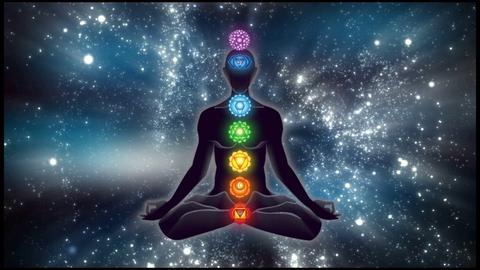
There are seven Chakras located in the pranic mental sheath. These thin centers are identified in the central spinal canal and correspond to functional ways. Chakras are antennas for energy vibrations. 

The first, Muladhara, is connected to the Earth, at the base of the column, hence the feeling of the I am this, the sense of smell. When the Earth energy is harmonic you live with balance and you are able to reach your goals; its malfunction leads to attachment to goods and fear of loss. 

The second chakra, Swadistana, at the level of the sexual organs, corresponds to the element Water, to memory, to taste, if well functioning it is open and spontaneous, inclined to satisfy relationships; the malfunction leads to loss of self-esteem, tensions and uncertainties. 

The third chakra, Manipura, solar plexus, represents the Fire, the intellect, the sight, in it is structured our active personality, when it is harmonious you feel satisfied with yourself and others, on the contrary we will try to conquer and manipulate power we will lack lucidity and act disorderly. 

The fourth is Anahata, at the height of the heart, connected to Air, touch, mind; it has a unifying function, when it is harmonious it allows us to heal and love without expectations, to radiate human warmth and sympathy; malfunctioning we will feel dependent on the love of others, offended by rejection, succubi or fearful of opening up. 

The fifth chakra, Vishudda, the Ether, the hearing, is placed in the throat, in charge of learning. Through it we communicate, with the voice, dance, music, the arts. When our speech is harmonious, we transmit without fear of misunderstanding or judgment and we perceive the true Dharma; malfunctioning we are shy, incapable of expressiveness, talkative or inept in speaking. 

The sixth Chakra, Ajna, pituary gland, presides over the knowledge of being, is the pure mind, here we are intuitive, open to the inner vision, we have extrasensory perceptions; if the energies are not harmonic we will be led to rationalize every event and we will suffer emotional conflicts. 

The seventh Chakra, Sahasrara, is on the fontanelle of the head, here all energies meet, the emptiness is full, the bliss of being-non-being, existence is the game of conscience, opposites come together and all is wisdom. Reached this state there is no more dualism. 

Paolo D'Arpini

Risultati immagini per The seven chakras paolo d'arpini


Testo italiano

Esistono sette Chakra situati nella guaina mentale pranica. Questi centri sottili vengono individuati nel canale centrale spinale e corrispondono a modi funzionali. I Chakra sono antenne per le vibrazioni energetiche. Il primo, Muladhara, è collegato alla Terra, alla base della colonna, da qui sorge il senso dell’ego, l’olfatto. Quando l’energia Terra è armonica si vive con equilibrio e si è capaci di raggiungere i propri obiettivi; il suo malfunzionamento porta ad attaccamento verso i beni e paura della perdita. Il secondo chakra, Swadistana, all’altezza degli organi sessuali, corrisponde all’elemento Acqua, alla memoria, al gusto, se ben funzionante si è aperti e spontanei, inclini a soddisfare i rapporti; il malfunzionamento conduce alla perdita dell’autostima, a tensioni ed incertezze. Il terzo chakra, Manipura, plesso solare, rappresenta il Fuoco, l’intelletto, la vista, in esso si struttura la nostra personalità attiva, quando è armonico ci si sente soddisfatti di sé e degli altri, al contrario cercheremo di conquistare e manipolare potere, mancheremo di lucidità e agiremo disordinatamente. Il quarto è Anahata, all’altezza del cuore, collegato ad Aria, tatto, mente; ha una funzione unificante, quando è armonico ci permette di sanare ed amare senza aspettative, di irradiare calore umano e simpatia; malfunzionando ci sentiremo dipendenti dall’amore altrui, offesi dal rifiuto, succubi o timorosi di aprirci. Il quinto chakra, Vishudda, l’Etere, l’udito, è posto nella gola, preposto all’apprendimento. Attraverso di esso comunichiamo, con la voce, la danza, la musica, le arti. Quando armonico il nostro parlare è chiaro, trasmettiamo senza temere incomprensione o giudizio e percepiamo il vero Dharma; malfunzionando siamo timidi, incapaci di espressività, logorroici oppure inetti nel parlare. Il sesto Chakra, Ajna, ghiandola pituaria, presiede alla conoscenza dell’essere, è la mente pura, qui si è intuitivi, aperti alla visione interiore, si hanno percezioni extrasensoriali; se le energie non sono armoniche saremo portati a razionalizzare ogni evento e subiremo conflitti emotivi. Il settimo Chakra, Sahasrara, è sulla fontanella del capo, qui si incontrano tutte le energie, il vuoto è pieno, la beatitudine dell’essere-nonessere, l’esistenza è il gioco della coscienza, gli opposti si uniscono e tutto è saggezza. Raggiunto questo stato non c’è più dualismo. 

Paolo D'Arpini

venerdì 23 novembre 2018

Even in lay spirituality, a guide is necessary - Anche nella spiritualità laica una guida è necessaria.

Risultati immagini per spiritualità  maestro
Spiritual research, without an instructor pointing the way, presents itself as a titanic enterprise, almost impossible. It is as if an explorer who has to cross the jungle had the choice: either to have an expert guide to accompany him on the journey and, on the way, learn the dangers that infest the jungle, or try to know in advance any danger that nestles in the jungle, with the purpose then to avoid it. Certainly the second hypothesis is much more uncertain and almost destined to failure, and only if the explorer has an innate and strong intuition, beyond a strong will, then he can hope for an happy success.
From this it emerges the extreme importance of the Guru who acts as a guide along the path of self-knowledge. And the first step must be taken trying to understand the function of the mind. 
The  conscious process of  individualize oneself is the very function of the mind. The mind is the reflective capacity of the conscience that takes on itself the task of objectification and therefore of the creation of the so-called world of names and  forms. Outsourcing  is its tendency.
And here we return to the "Guru". the inner Guru is the ability to learn through daily life, in spiritual terms it is the intrinsic ability to recognize the "truth" about our intrinsic nature in all that we manifest or that manifests to us.The Guru in this sense is not a person, therefore, or at least not only a person as he can in any case manifest itself in every form, but the enlightened intelligence that frees us from mental superstructures and religious or moral fictions.
Here I set a concrete example: The love story of the nun Ryonen.
Once upon a time in Japan there lived a beautiful nun named Ryonen, famous for the depth of her intellect and her discriminating attention. A monk who was staying in the same monastery fell madly in love with her and one night he stole into his room. Ryonen was not upset at all and willingly agreed to lie with him. But the next day when the lover came back, she said that at that moment it was not possible... The following day a great ceremony took place in the temple to commemorate the illumination of the Buddha in the presence of a large crowd and several monks who came from afar.  Ryonen entered without delay into the full hall and with total naturalness stood before the monk who said he loved her, he completely naked and said: "Here I am, I am ready, if you want to love me you can do it here, now ...".
The monk fled to avoid coming back while Ryonen had cut off the roots of every illusion with that gesture. The story of Ryonen and his total adamant adherence to the truth continues. And who is that inner witness that pushes the seeker to a clean truth, starting from the things of the world: "Master is the one who leads you to be your own Master!"
Ramana Maharshi said: "Know your mind, not to be cheated by the mind" See how many images appear in a dream, how many characters who seek and escape, who love and hate each other? But the dreamer is only one...
To awaken to yourself from any point or identity you recognize yourself in the dream, accept that, stop at that and from there observe and discover the observer. Do not wait to deceive yourself that you can wake up if you're dreaming of being someone else, a more prepared or nicer character...
Whatever the character of the dream in which you find yourself, accept it.
Osho said: "Accepting for what we are is the basis for spiritual awakening". In fact, accepting does not mean renouncing one's own growth, on the contrary it means that we accept to grow starting from what we are. In this way growth will not be a choice but a spontaneous movement.It is the flowering of the intrinsic perfection that finds an expressive form, without effort, without anger or frustration, without sacrifice, without the use of memory, without expiation, without hope...
Can you then tell me where is the suffering, that self-control, that has accompanied your research so far? Where is the projective utility of the self seeking itself? How many are the "I" in you? Where is that one who seeks and the other who is sought? Where are the lives spent trudging towards perfection and where are those future lives to complete it? What does it mean "I am young, I am old, I am male, I am a female"? Are you not present here and now, pure consciousness, beyond any external distinction?
And you will always be!
Listen, you are always, absolutely, and anyone that in your dream says something sensible, you say it. Recognize that message as yours, look at the moon and leave your finger, discover the essence and do not be deceived by the reflection. 
And finally  remember: "The Guru belongs to you completely but do you belong completely to the Guru?" (Swami Muktananda)
Paolo D'Arpini
Risultati immagini per nella foresta paolo d'arpini

Testo italiano
La ricerca spirituale, senza un istruttore che indichi la via, si presenta come impresa titanica, quasi impossibile. E’ come se un esploratore che deve attraversare la giungla avesse come scelta la possibilità: o di avere una guida esperta che lo accompagni nel viaggio e, strada facendo, apprendere i pericoli che infestano la giungla, o cercare di conoscere anticipatamente ogni pericolo che si annida nella giungla, con lo scopo poi di evitarlo. Certamente la seconda ipotesi è molto più incerta e quasi destinata al fallimento, e solo se l’esploratore possiede un’innata e spiccata intuizione, oltre una forte volontà, allora può sperare nella felice riuscita.
Da ciò si evince l’estrema importanza del Guru che funge da guida lungo il sentiero dell’autoconoscenza. E il primo passo va compiuto cercando di comprendere la funzione della mente.
Il processo dell’individualizzazione della coscienza è la funzione stessa della mente. La mente è la capacità riflettente della coscienza che assume su di sé il compito dell’oggettivazione e quindi della creazione del cosiddetto mondo delle forme. L’esteriorizzazione è la sua tendenza.
E qui ritorniamo sul discorso del “Guru”. il Guru  interiore è la capacità di apprendere attraverso la vita quotidiana, in termini spirituali  è la capacità intrinseca di riconoscere la “verità” sulla nostra natura intrinseca in tutto ciò che noi manifestiamo o che a noi si manifesta.
Il Guru in tal senso  non è una persona, quindi, o perlomeno non soltanto una persona visto che comunque può manifestarsi in ogni forma, bensì l’intelligenza illuminate che ci libera dalle sovrastrutture mentali e dalle finzioni religiose o morali.
Qui pongo un esempio concreto:  La storia amorosa della monaca Ryonen.
Un tempo in Giappone viveva una bellissima monaca di nome Ryonen, famosa per la profondità del suo intelletto e per la sua discriminante attenzione. Un monaco che stavo nello stesso monastero si innamorò perdutamente di lei ed una notte si introdusse furtivamente nella sua stanza. Ryonen non si turbò affatto ed accettò volentieri di giacere con lui. Ma l’indomani quando l’innamorato si ripresentò ella disse che in quel momento non era possibile… Il giorno seguente si svolgeva nel tempio una grande cerimonia per commemorare l’illuminazione del Buddha alla presenza di una gran folla e di parecchi monaci venuti da lontano. Ryonen entrò senza indugi nella sala colma e con totale naturalezza si pose di fronte al monaco che diceva di amarla, si denudò completamente e gli disse: “Eccomi, sono pronta, se vuoi amarmi puoi farlo qui, ora…”.
Il monaco se ne fuggì per non far più ritorno mentre Ryonen con quel gesto aveva reciso le radici di ogni illusione.  La storia di Ryonen e la sua totale adamantina aderenza alla verità continua.
E chi è quel testimone interiore che spinge il cercatore verso una verità pulita, a partire dalle cose del mondo: “Maestro è colui che ti porta ad essere il tuo stesso Maestro!”
Diceva Ramana Maharshi: ”Conosci la tua mente, per non farti imbrogliare dalla mente”  Vedi quante immagini appaiono in un sogno, quanti personaggi che si cercano e si sfuggono, che si amano e si odiano? Ma il sognatore è uno solo….
Per risvegliarti a te stesso da qualsiasi punto o identità ti riconosci nel sogno, accetta quella, fermati a quella e da lì osserva e scopri l’osservatore. Non aspettare illudendoti che potrai svegliarti se stai sognando di essere qualcun altro, un personaggio più preparato o più simpatico…
Qualsiasi sia il personaggio del sogno nel quale ti ritrovi, accettalo.
Osho diceva: “Accettarsi per quel che siamo è la base per il risveglio spirituale”. Infatti accettarsi non significa rinunciare alla propria crescita, anzi vuol dire che accettiamo di crescere partendo da ciò che siamo. In questo modo la crescita non sarà una scelta bensì un moto spontaneo.
E’ la fioritura dell’intrinseca perfezione che trova una forma espressiva, senza sforzo, senza rabbia o frustrazione, senza sacrificio, senza uso della memoria,senza espiazione, senza speranza…
Puoi dirmi allora dove si pone, a cosa serve, quella sofferenza, quell’autocontrollo, che sin’ora ha accompagnato la tua ricerca? Dov’è l’utilità proiettiva dell’io che cerca se stesso? Quanti sono gli “io” in te? Dov’è quell’uno che cerca e l’altro che è cercato? Dove sono le vite trascorse arrancando verso la perfezione e dove sono quelle vite future per completarla? Cosa significa “io sono giovane, io sono vecchio, io sono maschio, io sono femmina”? Non sei tu presente qui ed ora, pura coscienza, aldilà di ogni distinzione esteriore?
E sempre lo sarai!
Ascolta, tu sei sempre, assolutamente, e chiunque nel tuo sogno dica qualcosa di sensato, sei tu a dirlo. Riconosci quel messaggio come tuo, guarda la luna e lascia stare il dito, scopri l’essenza e non lasciarti ingannare dal riflesso..
E per finire ricorda: “Il Guru ti appartiene completamente ma appartieni tu completamente al Guru..?” (Swami Muktananda)
Paolo D’Arpini

domenica 18 novembre 2018

For the constitution of a spiritual "anarchy" - Manifesto per una “anarchia” spirituale


Risultati immagini per Manifesto per una “anarchia” spirituale

Checking on the vocabulary the etymological origin of the word "lay" comes out a disconcerting thing ... "Lay", from the Latin "laicus" derived from the Greek "laikos" means "of the people, profane, alien to the social and religious structural context", opposite to "clerikos" (from the Greek) "of the clergy"!

The whole story was written by the patriarchy, and also the meaning of the words, so much so that the ancient symbologies have been described in negative. The fact that the word laikos in Greek expresses a negative judgment helps my theory...  It happened the same for the pariah (or out-caste) Indians, so despised by the Arians (patriarchal). Both the layperson and the outcaste were excluded from civil society, constituted in terms of class and census (from the father). Equally, they were considered unrelated to official religious culture (and therefore opposed to clericos and to the bramin sacerdotal caste).

For example, in the south of India, less affected by the patriarchal culture, the cults dedicated to shakti (feminine energy) were maintained,  in which there is no specific male priesthood constituted. All this leads us to suppose that the social marginalization and disrespect suffered by the laity in Greece, - or by the pariahs in India - (considered stateless, low and ignorant populace) was undoubtedly the effect of the final marginalization towards the expressively free culture and non-hierarchical spirituality of matrism.

Among other things, both in Greece, as in the Dravidian area of the Indian subcontinent, resisted (Crete is an example) a matristic flap. The struggle of customs and thought between patriarchy and matrism was still taking place at the time when the term "laikos" and "pariah" of  the patriarchal culture that was prevailing on the other was coined. 

Speaking of "lay spirituality" corresponds to the description  of "natural spirituality", that is a spirituality not structured in any form of belief but based on spontaneous intuition of man, both these definitions evoke the same identical thing: the ability to perceive in itself themselves, without intermediaries,  the presence of the Spirit, a synthesis between consciousness and intelligence.

Today the term "lay" is substantially misrepresented but it is certainly preferable to give back to this word its value rather than condemning the term in itself because it has been misappropriated, in recent years, by the "secular culture" as opposed to the "clerical" one. Otherwise we do like the Germans who today condemn the Swastika, for the use made by Nazism, forgetting the thousands of years - still now - of symbolic sacredness (in many parts of the world) in which the Swastika is the emblem of creative energy and of peace. 

Why give it to those who cripple the meaning instead of correcting deviations (exploitation)? It is necessary to restore the value of truth to the symbol of the Swastika, by doing the same with the word "lay" which has been distorted - in his  profound meaning - by political and religious ideologies, but which does not deserve to disappear from our vocabulary. 

Lay spirituality is an expression of autonomy of thought, an expression devoid of connotations (... of the people, alien to any social and religious construct ...), in short, free!

Paolo D'Arpini


Testo italiano:

Controllando sul vocabolario l’origine etimologica della parola “laico” viene fuori una cosa sconcertante… “Laico”, dal latino “laicus” di derivazione dal greco “laikos” significa “del popolo, profano, estraneo al contesto strutturale sociale e religioso”, opposto a “clerikos” (dal greco) “del clero”!

Tutta la storia è stata scritta dal patriarcato, ed anche il significato delle parole, tant’è vero che le antiche simbologie sono state descritte in negativo. Il fatto che la parola laikos in greco esprima un giudizio negativo aiuta la mia teoria….. Avvenne lo stesso per i pariah (o fuori-casta) indiani, così disprezzati dagli ariani (patriarcali). Sia il laico che il fuori-casta erano esclusi dalla società civile, costituita in termini di classe e censo (dal padre). Altrettanto essi erano considerati estranei alla cultura religiosa ufficiale (e quindi opposti al clericos ed al bramano).

Ad esempio nel sud dell’India, meno toccato dalla cultura patriarcale, si mantennero i culti dedicati alla shakti (energia femminile) in cui non vi è uno specifico sacerdozio costituito. Tutto ciò fa supporre che l’emarginazione sociale ed il dis-rispetto subito dai laici in Grecia,- o dai pariah in India-, (ritenuti apolidi, popolino basso ed ignorante) era senz’altro l’effetto della emarginazione finale nei confronti della cultura espressivamente libera e della spiritualità non gerarchizzata del matrismo.

Tra l’altro sia in Grecia, come nell’area dravidiana del subcontinente indiano, resistette (Creta ne è un esempio) un lembo matristico. La lotta di costume e di pensiero fra patriarcato e matrismo era ancora in atto ai tempi in cui fu coniato il termine “laikos” e “pariah” dalla cultura patriarcale che stava avendo il sopravvento sull’altra.

Parlare di “Spiritualità laica” corrisponde al parlare di “Spiritualità naturale”, ovvero una spiritualità non strutturata in alcuna forma di credo ma basata sull’intuizione spontanea dell’uomo, entrambe queste definizioni evocano la stessa identica cosa: la capacità di percepire in se stessi, senza tramiti, la presenza dello Spirito, una sintesi fra coscienza ed intelligenza.

Oggi il termine “laico” è sostanzialmente travisato ma è sicuramente preferibile restituire a questa parola la sua valenza piuttosto che condannare il termine in se stesso perché usato malamente, in questi ultimi anni, dalla “cultura laicista” in contrapposizione a quella “clericale”. Altrimenti facciamo come i tedeschi che oggi condannano la Svastica, per l’utilizzo fattone dal nazismo, dimenticando le migliaia di anni –ancora adesso- di sacralità simbolica (in molte parti del mondo) in cui la Svastica è l’emblema dell’energia creativa e della pace.

Perché darla vinta a chi storpia il significato invece di correggere le devianze (opera di strumentalizzazione)? Occorre restituire valore-verità al simbolo della Svastica, facendo altrettanto con la parola “laico” che è stata storpiata -nel significato profondo- dalle ideologie politiche e religiose, ma che non merita di scomparire dal nostro vocabolario. Spiritualità laica è espressione di autonomia di pensiero, un’espressione priva di connotazioni (…del popolo, estranea ad ogni  costrutto sociale e religioso..), insomma libera!

Paolo D’Arpini